
How Yumna Zahra Silbaqolbina, an Indonesian Scholar, Secured a Fully Funded Master’s in Transportation Engineering at Southeast University Through the Chinese Government Scholarship
University: Southeast University
Degree: Master’s in Transportation Engineering
Previous Education: Bachelor’s in Computer Science, Nanjing Tech University (GPA: 3.57); HSK Level 5
Scholarship: Chinese Government Scholarship – Tuition, Accommodation, Medical Insurance and RMB 3,000 Monthly Living Allowance
Other Offered Scholarships: Nanjing Tech University Tuition Scholarship; Jiangsu Government Scholarship – RMB 18,000 per Year for Two Years
LinkedIn: Yumna Zahra Silbaqolbina
The Journey
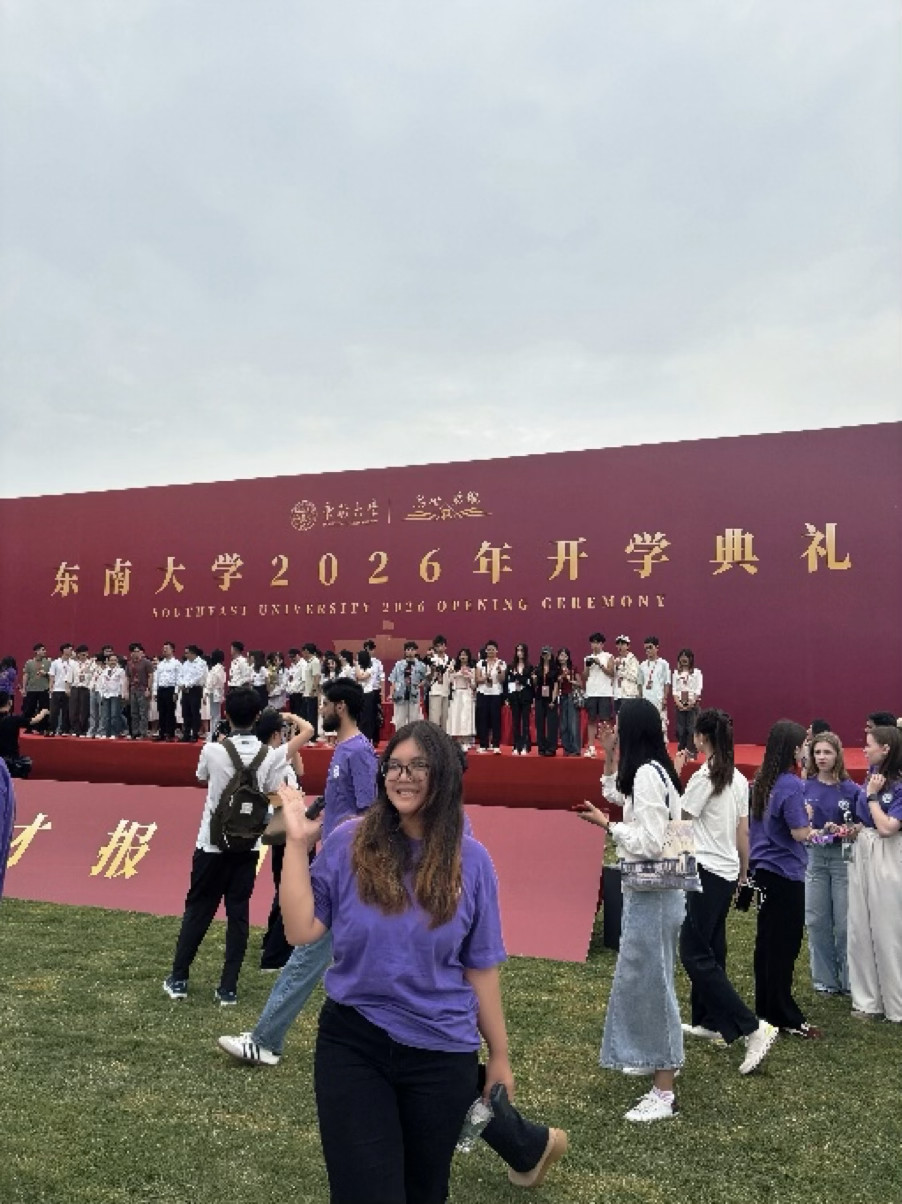
Hello, everyone! My name is Yumna, but most people call me Nana. I’m from a small village in Indonesia, and I’m currently pursuing a master’s degree in Transportation Engineering at Southeast University in China through the Chinese Government Scholarship.
I went to public schools from kindergarten through high school. I was always curious and liked a good challenge. Even in elementary school, I loved discussing math problems with my teachers. I wouldn’t call myself a math expert, but I really enjoyed figuring out how to get to the answer. In high school, I fell in love with English and started dreaming about studying abroad. At first, I had no connections to help me get started; my parents didn’t agree with the idea, and I wasn’t sure how I could afford it. Then I found out how many scholarships China offers to international students, and for the first time, studying abroad felt possible.
I ended up receiving scholarships for both my bachelor’s and master’s degrees in China.
I chose Computer Science for my bachelor’s degree partly because I loved math. There was also a more personal reason. I loved playing PUBG Mobile in high school, and that’s how I first heard about Tencent, one of the companies that helped develop the game. After moving to China, I realized that the same company was behind WeChat, an app I now use almost every day.
So, why did I switch to Transportation Engineering for my master’s? Honestly, I’m still figuring out the answer myself. After four years of Computer Science, I felt that the field was moving so fast that I sometimes struggled to keep up. I also wanted to see what I could do in a different field. My current research uses computer vision to study transportation problems, so I still get to use what I learned in Computer Science. The transition has been challenging, and I’m still finding my feet. For now, I’m taking it one step at a time and trying to enjoy it along the way.
Chinese Government Scholarship Details
I currently receive the Chinese Government Scholarship, also known as CSC, through the Type B application route at Southeast University. It covers tuition fees, accommodation, medical insurance, and a monthly living allowance of RMB 3,000. Scholarship opportunities were one of the main reasons I chose China. Beyond financial support, I was attracted by its rapid technological development and rich culture, including the way traditional culture remains part of everyday life. I also felt that studying in China could be more affordable than studying in countries such as the US or the UK.
Other Offered Scholarships
During my bachelor’s studies at Nanjing Tech University, I received a university scholarship that covered my tuition fees. Because of my academic performance and achievements, I also received the Jiangsu Government Scholarship for two consecutive years, worth RMB 18,000 per year. These experiences showed me that there are different scholarship opportunities in China, beyond CSC alone.
My Educational Background
I completed my bachelor’s degree in Computer Science at Nanjing Tech University with a GPA of 3.57. During my undergraduate studies, I also explored interests outside my major. I won two national first prizes in competitions related to business planning and market research, and I passed HSK Level 5. Although I’ve moved into Transportation Engineering, my undergraduate background is still useful. My current research involves applying computer vision to transportation problems, allowing me to connect what I learned before with what I’m learning now.
Preparing to Apply to Universities
For my bachelor’s applications, I spent about a year preparing for TOEFL and gathering the required documents. One decision I’m especially glad I made was learning basic Chinese before moving to China. It helped me manage everyday situations and settle into life there. After completing my bachelor’s degree, I decided to continue with a master’s and apply for CSC. Before submitting my university application, I had already obtained an acceptance letter from a professor. I believe that helped make my application stronger.
My English and Chinese Test Preparation
I still remember deciding to enter an English competition in my city during high school. At the time, my English club supported me by helping me buy a very thick TOEFL preparation book. I studied from that book little by little. My English gradually improved, and eventually, I felt brave enough to take the TOEFL test. For me, that book was part of turning my dream of studying abroad into something I could actually work toward.
I also continued learning Chinese and eventually passed HSK Level 5. Looking back, both languages played important roles in my journey: English helped me pursue international study, while Chinese helped me feel more comfortable living and learning in China.
Preparing My Scholarship Application
For my master’s scholarship application, I brought together my academic record, language qualifications, competition achievements, and a professor’s acceptance letter. I think understanding what you want to study matters, too. Moving into a new field has made me think more carefully about how my previous experience connects with my future research.
Chinese proficiency is also worth investing in. From my experience, it can be a plus in scholarship applications and can help you communicate with professors and participate more confidently in university life.
My Experience as an International Student at Southeast University
My experience at Southeast University has included both academic challenges and opportunities to explore. SEU is a Project 985 and Project 211 university, and its strong reputation, especially in Transportation Engineering, was an important part of its appeal to me. Changing fields has been difficult, so I’m still adjusting and learning. However, I appreciate having the opportunity to explore transportation while continuing to use my Computer Science background.
One thing I appreciate about SEU is the support it provides to international students. The university offers scholarship opportunities and organizes monthly Chinese cultural activities, along with other events that help us balance studying with university life. Our advisors care about our safety, and my supervisor checks in about difficulties we might be facing, whether they involve our studies or everyday life. That support means a lot when you’re studying far from home.
Classroom Language and Everyday Communication
I’m enrolled in an English-taught program. At SEU, the language of instruction depends on the program you choose: English-taught programs use English, while Chinese-taught programs use Chinese. My university also allows me to attend Chinese-taught classes to explore more subjects, which I appreciate. From my experience, you can manage academically in an English-taught program without knowing much Chinese. However, for everyday life, I strongly recommend learning at least the basics. It makes communicating, handling daily tasks, and connecting with people much easier.
What Made My Application Stand Out
If I had to identify the stronger parts of my application, I would say my professor’s acceptance letter, two national first prizes in business-related competitions, HSK Level 5, and a GPA of 3.57. Still, I didn’t necessarily see myself as an outstanding candidate. Even now, part of me feels that I was lucky. But those achievements were part of my journey, and I believe they helped support my application.
What I Would Do Differently
If I could go through my undergraduate studies again, I would pay more attention to my graduation thesis. It had a significant impact on my final GPA, and I wish I had handled that part better. I don’t regret studying Computer Science, switching to Transportation Engineering, or exploring business competitions along the way. Each experience has been part of discovering what interests me. I only live once, and I want to enjoy every process.
My Advice for Future Applicants
Start preparing early. Work on your English qualifications, whether that means IELTS or TOEFL, and consider learning Chinese and taking the HSK. Try to understand what you want to study, why it matters to you, and what impact you hope to make. Study in China is also an opportunity to become a bridge between your home country and China through the people you meet and the experiences you share.
And please don’t lose hope if CSC doesn’t work out. It isn’t the only scholarship available in China. Other opportunities may also offer substantial support, so keep exploring your options.
Most of all, stay positive and enjoy each stage. You don’t need to have every answer before you begin. I certainly didn’t, and I’m still figuring some things out now. Good luck, everyone! Keep going, keep learning, and keep giving it your best!
Want to submit your
scholarship journey?
Submit Your Story Here!
More Scholarship Recipients
My name is Amílcar Mário Furtado Quinta, and I am an Angolan corporate lawyer and university lecturer from Luanda, Angola. .... Read more

Hi, I am Ali from Karachi, Pakistan. I am currently studying Physics at University College London, where I am enrolled in an .... Read more
My name is Viengsavanh Xaychaleune (Vern) from Lao PDR. I currently serve as the Cluster Marketing and Communications Manage .... Read more
Leave A Comment