
How I Secured a Fully Funded Master's at Chonnam National University, South Korea Through the GKS Graduate Scholarship (GKS-G)
University (Undergraduate): Namseoul University, South Korea
Degree (Undergraduate): Bachelor’s in Computer Software Engineering
Scholarship (Undergraduate): Global Korea Scholarship (GKS-U) 2020 Full with Funding (Full Tuition, Monthly Living Stipend, Round-Trip Airfare, Health Insurance, One Year of Korean Language Training)
University (Graduate): Chonnam National University, South Korea
Degree (Graduate): Master’s in Data Science (ongoing, final semester)
Scholarship (Graduate): Global Korea Scholarship (GKS-G) 2024 with Full Funding (Full Tuition, Monthly Living Stipend, Round-Trip Airfare, Health Insurance)
Other Offered Scholarships: N/A
LinkedIn: linkedin.com/in/ngoc-ly-tran-46475926b
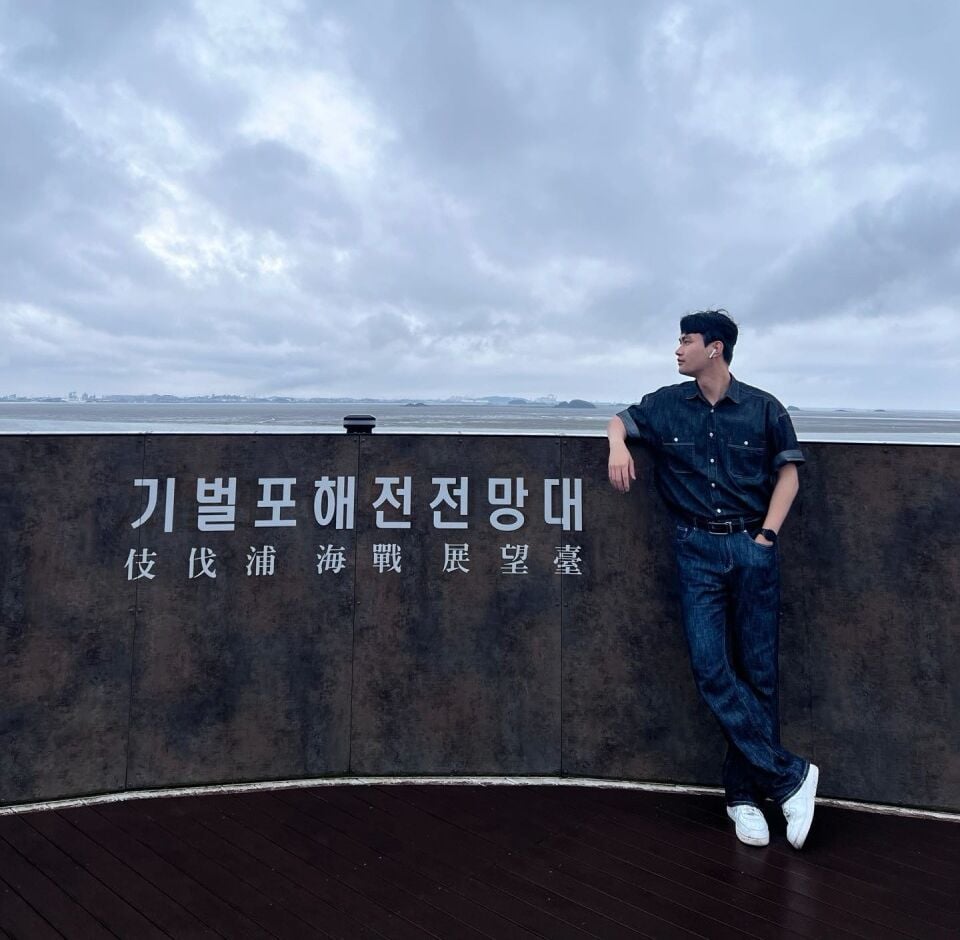
The Journey
My name is Tran Ngoc Ly, and I'm from Nam Dinh, a province in northern Vietnam. I received the Global Korea Scholarship Undergraduate program (GKS-U) in 2020, which brought me to Namseoul University to pursue a degree in Computer Software Engineering. After graduating, I was honored to receive the GKS Graduate Scholarship (GKS-G) in 2024, and I am currently in my final semester of a Master's in Data Science at Chonnam National University. Having received both GKS scholarships, I hope this story can be a practical guide for anyone hoping to follow a similar path.
I was drawn to Computer Software Engineering because of the creativity it demands , the idea that you can build something from nothing and genuinely make people's lives easier. That drive stayed with me throughout my undergraduate years. Over time, I became increasingly fascinated by data , how it could be analyzed and used not just to build systems, but to make smarter decisions and predictions. I realized that combining software engineering with data science was exactly where I wanted to be. That's what led me to apply for the GKS-G and pursue graduate research in Medical AI, specifically multi-task learning for medical image classification and segmentation. A paper from this research is currently under review.
Global Korea Scholarship Details
GKS Undergraduate Scholarship (GKS-U) , 2020
The Global Korea Scholarship (GKS) is a fully funded government scholarship administered by Korea's National Institute for International Education (NIIED). The undergraduate track covered full tuition, a monthly stipend of approximately KRW 900,000, round-trip airfare, health insurance, and one year of Korean language training. I was placed at Namseoul University in Cheonan, South Korea.
GKS Graduate Scholarship (GKS-G) , 2024
The graduate scholarship similarly covers full tuition, a monthly stipend, round-trip airfare, and health insurance. I was admitted to Chonnam National University (CNU) in Gwangju to pursue a Master's in Data Science, with a research focus in Medical AI.
Were You Offered Any Other Scholarships?
N/A , The GKS-U and GKS-G were the primary scholarships I applied for and received.
Educational Background
I earned my Bachelor's degree in Computer Software Engineering from Namseoul University, graduating with a GPA of 4.02/4.5. The program covered programming fundamentals, algorithms, software architecture, databases, and systems design , a strong technical foundation that later proved essential in my graduate research.
During undergrad, I grew increasingly interested in machine learning and data analysis, which pushed me toward Data Science for my Master's. I am currently completing my thesis at Chonnam National University with a GPA of 4.5/4.5. My research applies multi-task deep learning to medical image analysis (classification and segmentation simultaneously), and the resulting paper is currently under review.
Finding Information About Scholarships and Institutions
I first learned about GKS through Vietnamese Facebook groups where current scholars shared their experiences and application tips. These communities gave me a realistic picture of what the process looked like and what evaluators were looking for. I also used the official Study in Korea website (studyinkorea.go.kr) to research university options and requirements. For the graduate application, my prior experience as a GKS-U scholar was a huge advantage. I already understood the system and had a network of seniors studying in Korea under the same scholarship who could guide me.
Did You Take Any Standardized Tests? If So, How Did You Prepare for Them?
For the GKS-U, I submitted a TOEIC score of 900. I also achieved TOPIK Level 5 before my undergraduate application, which reflected my commitment to Korean language preparation. No SAT or GRE was required for GKS.
By the time I applied for GKS-G, I had been living and studying in Korea for four years. My Korean had progressed to TOPIK Level 6, which showed both my academic readiness and my long-term commitment to building a career in South Korea.
How Did You Prepare to Apply for the Scholarships?
GKS-U (2020)
I applied through the University track. The hardest part was writing the personal statement and study plan. I wanted to clearly explain why I chose Computer Software Engineering, why South Korea, and what I hoped to contribute after graduation. I also gathered letters of recommendation and carefully assembled all required documents, cross-checking each item against the official GKS checklist. Before submitting, I researched Namseoul University's department page thoroughly to ensure my application was well-targeted.
GKS-G (2024)
For the graduate scholarship, I applied through the University track (R&D). Rather than contacting a specific professor directly beforehand, I prepared by thoroughly researching the department's homepage and reaching out to seniors who were already studying at CNU under GKS. Their firsthand advice about the program, research environment, and application process was extremely helpful and gave me a realistic picture of what to expect.
My personal statement reflected on how I had grown academically and technically during my undergraduate years, and laid out a clear, specific research direction in Medical AI. I focused on explaining the real-world impact of the problem I wanted to solve , applying deep learning to medical image analysis , and why I was the right person for it.
How Was Your Experience at the Institutions?
Namseoul University was a genuinely welcoming place to begin my journey in South Korea. One of the highlights was the diversity of the student community , I built friendships with students from all over the world, which made my undergraduate years both academically enriching and personally unforgettable. I was also very active in extracurricular activities on campus, which helped me integrate into Korean student life and develop skills beyond the classroom. The professors were approachable and supportive, and being part of the GKS scholar community meant I always had peers I could turn to for guidance and encouragement.
CNU is one of South Korea's prominent national research universities, and the graduate experience here has been significantly more intensive and research-focused than my undergraduate years. Working on my thesis in Medical AI has pushed me to grow both technically and academically in ways I did not anticipate. Gwangju is a comfortable, livable city , less hectic than Seoul, with a great arts and culture scene that pairs nicely with the demands of graduate research. The Data Science program is rigorous, and I have had the opportunity to work on research that I believe has real-world relevance, which has been deeply motivating.
How Do You Rate the Institutions Academically?
Namseoul University: A solid undergraduate institution with dedicated faculty and a supportive environment for international students. The Computer Software Engineering program provided the technical foundation I needed for graduate research.
Chonnam National University: A strong research university with excellent resources for graduate students. The Data Science program is demanding in the best way, and the research culture actively encourages independent thinking and publication.
How Does Namseoul University and Chonnam National University Support International Students?
Both universities have dedicated international student offices that assist with visa processing, housing, academic registration, and cultural adaptation. As a GKS scholar at both institutions, I also had access to a scholarship coordinator who handled any administrative issues. At Namseoul University, the international student office was particularly proactive in organizing orientation events and cultural activities that helped new students settle in quickly. At CNU, the graduate school's administrative staff were responsive and efficient in handling the needs of international researchers.
Are Your Classes Conducted in English or Korean?
At Namseoul University, the majority of my courses were conducted in Korean. At Chonnam National University, some graduate courses and research presentations allow English, but most instruction and academic interaction is in Korean. The one-year language training included in GKS is essential, but students should continue developing their Korean throughout their studies.
Would Potential Students Have Any Problems Not Knowing Korean?
Yes, particularly at the undergraduate level. Daily academic life lectures, assignments, group projects, and interactions with professors is largely conducted in Korean. The GKS preparatory year provides a good foundation, but students who treat language learning as an ongoing priority will find their experience significantly more rewarding, both academically and socially.
What Do You Think Made Your Application Stand Out?
A coherent academic story: Receiving the GKS-U and then applying for GKS-G five years later told a clear story , one of growth, commitment, and a deepening focus. Evaluators could see a clear progression from software engineering to data science to applied research in Medical AI.
A specific research direction: My graduate application presented a concrete, realistic research proposal rather than a generic interest in 'AI' or 'data science.' Defining the exact problem I wanted to solve and explaining its real-world relevance made the application much more compelling.
Strong academic performance: A GPA of 4.02/4.5 at undergraduate level and 4.5/4.5 at graduate level, combined with a TOEIC score of 900 and TOPIK Level 6, showed both strong academic results and genuine integration into Korean academic life.
Community-driven preparation: I leveraged the GKS scholar network online Facebook communities and senior scholars at my target university to prepare a well-informed application. Understanding the process from people who had already been through it helped me avoid common mistakes and present a stronger case.
What Would You Have Done Differently if You Were Going Through the Process Again?
I would have documented my journey more carefully as it happened. The details of each application stage what worked, what I was uncertain about, what I wished I had known fade over time. Keeping clear notes from the start would have made it easier both to help others and to build on the lessons for the next application.
For the GKS-G, I would have tried to connect with professors at my target university even earlier, rather than relying mainly on department homepage research and advice from seniors. Direct communication with a potential supervisor , ideally several months before the deadline gives both sides more time to align on research direction and allows for a much more personalized application.
I would also have been more intentional about building relationships within the GKS community during my undergraduate years. The network is large, generous, and full of people willing to share advice but you have to be proactive about reaching out.
What Advice Would You Give Those Looking to Apply for a Similar Scholarship?
Start earlier than you think you need to. Both the GKS-U and GKS-G involve significant document preparation. Starting 6 to 12 months before the deadline is not too early.
Take Korean seriously. It is more than a GKS requirement , it is your ticket to full participation in academic and social life in South Korea. The preparatory year gives you a start; consistency over four or more years builds real fluency. Reaching TOPIK Level 6 was one of my proudest milestones.
Write a personal statement that is uniquely yours. Share a specific experience, a turning point, or a problem you genuinely want to solve. Generic essays do not stand out.
For GKS-G: use every resource available. Research the department thoroughly, reach out to seniors already studying at your target university, and if possible, contact professors directly. The more you understand the program before applying, the stronger your application will be.
Don't self-reject. Apply. The only application guaranteed not to succeed is the one you never submit. Many past scholars went through moments of doubt. Push through them.
Use the GKS community. There are active online communities of GKS scholars on Facebook groups, blogs, and YouTube channels. They are your best real-time source of advice on application tips, university selection, and life in Korea. This community is where I first learned about GKS, and it made all the difference.
Have questions about GKS or studying in South Korea? Feel free to reach out on LinkedIn: linkedin.com/in/ngoc-ly-tran-46475926b
Want to submit your
scholarship journey?
Submit Your Story Here!
More Scholarship Recipients
My name is Shah Hussain, and I am from Khyber Pakhtunkhwa, Pakistan. I completed my Bachelor’s in Psychology at the Univer .... Read more
I am June from the Philippines. I am an educator for Social Sciences and Humanities. I recently earned my Master in Southeas .... Read more
Hi, my name is Abdul Hafeez, and I come from a small town called Nasirabad in Sindh, Pakistan. Currently, I am pursuing a ma .... Read more
Leave A Comment