
How I Secured a Partially Funded Master’s at ENSAE Paris, France Through the Eiffel Excellence Scholarship
University: ENSAE Paris and National Institute of Statistics and Applied Economics (INSEA)
Degree: Double Degree in Actuarial Science and Finance
Scholarship: Eiffel Excellence Scholarship – Partial Funding (€1,181 Monthly Allowance for Two Years, International Travel, and Visa-Related Support)
Social Media
LinkedIn: linkedin.com/in/salah-eddine-nejjari/
The Journey
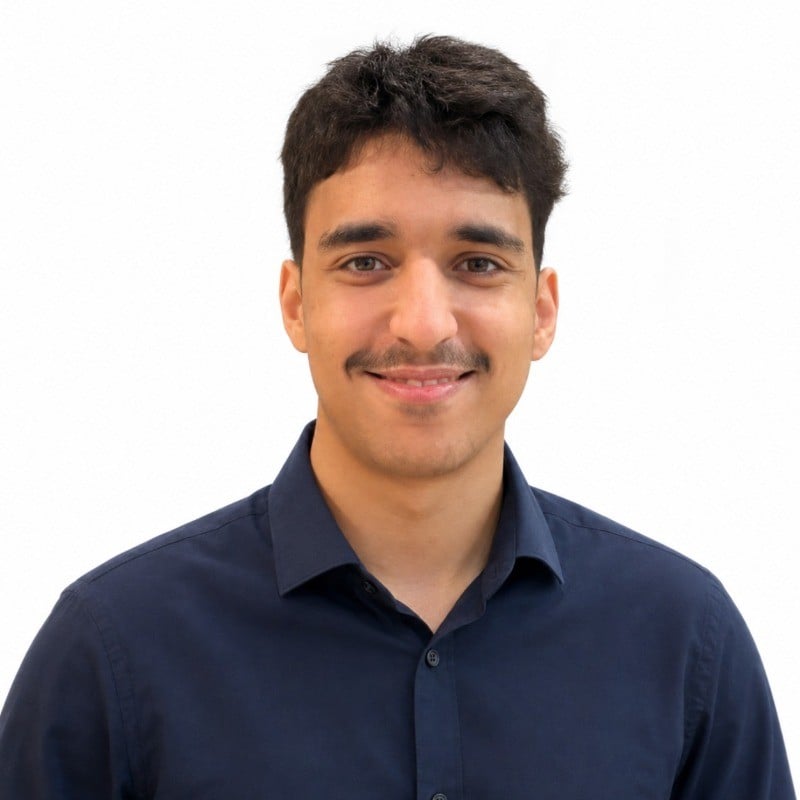
My name is Salah Eddine NEJJARI, and I am from Morocco. I study Actuarial Science and Finance through a double-degree pathway between INSEA in Rabat and ENSAE Paris. My academic journey began with a strong interest in mathematics and gradually moved toward applied mathematics, statistics, risk, and insurance. I chose actuarial science because it combines rigorous quantitative methods with real problems involving uncertainty, financial security, and long-term decision-making. My long-term goal is to pursue doctoral research in actuarial science and build a career combining research, teaching, and applied work.
Eiffel Excellence Scholarship Details
I received the Eiffel Excellence Scholarship from the French Ministry for Europe and Foreign Affairs for my studies at ENSAE Paris. Under the program terms applicable to my application, the scholarship provided a monthly allowance of €1,181 for the two-year study period, together with benefits including international travel and visa-related support. My award supports my ENSAE-INSEA double-degree studies.
Were You Offered Any Other Scholarships?
N/A. The Eiffel Excellence Scholarship was the scholarship I received for this study pathway.
Educational Background
The Moroccan and French systems I studied in do not use a US-style GPA, so rankings and grades are more meaningful in my case. I earned a Scientific Baccalaureate in Mathematics in 2021 with 17.88/20 and Highest Honors. Earlier, I ranked first at the provincial level in a mathematics olympiad. I then completed two years of intensive MPSI/MP preparatory classes and ranked 81st among approximately 3,000 candidates in Morocco's national engineering-school entrance competition (CNC 2023). At INSEA, where I specialized in Actuarial Science and Finance, I ranked first in my first engineering year. This progression from theoretical mathematics to probability, statistics, finance, and actuarial modelling gave me the quantitative foundation and academic coherence required for ENSAE and the Eiffel Scholarship.
How Did You Prepare to Apply to ENSAE Paris and the National Institute of Statistics and Applied Economics (INSEA)?
I treated the application as a coherent academic project rather than a simple school application. I studied ENSAE's curriculum, actuarial pathway, quantitative focus, and research environment, then connected them directly to my training at INSEA and my long-term research goals. At INSEA, I entered the November double-degree selection route based on academic ranking. After being selected, I prepared specifically for the ENSAE interview by building a short presentation around four points: my academic progression, why actuarial science, why ENSAE, and my long-term professional and research plan. The interview was followed by detailed questions on my projects, specialization choice, and future objectives.
How Did You Prepare to Apply to ENSAE Paris and the National Institute of Statistics and Applied Economics (INSEA)?
How Did You Find Information About the Eiffel Excellence Scholarship, ENSAE Paris, and the National Institute of Statistics and Applied Economics (INSEA)?
I first learned about the ENSAE-INSEA double-degree and the Eiffel opportunity through the academic mobility process at INSEA. I then used official institutional and Campus France information, studied the ENSAE program in detail, and spoke with students familiar with the selection process. The most important lesson was understanding that candidates do not submit an Eiffel application independently: the French institution first admits and then nominates the candidate.
Did You Take Any Standardized Tests? If So, How Did You Prepare for Them?
No. I did not take the SAT, ACT, TOEFL, IELTS, GRE, or GMAT for this application.
How Did You Prepare to Apply for the Eiffel Excellence Scholarship?
After my admission to ENSAE, I focused on presenting evidence of excellence and a clear professional project. I prepared an updated CV, transcripts, and official ranking documents, and I carefully structured my career plan. I highlighted my first-place ranking at INSEA, my CNC result, my mathematics background and distinctions, but I also made sure that these achievements formed one coherent story: moving from pure mathematics toward actuarial science, advanced quantitative training, and future research. I also explained precisely why ENSAE was the right next step and how the scholarship would support this trajectory.
How is Your Experience at ENSAE Paris and the National Institute of Statistics and Applied Economics (INSEA)?
My experience at ENSAE Paris has been academically demanding and very rewarding. The program strengthened my training in statistics, quantitative methods, economics, and actuarial science, while exposing me to a highly rigorous academic environment. It has also brought me closer to research and helped me refine my long-term objective of pursuing a PhD.
How Do You Rate ENSAE Paris and the National Institute of Statistics and Applied Economics (INSEA) Academically?
I rate ENSAE very highly academically. Its main strength, in my experience, is the combination of mathematical rigor, statistics, economics, and data-oriented methods. For a student interested in actuarial science and research, this interdisciplinary quantitative environment is particularly valuable.
How Do ENSAE Paris and the National Institute of Statistics and Applied Economics (INSEA) Support International Students?
As an international student and Eiffel scholar, I received support through the administrative procedures linked to enrollment and my scholarship status. ENSAE and Campus France guidance helped me manage key steps related to arrival and scholarship administration. The double-degree framework also made the transition from INSEA to ENSAE clearer.
Are Your Classes Conducted in English or French?
My studies are mainly conducted in French, with some courses, academic materials, and research work in English.
What Did You Pursue After the Eiffel Excellence Scholarship?
I am still progressing through the academic pathway supported by the scholarship. For the 2026-2027 academic year, I have secured an actuarial apprenticeship with AXA GIE while continuing my studies at ENSAE. My next objective is to deepen my actuarial expertise and then pursue doctoral research. In the long term, I want to work at the intersection of actuarial science, quantitative risk research, and higher education.
Would Potential Students Have Any Problems Not Knowing French?
French is very helpful and, for many courses and administrative interactions, important. A strong quantitative background can help academically, and English is widely used in research, but I would still advise international students to develop practical French before or during their studies. It makes both academic integration and daily life much easier.
What Do You Think Made Your Application Stand Out?
consistent academic excellence, a coherent quantitative trajectory, and a precise long-term project. My record included 17.88/20 in the Baccalaureate, a national competitive-exam rank of 81st among roughly 3,000 candidates, and first place in my first year at INSEA. More importantly, I connected these results to a clear progression from mathematics to actuarial science and to a concrete ambition to pursue research and teaching. I did not present ENSAE or Eiffel as isolated opportunities; I presented them as the logical next step in a long-term academic plan.
What Would You Have Done Differently if You Were Going Through the Process Again?
I would have started organizing the documentary evidence of my achievements even earlier. Official ranking certificates, distinctions, and supporting documents can take time to obtain. I would also have contacted more former Eiffel scholars earlier in the process to learn from their experience and refine my application narrative sooner.
What Advice Would You Give Those Looking to Apply for a Similar Scholarship?
Start early and build a coherent story. Excellent grades matter, but do not submit a collection of achievements without explaining the direction behind them. Document your rankings and distinctions with official evidence, research the exact program you are targeting, and connect its strengths to your previous studies and future goals. Be precise about what you want to study, the problems you want to work on and what you plan to do after graduation. For Eiffel applicants, also remember that the French institution submits the application, so admission and institutional nomination are essential first steps. Finally, prepare seriously for interviews: know your CV, your projects, your chosen specialization and your long-term plan.
Want to submit your
scholarship journey?
Submit Your Story Here!
More Scholarship Recipients
My name is Shah Hussain, and I am from Khyber Pakhtunkhwa, Pakistan. I completed my Bachelor’s in Psychology at the Univer .... Read more
I am June from the Philippines. I am an educator for Social Sciences and Humanities. I recently earned my Master in Southeas .... Read more
Hi, my name is Abdul Hafeez, and I come from a small town called Nasirabad in Sindh, Pakistan. Currently, I am pursuing a ma .... Read more
Leave A Comment