
How Ramila Jabbarzade, an Azerbaijani Scholar, Secured a Fully Funded Master’s in Biotechnology Through the Global Korea Scholarship
University: Hannam University
Degree: Master’s in Biological Systems Science and Biotechnology
Previous Education: Bachelor’s in Biology at Baku State University
Scholarship: Global Korea Scholarship (GKS) – Fully Funded (Tuition Support, Monthly Living Allowance of Approximately KRW 1,400,000, Korean Language Training and Settlement Benefits)
Social Media
The Journey
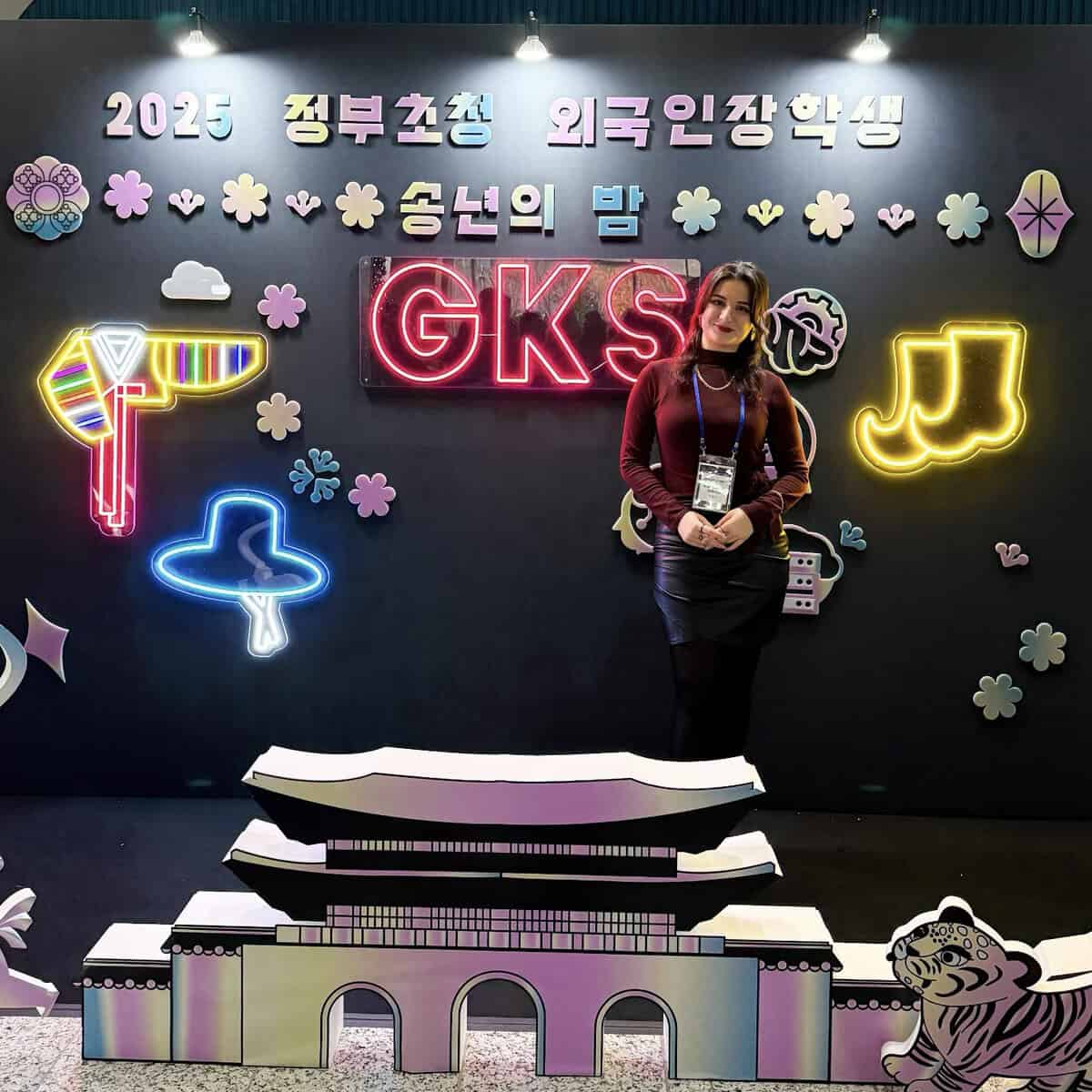
I am Ramila Jabbarzade, and I am from Azerbaijan. I am a holder of the Global Korean Scholarship 20024 and am pursuing a master’s degree in Biological Systems Science and Biotechnology at Hannam University in South Korea. In my current studies at the Molecular Disorders of Brain Diseases laboratory, I am exploring cellular processes and molecular mechanisms related to brain disorders, with the aim of deepening my understanding of disease development at the molecular level. My interest in biological sciences has grown from a curiosity about how life functions at the molecular and cellular levels, particularly how changes in these processes can lead to diseases. I chose to pursue graduate studies to deepen my understanding of molecular biology and biotechnology and gain hands-on experience in scientific research. I am especially interested in exploring the molecular mechanisms underlying neurological disorders and understanding how cellular processes contribute to disease development. Through my master’s studies, I aim to strengthen my research abilities, expand my scientific knowledge, and build a foundation for a future career in research.
Global Korea Scholarship Details
I was awarded the Global Korea Scholarship (GKS) 2024, a prestigious scholarship program funded by the South Korean government and administered by the National Institute for International Education (NIIED). Through this scholarship, I was given the opportunity to pursue a yearlong Korean language program and a master’s degree in South Korea. The scholarship provides financial support for international students, including a monthly living allowance of approximately KRW 1,400,000 (for graduate students), tuition support, and benefits related to Korean language training and settlement, according to the applicable scholarship guidelines. It has allowed me to continue my education in an international academic environment, focus on my research, and develop my scientific knowledge and skills without bearing the full financial burden of studying abroad. Beyond financial assistance, the GKS program offers an opportunity to experience Korean culture, build international connections, and collaborate with researchers from diverse academic backgrounds.
The Global Korea Scholarship (GKS) application process requires careful preparation and attention to detail. There are two main application tracks: the Embassy Track, through which applicants apply via the Korean embassy in their country of citizenship, and the University Track, through which applicants apply directly to a designated Korean university. For the Embassy Track, applicants must submit the required documents, which generally include academic transcripts and certificates, a personal statement, a study plan, recommendation letters, and other supporting documents specified in the annual guidelines. Applicants are evaluated by the embassy and, if successful, proceed to subsequent selection stages conducted by the National Institute for International Education (NIIED) and the university admission process. Requirements, document authentication procedures, university choices, and deadlines can vary by year and country, so it is essential to follow the official GKS guidelines and the Korean embassy’s announcements carefully. Applicants should also research universities and professors in advance, prepare a clear and realistic study plan, and explain how their academic background and future goals align with their chosen field. Starting early and organizing all documents before the deadline can help make the application process more manageable.
Educational Background
I graduated with a Bachelor’s degree in Biology from Baku State University in Azerbaijan, where I completed an English-taught program with a GPA of 93.5. Throughout my undergraduate studies, I developed a strong foundation in biological sciences and became particularly interested in molecular biology, biotechnology, and the mechanisms that regulate cellular functions. Studying a wide range of biological topics helped me understand the connections between molecular processes, cell function, genetics, and human health.
My undergraduate education also strengthened my analytical thinking, scientific curiosity, and ability to understand complex biological concepts. In addition, studying in an English-taught program prepared me to access international scientific literature, understand research publications, and communicate scientific information in an academic environment. These experiences encouraged me to pursue advanced education and gain practical research experience beyond theoretical knowledge.
I chose to continue my studies in the biological science field because I wanted to explore biological processes in greater depth, particularly the molecular and cellular mechanisms involved in disease development. My current graduate studies allow me to build upon my undergraduate knowledge through laboratory research and develop the experimental skills necessary for a future career in molecular biology and biomedical research.
How Did You Prepare to Apply to Hannam University?
I began by researching universities in South Korea that offered graduate programs related to my academic background and research interests. Rather than choosing universities based only on their rankings, I focused on the research areas of individual professors, the ongoing projects in their laboratories, and whether their research aligned with my interests in molecular biology and biotechnology. I reviewed university websites, graduate program information, and laboratory publications to identify suitable institutions. I also compared admission requirements, available research opportunities, and the academic environment before making my final choices.
How Did You Find Information About Global Korea Scholarship and Hannam University?
I mainly used the official Global Korea Scholarship (GKS) website and the website of the Korean Embassy in Azerbaijan to find reliable information about scholarship requirements, application procedures, deadlines, and participating universities. I also explored university websites to learn about graduate programs, faculty members, and laboratory research. I recommend checking the official GKS guidelines for the specific application year because eligible universities, quotas, required documents, and procedures may change.
Did You Take Any Standardized Tests? If So, How Did You Prepare for Them?
Although the GKS application does not generally require applicants to submit an English-language proficiency certificate as a universal requirement, I decided to strengthen my application by taking the IELTS examination, achieving an overall score of 7.0. I prepared intensively for approximately two months by practicing all four sections: Listening, Reading, Writing, and Speaking. My preparation included completing timed practice tests, reviewing grammar and academic vocabulary, analyzing mistakes, and practicing essay writing and speaking responses regularly. I also familiarized myself with the examination format and worked on time management to improve my performance. My advice is to begin preparation early and follow a structured study plan based on your weakest areas.
How Did You Prepare to Apply for the Global Korea Scholarship?
I applied through the GKS Embassy Track, which allows applicants to submit their applications through the Korean embassy in their home country. I carefully reviewed the official application guidelines and prepared the required documents, including my academic records, personal statement, study plan, and supporting documents according to the requirements for that year. I also researched participating universities and selected institutions based on their graduate programs, laboratory research, and alignment with my academic interests. I focused on explaining how my previous education, academic achievements, and future research goals connected with the opportunities offered by the scholarship. Since the Embassy Track involves an embassy-level selection process followed by further selection stages, it is important to follow the official instructions carefully and prepare documents well before the deadline.
The Global Korea Scholarship (GKS) application: There are two main application tracks: the Embassy Track, through which applicants apply via the Korean embassy in their country of citizenship, and the University Track, through which applicants apply directly to a designated Korean university. For the Embassy Track, applicants must submit the required documents, which generally include academic transcripts and certificates, a personal statement, a study plan, recommendation letters, and other supporting documents specified in the annual guidelines. Applicants are evaluated by the embassy and, if successful, proceed to subsequent selection stages conducted by the National Institute for International Education (NIIED) and the university admission process. Requirements, document authentication procedures, university choices, and deadlines can vary by year and country, so it is essential to follow the official GKS guidelines and the Korean embassy’s announcements carefully
How is Your Experience at Hannam University?
My experience at Hannam University has been both rewarding and challenging. Studying in South Korea has allowed me to experience a different academic environment, meet people from diverse backgrounds, and develop my research skills. However, adapting to a different education system, teaching methods, and academic expectations has required time and effort. I have also had to adjust to differences between my previous educational background and the structure of graduate-level research in Korea. Working in a research laboratory has been particularly valuable because it allows me to gain practical experience, develop experimental skills, and learn more about scientific research beyond theoretical knowledge.
How Do You Rate Hannam University Academically?
I consider Hannam University a quite good institution for my academic and research development because it provides opportunities to pursue graduate studies and participate in laboratory-based research. For me, the quality of supervision, the relevance of research opportunities, and the possibility of developing specialized knowledge are important factors when evaluating a university academically.
Are Your Classes Conducted in English or Korean?
My university classes are conducted in Korean. This can be challenging for international students who are not yet proficient in the language. However, my research activities in the laboratory can be conducted in English, which helps me understand scientific concepts and communicate about my research more effectively. Students considering studying in South Korea should check the language of instruction for their specific program and understand that the language used in regular classes may differ from the language used in laboratory research.
Would Potential Students Have Any Problems Not Knowing Korean?
Yes, not knowing Korean can create difficulties for international students in South Korea, particularly when classes, examinations, university announcements, and administrative procedures are conducted in Korean. Even when research activities can be conducted in English, students may still encounter language barriers in daily university life and communication with other students or staff. Learning Korean before arriving or continuing to study it after arrival can make a significant difference. As well as, GKS program is also offering a yearlong Korean language program which can help students to learn the Korea n language even from the scratches and reach the certain level before the start of their degree program.
What Do You Think Made Your Application Stand Out?
I believe my strong academic background, clear research interests, and motivation to pursue graduate studies helped strengthen my application. Even though I didn’t have any standout background experience, I had been participated different seminars related to my major which helped me to come up with research proposal. In addition, I achieved an IELTS score of 7.0, demonstrating my English-language proficiency. I believe that presenting a clear connection between my previous education, research interests, and future plans helped demonstrate that I had a well-defined purpose for pursuing the scholarship.
What Would You Have Done Differently if You Were Going Through the Process Again?
If I were going through the application process again, I would spend more time researching the specific research directions of professors and laboratories before selecting universities. I would also prepare earlier for the transition to studying in South Korea, particularly by learning more Korean and familiarizing myself with the country's graduate education system. I believe these steps would help me make even more informed decisions and adjust more smoothly to academic and daily life.
What Advice Would You Give Those Looking to Apply for a Similar Scholarship?
My main advice is to start early, read the official GKS guidelines carefully, and organize all required documents well before the deadline. Applicants should research the Embassy Track and University Track to determine which application route best suits their circumstances, while checking the current year's eligibility rules and selection procedures. GKS requirements can differ by application year and track, and some universities or departments may have additional language requirements. When choosing universities, do not focus only on rankings; look at professors, laboratory research, and how well the program matches your academic interests. Prepare a clear and realistic study plan that connects your previous education with your future goals. Finally, be prepared for cultural and language differences, remain flexible, and remember that a scholarship application should communicate not only your achievements but also your motivation and direction.
Want to submit your
scholarship journey?
Submit Your Story Here!
More Scholarship Recipients

My name is Syed Abdullah Shah, and I am from Pakistan. I completed my bachelor's degree in Applied Geology in my home countr .... Read more

My name is Hasnain Hyder Shah, and I am from Umerkot, Sindh, Pakistan. I am a first-generation lawyer who has always believe .... Read more
I am Bevan Narinesingh, an Attorney-at-Law from Trinidad and Tobago and the Executive Director of the Trinidad and Tobago Fa .... Read more
Leave A Comment