
Erasmus Mundus Joint Master’s Degree Programme Scholarship Scholar Nilufar Khalikulova from Uzbekistan Shares Her Journey of Securing a Fully Funded Master's at the University of Córdoba, Spain
University: University of Córdoba; Polytechnic Institute of Lisbon; Marmara University
Degree: Erasmus Mundus Joint Master’s Degree in Play, Education, Toys and Languages (PETaL)
Previous Education: Bachelor’s degree in Translation Theory and Practice, Alisher Navo’i Tashkent State University of Uzbek Language and Literature
Scholarship: Erasmus Mundus Joint Master’s Degree Programme (EMJMD) Scholarship – Funding (Stipend)
Other Offered Scholarships (if any): National Scholarship Programme of the Slovak Republic – Matej Bel University (Exchange Studies)
Social Media
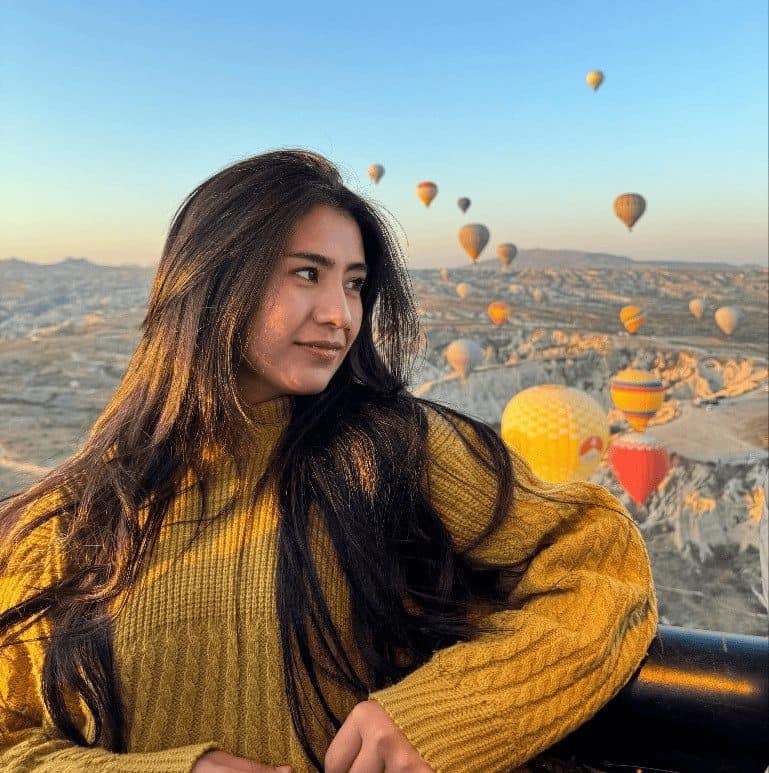
The Journey
Hello, I’m Nilufar Khalikulova. I come from a small city near Tashkent, Uzbekistan. I completed the Erasmus Mundus Joint Master’s Degree in Play, Education, Toys and Languages (PETaL) from 2023 to 2025, studying in Spain, Portugal, and Türkiye at the University of Córdoba, Polytechnic Institute of Lisbon, and Marmara University.
Alongside my academic journey, I have been closely involved in working with children, especially in inclusive education settings, which shaped my strong interest in early childhood development and special education through the European Solidarity Corps, an American exchange program, and internship opportunities within the Erasmus Mundus scholarship.
Educational Background
Before Erasmus Mundus, I completed my bachelor’s degree in Translation Theory and Practice at Alisher Navo’i Tashkent State University of Uzbek Language and Literature, specializing in scientific-technical translation.
I self-prepared for IELTS and scored 7.5 overall. I also participated in an exchange program at Matej Bel University, which strengthened my ability to adapt to international academic environments, different cultures, and independent learning systems.
How Did You Prepare to Apply to the University of Córdoba, Polytechnic Institute of Lisbon, and Marmara University?
I carefully researched Erasmus Mundus programmes and chose PETaL because it combined early childhood education, multilingualism, and inclusion in a practical and interdisciplinary way.
While preparing my application, I focused on connecting my academic background in languages with my real experience working with children. My teaching experience, especially in inclusive settings, helped me shape a clear and authentic motivation letter.
How Did You Prepare to Apply for the Erasmus Mundus Joint Master’s Degree Programme?
Before Erasmus Mundus, I applied for the National Scholarship Programme of the Slovak Republic for my exchange studies.
For Erasmus Mundus, I prepared my application very carefully over several months, including my CV, motivation letter, and academic narrative. The program is highly competitive, so I focused on presenting a strong combination of academic performance, practical teaching experience, and a clear research direction in inclusive education.
What strengthened my application was not only academic achievement but also real experience working directly with children in educational settings.
Were You Offered Any Other Scholarships?
N/A - I was awarded the National Scholarship Programme of the Slovak Republic for my exchange studies at Matej Bel University.
Later, I received the Erasmus Mundus Joint Master’s Degree Programme (EMJMD) scholarship for PETaL, meaning I benefited from two different scholarships at separate stages of my academic journey.
Could You Briefly Discuss the Erasmus Mundus Program You Pursued and the Specific Field of Study It Focused On?
PETaL is an interdisciplinary programme focused on early childhood education, play-based learning, toys, multilingualism, and inclusive education. It connects education theory with real-world child development practices across different cultural contexts.
More information about the programme: https://web.em-petal.eu/
During my studies, I also applied what I was learning in real life by working closely with children, including those with special needs. I was regularly in inclusive settings and observed children’s development, which helped me understand child behavior beyond theory.
My master’s thesis focused on preventing unjustified aggression among children from immigrant families and exploring how inclusive educational environments support emotional development and behavior regulation.
What Did You Pursue After the Erasmus Mundus Joint Master’s Degree Programme?
While completing my thesis, I worked in a kindergarten in Bad Essen, Germany. After coming back to Uzbekistan, I began working as an Academic Advisor at Webster University in Tashkent and will also begin teaching in the upcoming academic year.
At the same time, I continue to stay connected to research and education-related projects because I still see myself developing further in the field of inclusive and early childhood education.
How Did the Cost of Living Vary Across the Countries You Studied In? Which Country Was the Most Affordable or Expensive, and How Did You Manage Financially?
The cost of living differed across countries. For me, Spain (Córdoba) was the most affordable, while Portugal (Lisbon) was more expensive, and Türkiye (Istanbul) was moderate. I managed my budget by sharing accommodation, cooking at home, and planning expenses carefully, supported by the Erasmus Mundus stipend.
Did You Face Any Language Barriers, and if so, How Did You Overcome Them? Did the Language of Instruction Change from One Country to Another?
The program was taught in English, so I did not have major academic challenges. However, in everyday life, I sometimes faced language barriers in Spain and Portugal, where local languages were commonly used. In Istanbul, I adapted more easily, as my native language is linguistically close to Turkish, which made communication much smoother.
Would You Recommend the Erasmus Mundus Program to Others? What Advice Would You Give to Someone Considering This Scholarship?
Yes, I would definitely recommend it. Erasmus Mundus is a transformative academic and personal experience.
My advice is to be honest and specific in your application. Real experience matters a lot. For me, working directly with children, especially teaching children with special needs, played a key role in shaping my academic identity.
Applicants should clearly show their motivation, not just academic achievements, but also practical engagement and personal commitment.
What Would You Have Done Differently if You Were Going Through the Process Again?
If I could change anything, I would start networking earlier and build academic connections in each country more actively. I would also begin learning local languages before arriving to better integrate into daily life.
Want to submit your
scholarship journey?
Submit Your Story Here!
More Scholarship Recipients
My name is Anna Nana Agyeiwaa Mensah, a professional nurse from Ghana. My interest in Global Health grew out of my experienc .... Read more
My name is Ratul Chakraborty, and I am from Bangladesh. My background is interdisciplinary, actually. Before coming to Germa .... Read more
My name is Mabel Zuñiga. I am a graduate student from Panama pursuing a Master’s degree in Public Policy at the Universit .... Read more
Leave A Comment