
How I Secured a Fully Funded Master's at Imperial College London, United Kingdom Through the Commonwealth Master's Scholarship
University: Imperial College London
Degree: MSc Cardiovascular and Respiratory Healthcare
Previous Education: Bachelor of Science in Physician Associate, PSG Institute of Medical Sciences and Research (affiliated with The Tamil Nadu Dr. M.G.R. Medical University)
Scholarship: Commonwealth Master’s Scholarship 2026 – Full Funding (Tuition Fees, Monthly Living Stipend, Return Airfare, Study-Travel Grant, Thesis Grant, and Other Eligible Support)
Other Offered Scholarships: Imperial College London India Future Leaders Scholarship – GBP 10,000 toward tuition fees; Chief Minister of Tamil Nadu Overseas Scholarship – INR 36 Lakhs
Social Media
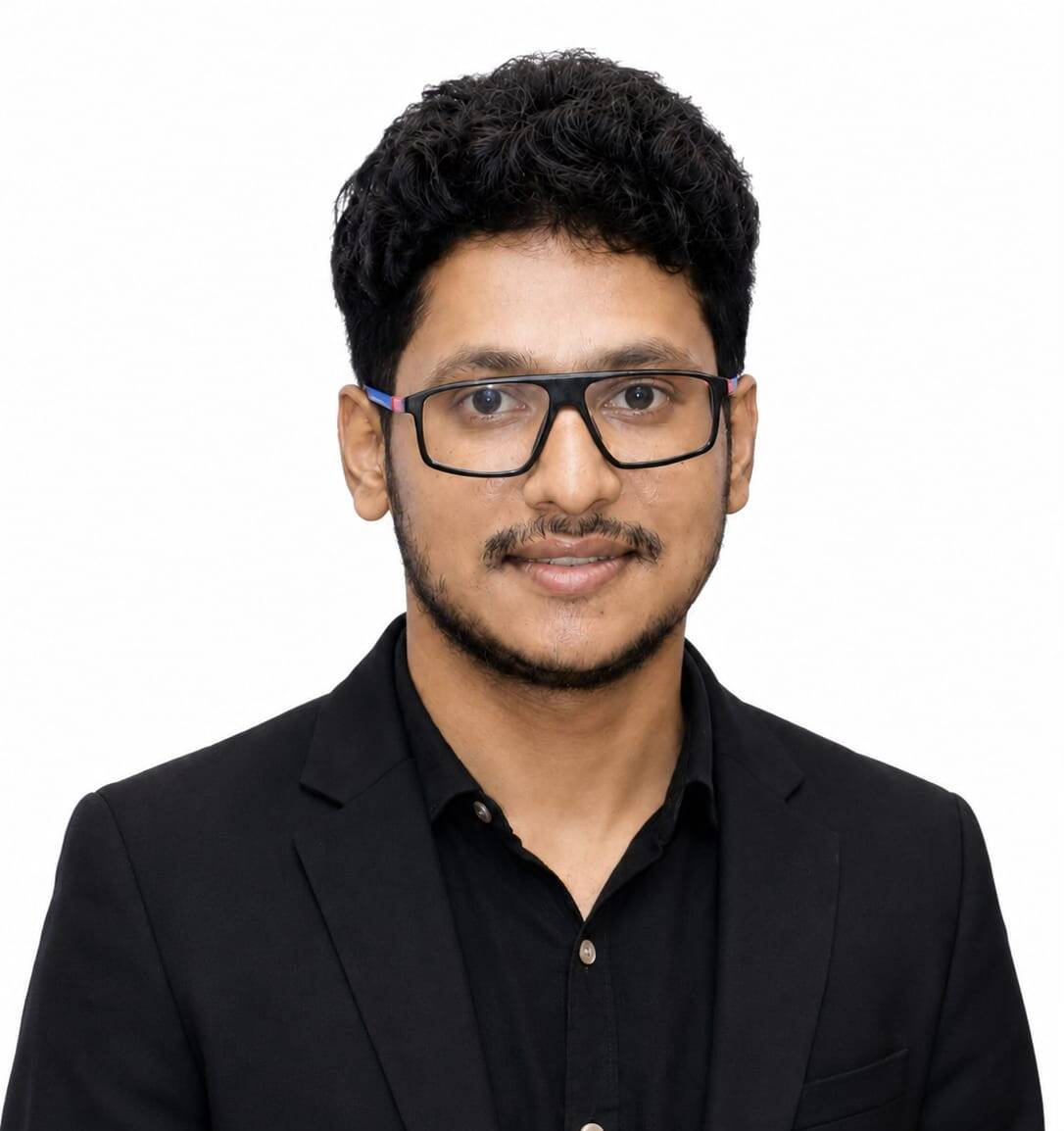
The Journey
My name is Muhammed Suhail Sikkander Basha, and I am from Coimbatore, Tamil Nadu, India. I trained as a Physician Associate at PSG Institute of Medical Sciences and Research, where my education was rooted in direct patient care. Across more than 4,500 hours of supervised clinical training, I worked in areas including cardiology, respiratory medicine, emergency medicine, neurology, nephrology, gastroenterology, and critical care. Those settings taught me that strong healthcare depends not only on individual clinical decisions, but also on research, education, teamwork, and systems that make good decisions easier to repeat.
In September 2026, I will begin the MSc Cardiovascular and Respiratory Healthcare at Imperial College London. I chose this field because cardiovascular and respiratory conditions are among the clinical problems I encountered repeatedly during training, and because they sit at the meeting point of patient care, diagnostics, research, quality improvement, and population health. I want to become a clinician-researcher and educator who can translate scientific evidence into better care pathways and stronger training in India.
For me, postgraduate study is not an escape from clinical practice. It is a way to return to practice with better questions, stronger methods and a wider capacity to contribute.
Commonwealth Master's Scholarship Details
Which scholarship did you receive, where will you study, and what does it cover?
I received the Commonwealth Master's Scholarship 2026, a UK Government-funded award administered by the Commonwealth Scholarship Commission in the United Kingdom. The scholarship will support my full-time MSc Cardiovascular and Respiratory Healthcare at Imperial College London, delivered through the National Heart and Lung Institute. My award is tenable from 26 September 2026 to 30 September 2027.
My confirmed support includes the full overseas tuition fee of GBP 47,300, a monthly living stipend of GBP 2,000, return airfare, a GBP 200 study-travel grant, and a GBP 225 thesis grant, together with other eligible support under the scholarship terms. The financial support makes the degree possible; the development purpose makes the opportunity meaningful. The award asks not only what I will learn, but how that learning will create value after I return home.
Were You Offered Any Other Scholarships?
Yes. I was also selected for Imperial College London's India Future Leaders Scholarship for the 2026/27 academic year, valued at GBP 10,000 toward tuition fees. (Unutilized) I also received the Chief Minister of Tamil Nadu Overseas Scholarship award of 36 Lakhs INR. (Unutilized)
I am grateful for every recognition, but the Commonwealth Master's Scholarship was the strongest fit because it combined comprehensive funding with a clear development mandate. It treated study not as a private benefit, but as preparation for public contribution.
Educational Background
I completed a Bachelor of Science in Physician Associate at PSG Institute of Medical Sciences and Research, affiliated with The Tamil Nadu Dr. M.G.R. Medical University. I graduated with 75.13 per cent, First Class with Distinction, and finished as the course topper. The combination of classroom learning and extensive supervised clinical exposure trained me to connect physiology, diagnosis, treatment, and follow-up rather than seeing them as isolated subjects.
Beyond grades, I deliberately developed the research and communication skills that my future work would require. My academic record includes research presentations, publications, and conference work on topics such as Physician Associate workforce distribution, sepsis recognition, coronary imaging, patient-ventilator synchrony, point-of-care ECG, and health technology. I received the National Student of the Year Award from the Indian Association of Physician Associates and a gold medal for a scientific paper presentation.
Community engagement kept this work grounded. I contributed to preventive-health education reaching more than 5,000 students, along with cancer-awareness, HIV-awareness, and rural-health activities. These experiences prepared me to present a scholarship application in which academic merit, clinical exposure, research, and service supported the same direction rather than appearing as unrelated achievements.
How Did You Prepare to Apply to Imperial College London?
I began by defining the capability I needed, not by collecting famous university names. I wanted deeper training in cardiovascular and respiratory science, research design, quality improvement, new technologies and the translation of evidence into practice. I then compared postgraduate programmes according to their modules, research environment, teaching approach and relevance to the problems I had seen during clinical training.
Imperial's programme stood out because it joined advanced clinical knowledge with research methods and an original research project. Once I understood that fit, I worked backwards through my own evidence: clinical rotations, scientific presentations, publications, community initiatives, leadership and advocacy for Physician Associate education. My statement answered four connected questions: Why this subject? Why this course? Why now? What will change after I return? I revised until every paragraph contributed evidence or direction. A university application should not be a complete autobiography; it should be a precise argument for a specific next step.
How Did You Find Information About Commonwealth Master's Scholarship and Imperial College London?
My search began before an application deadline forced me to act. In August 2024, before my final year, I reviewed my career direction and decided that I wanted to integrate clinical practice, research, and academic work. Between August and December 2024, I compared countries and postgraduate routes. By January 2025, I was actively searching for fully funded opportunities and identified the Commonwealth Master's Scholarship.
I used official university, scholarship, and government websites for rules, eligibility, and deadlines. I used conversations with past and present scholars for context: how they selected courses, interpreted development impact, worked with referees and managed the uncertainty after submission. I treated every informal suggestion as a question to investigate, not a fact to repeat. That distinction protected me from building a strategy around hearsay.
Did You Take Any Standardized Tests? If So, How Did You Prepare for Them?
Yes. I scored 125 out of 160 on the Duolingo English Test, aligned with CEFR B2. I did not take the SAT, ACT, GRE, or GMAT because they were not required for my programme.
My preparation relied on repeated timed practice rather than occasional long study sessions. I trained myself to listen for meaning rather than isolated words, speak in complete and organised responses, read quickly without sacrificing accuracy, and write with a clear beginning, middle, and end. After each practice test, I classified the errors instead of looking only at the total score. That turned every mock test into a diagnosis and made improvement more deliberate.
Serving as a Duolingo English Test ambassador has allowed me to share a wider lesson: language preparation is not merely about clearing an admission condition. It trains applicants to explain ideas, respond under pressure and enter an international classroom with confidence. Requirements can change, so applicants should always verify the current rules for their chosen programme.
How Did You Prepare to Apply for the Commonwealth Master's Scholarship?
I separated preparation from submission. Preparation began months earlier; submission was only the final assembly. When my internship began in May 2025, I started organising academic, personal and supporting documents. After the Indian nominating agency published its call in July, I approached mentors and faculty members for references in August. I submitted through the CSC system on 2 September 2025 and through the Ministry of Education's SAKSHAT portal on 24 October 2025. The Ministry nomination arrived on 13 January 2026, provisional selection on 28 May, and final confirmation on 10 July.
The essays were the centre of the application. I built them around one connected chain: clinical exposure showed me a problem; research taught me how to examine it; Imperial would provide the advanced capabilities I still needed; returning to India would let me translate and multiply those capabilities through patient care, education, research and institutional development.
I also briefed referees early. I shared the programme, scholarship criteria, deadlines and examples of work they had directly observed. A strong reference is not a list of adjectives from the most senior person available. It is credible evidence from someone who can describe how the applicant thinks, works and contributes.
How is Your Experience at Imperial College London?
I have not yet begun the programme, so I cannot honestly describe the day-to-day student experience. At the time of writing, I am completing pre-arrival preparations for a course that begins on 26 September 2026. My experience so far has been one of careful planning: understanding the programme, award conditions, and transition to postgraduate study. I would prefer to offer a first-hand assessment after I have studied and participated in the Imperial community.
How Do You Rate Imperial College London Academically?
I am not yet in a position to provide a first-hand rating. My decision was based on the academic structure I could verify before enrolment. The MSc is delivered through the National Heart and Lung Institute and combines cardiovascular and respiratory science, research methods, healthcare quality, new technologies and an original research project. That combination matched the bridge I was seeking between clinical practice and research-led improvement. I will reserve a personal rating until I have experienced the teaching, assessment and research supervision directly.
How Does Imperial College London Support International Students?
Because I have not yet arrived, I cannot assess international-student support from lived experience. Imperial provides pre-arrival information and guidance, but the quality of support is best judged through actual use rather than website descriptions. After arrival, I will be able to comment more meaningfully on orientation, academic advising, wellbeing, accommodation and the practical transition to life in London.
What Did You Pursue After the Commonwealth Master's Scholarship?
The scholarship has not yet begun, so this answer describes my intended path rather than a completed outcome. After the MSc, I plan to return knowledge to practice in India. My immediate aim is to strengthen my contribution to cardiopulmonary care and clinical research. Over time, I want to combine patient-facing work with research collaboration, medical education, quality-improvement projects and the responsible use of emerging diagnostic technologies.
I describe the plan in three words: learn, translate and multiply. Learn means developing stronger scientific and research capability at Imperial. Translate means adapting that learning to Indian clinical, educational and resource settings instead of importing it unchanged. Multiply means sharing skills through teaching, protocols, research teams, advocacy and future mentorship. A one-year degree cannot solve a national health challenge, but it can equip someone to make better contributions and build teams whose work continues after the scholarship ends.
What Do You Think Made Your Application Stand Out?
I cannot know every discussion that took place during selection, so I answer this with humility: I believe coherence made the difference. My grades, clinical training, research, publications, presentations, leadership, community service and advocacy were not presented as separate trophies. They supported one case.
Clinical exposure had shown me cardiovascular and respiratory needs in practice. Research had begun to teach me how to investigate those needs. My chosen programme supplied capabilities I could not yet develop fully in my existing path. My return plan explained how those capabilities could benefit care, education, research and health-system capacity in India. In short, evidence showed readiness, relevance explained the course, and the return plan converted opportunity into public value.
My media record describes the award as marking several firsts for my profession and institutions. I am grateful for that visibility, but I did not build the application around being first. I built it around being prepared and useful. A first matters only if it makes later journeys easier for other Physician Associates and allied health students.
What Would You Have Done Differently if You Were Going Through the Process Again?
I would create an evidence bank even earlier. For every meaningful project, clinical responsibility, presentation, community activity, and leadership contribution, I would record the date, context, action, result, and what changed in my thinking. Reconstructing impact close to a deadline wastes time and weakens detail.
I would also complete English testing and university research earlier, give referees more lead time, and write the return plan before drafting the scholarship essays. The return plan is not a ceremonial final paragraph. It is the logic that should shape the subject choice, course selection, evidence, and development-impact case from the beginning.
What Advice Would You Give Those Looking to Apply for a Similar Scholarship?
Start with a problem, not with a scholarship. Identify a challenge you understand through study, work or service. Define who is affected, where the gap appears, and why it matters. Funding should enter the story after the problem, not before it.
Build an evidence bank. Record the situation, your action, the result, and the lesson from each meaningful experience. Choose a course by capability: identify what your current path cannot yet teach you, then find the modules, research opportunities and teaching environment that address those gaps. A university's reputation may attract attention; course-level fit wins the argument.
Make every essay distinct but connected. Academic merit, study plans, leadership, development impact and career goals should reveal different sides of the same candidate. Give referees evidence and time. Ask people who have observed your work closely, and help them understand the programme and scholarship without writing praise for them to sign.
Write a return plan with stages. Explain what you can do in the first year after study, what may require three to five years, and what belongs to a longer horizon. Finally, run a consistency check across every form, CV, reference and application. Dates, scores, award titles, and institution names should agree everywhere.
Do not copy another scholar's language or mistake decorative writing for clear thinking. Someone else's story can teach you structure, but it cannot supply your reasons. Do not apologise if your institution is not globally famous or your profession is under-recognised. Make your evidence precise, your contribution legible and your purpose unmistakably your own.
The application may carry one name, but its purpose should reach far beyond one person
Want to submit your
scholarship journey?
Submit Your Story Here!
More Scholarship Recipients
My name is Ian Cawich. I’m a proud Belizean, specifically from a small northern town called Orange Walk, which serves as t .... Read more
My name is Miguel Felipe Arévalo Castiblanco, and I'm originally from Colombia. I'm currently a PhD candidate in Electrical .... Read more
My name is Brendon Munashe Mahere, and I am from Zimbabwe. I graduated from Al Akhawayn in 2024 with a BSc in Engineering an .... Read more
Leave A Comment