
How Md. Shah Poran Shuvo, a Bangladeshi Scholar, Secured a Fully Funded PhD at Chiba University Through the MEXT Scholarship
University: Chiba University, Japan
Degree: PhD in Advanced Medical and Pharmaceutical Sciences, October 2026–September 2030
Previous Education: BSc (Honours) and master’s in Biochemistry and Molecular Biology at Mawlana Bhashani Science and Technology University, Bangladesh; BSc CGPA 3.87/4.00; master’s CGPA 3.95/4.00 up to the second semester of the final academic year
Scholarship: Japanese Government (MEXT) Scholarship, University Recommendation (General Category) — tuition exemption and ¥148,000 monthly stipend, with other benefits according to MEXT regulations
Other Offered Scholarships: Chiba University Merit Scholarship for doctoral studies, offered before MEXT; currently studying under MEXT
Social Media: linkedin.com/in/shahporanshuvo/
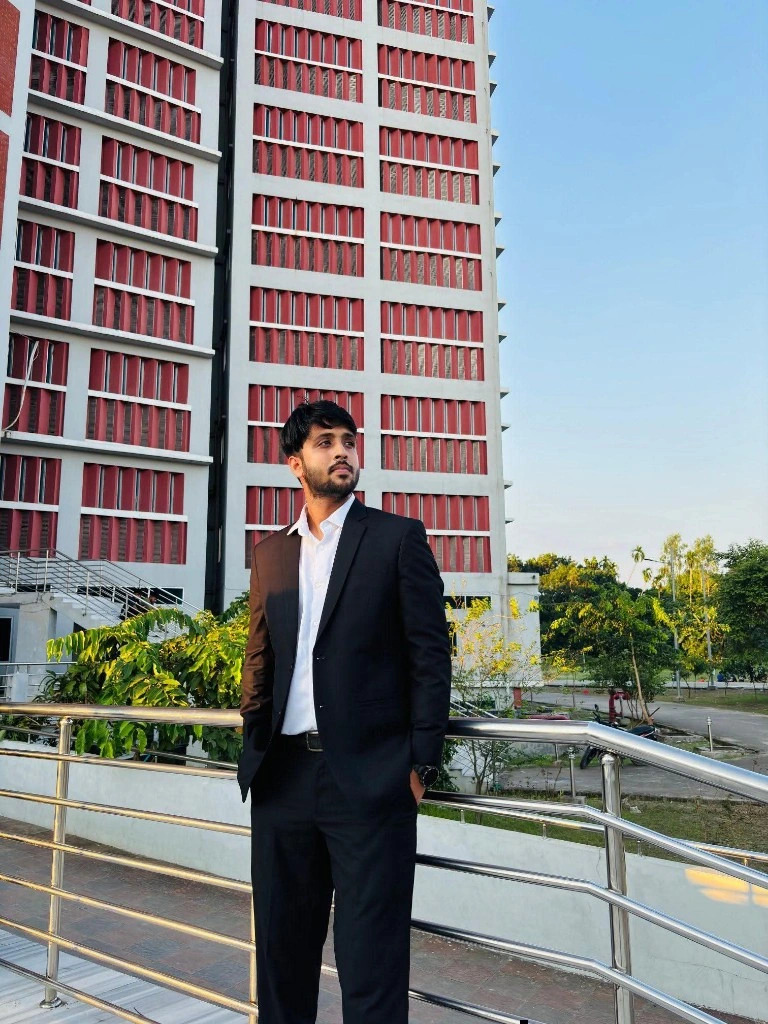
The Journey
My name is Md. Shah Poran Shuvo, and I am from Bangladesh. I am currently pursuing a PhD in Advanced Medical and Pharmaceutical Sciences at the Graduate School of Medical and Pharmaceutical Sciences, Chiba University, Japan, under the Japanese Government (MEXT) Scholarship.
My academic background is in Biochemistry and Molecular Biology. I completed both my undergraduate and master's degrees at Mawlana Bhashani Science and Technology University (MBSTU), Bangladesh. During my academic journey, I developed a strong interest in molecular biology, cancer research, and drug discovery.
My involvement in research projects gradually motivated me to pursue doctoral studies in an international research environment. I hope to deepen my expertise in biomedical sciences, particularly cancer research and immunology, and eventually contribute to strengthening biomedical research and healthcare in Bangladesh.
MEXT Scholarship Details
- Scholarship: Japanese Government (MEXT) Scholarship
- Selection route: University Recommendation (General Category)
- Institution: Chiba University, Japan
- Degree: PhD in Advanced Medical and Pharmaceutical Sciences
- Study period: October 2026 – September 2030
- Monthly stipend: ¥148,000
- Other benefits: Tuition exemption and other benefits according to MEXT scholarship regulations.
Receiving the MEXT Scholarship has been a significant milestone in my academic journey. It has provided me with the opportunity to pursue doctoral studies at a Japanese national university and focus on developing my research career.
Other Offered Scholarships
Yes. Before receiving the Japanese Government (MEXT) Scholarship, I was offered the Chiba University Merit Scholarship for my doctoral studies at Chiba University.
Subsequently, I was awarded the MEXT Scholarship through the University Recommendation (General Category) route. I am currently pursuing my PhD under the MEXT Scholarship.
Educational Background
I completed my Bachelor of Science (Honours) in Biochemistry and Molecular Biology at Mawlana Bhashani Science and Technology University (MBSTU), Bangladesh, with a CGPA of 3.87/4.00, securing second position in the order of merit.
I subsequently completed the academic requirements and thesis defense for my Master's degree in the same department before beginning my PhD, with a CGPA of 3.95/4.00 up to the second semester of the final academic year. At the time of my MEXT application, my final semester result had not yet been published. Therefore, I submitted an expected completion certificate as part of my application.
Throughout my academic journey, I received several Dean's Merit Scholarships (4 times) in recognition of my academic performance.
Beyond academics, I gained research experience as a Research Assistant in the Molecular Biology Laboratory at MBSTU. My research activities involved molecular biology, gene expression analysis, experimental disease models, phytochemical investigations, and computational drug discovery. I also had opportunities to present my research at academic conferences, where I received the Best Poster Presenter Award twice.
Before beginning my PhD, I had contributed to six peer-reviewed publications, including a first-author research article in Scientific Reports (Nature Portfolio) in 2025. I also received the National Science and Technology (NST) Fellowship from the Government of Bangladesh in 2025.
These academic, research, and scientific presentation experiences provided a strong foundation for my doctoral studies and strengthened my motivation to pursue advanced research training.
How Did You Prepare to Apply for Chiba University?
I carefully prepared my academic documents, certificates, transcripts, recommendation letters (from the University Dean Office), and other required application materials.
I focused on presenting my academic achievements, research experience, publications, and future research interests in a clear and consistent manner.
My previous research experience helped me explain my motivation for doctoral studies and demonstrate how my academic background could contribute to the research environment at Chiba University.
I applied through the MEXT University Recommendation (General Category) route and completed the university's selection and admission procedures.
Receiving the university's recommendation and subsequently securing the MEXT Scholarship was a significant achievement for me.
How Did You Find Information About the MEXT Scholarship and Chiba University?
I explored opportunities for higher education through academic contacts and communication with professors. I focused on identifying universities and research groups whose research interests aligned with my academic background and long-term goals.
Through academic connections, I learned about the opportunity at Chiba University. I then explored the university's academic programs, research environment, and available scholarship opportunities.
I was particularly interested in finding a research environment where I could expand my knowledge and develop advanced skills in biomedical sciences.
Did You Take Any Standardized Tests? If So, How Did You Prepare for Them?
I did not take IELTS or TOEFL for this application. Instead, I submitted a Medium of Instruction (MOI) certificate from my previous university as evidence of my English-medium academic background, in accordance with the university's admission requirements.
How Is Your Experience at Chiba University?
I joined Chiba University in October 2026, so I am still at the beginning of my doctoral journey.
My initial experience has been an exciting learning opportunity. I am adapting to a new academic environment, becoming familiar with laboratory practices, and developing essential experimental skills.
I am also learning how research is conducted in Japan, including laboratory organization, scientific communication, and collaboration with researchers from different backgrounds.
Although adjusting to a new country and academic environment comes with challenges, I see this experience as an important opportunity for personal and professional growth.
How Do You Rate Chiba University Academically and Why?
I chose Chiba University because of its established academic and research environment, particularly in medical and pharmaceutical sciences.
Its research-oriented environment and opportunities to interact with researchers from different disciplines make it an attractive place for doctoral training.
As I am still in the early stages of my PhD, I look forward to exploring more of its research opportunities and gaining further academic experience.
How Does Chiba University Support International Students?
As a newly enrolled international student, I have received administrative guidance and assistance from the university's international student support staff regarding admission procedures and settling in Japan.
The university has also provided information and support related to student registration, accommodation, and other essential matters.
Such guidance has been helpful in making my transition to life in Japan smoother.
Are Your Classes Conducted in English or Japanese?
So far, my academic experience at Chiba University has involved both English and Japanese. The language varies depending on the course and academic activity.
English is important for international research communication, scientific discussions, and publications. At the same time, some lectures and academic activities are conducted in Japanese.
I am gradually adapting to this multilingual academic environment while also learning Japanese for everyday communication.
What Did You Pursue After Receiving the Scholarship?
After receiving the MEXT Scholarship and securing admission to Chiba University, I relocated from Bangladesh to Japan and began my PhD in October 2026.
My current focus is on developing strong experimental and research skills while building a foundation for my doctoral research.
In the long term, I hope to establish myself as a biomedical researcher and contribute to cancer research, immunology, and translational research. I also aspire to strengthen research collaboration between Bangladesh and Japan.
Ultimately, I would like to use the knowledge and experience gained during my doctoral studies to contribute to scientific research and healthcare development in Bangladesh.
Would Potential Students Have Any Problems Academically Without Knowing Japanese?
Although Japan is not an English-speaking country, international students can pursue research in English in many research environments. I did not need to submit any Japanese language proficiency certificate during my application process.
My advice would be not to let the language barrier discourage applicants. At the same time, learning Japanese gradually can make the transition to life in Japan much easier.
What Do You Think Made Your Application Stand Out?
I believe the combination of my academic performance, research experience, and clear motivation for doctoral studies strengthened my application.
Some important aspects of my background included:
- Strong academic results in both undergraduate and master's studies.
- Multiple Dean's Merit Scholarships.
- Research experience as a Research Assistant.
- Six peer-reviewed publications, including a first-author article in Scientific Reports.
- Two Best Poster Presenter Awards at academic conferences.
- Experience in both experimental and computational research.
- A clear interest in biomedical research and long-term research goals.
However, I would not attribute my selection to any single achievement. I believe that presenting a consistent academic and research journey helped demonstrate my readiness for doctoral training.
What Would You Have Done Differently If You Were Going Through the Process Again?
If I were going through the process again, I would start preparing even earlier.
I would spend more time exploring potential supervisors and their research interests, improving my research proposal, and organizing all academic documents well ahead of the application deadlines.
I would also try to learn more about the Japanese academic environment and basic Japanese before relocating.
What Advice Would You Give Students Looking to Apply for a Similar Scholarship?
Based on my experience, I would share the following suggestions with students interested in applying for the MEXT University Recommendation Scholarship.
- Start contacting potential supervisors earlyOne of the most important lessons from my experience is that you should not wait until you have a large number of publications before contacting potential supervisors.
I started emailing professors around June–July, when I had only two review papers published as a co-author. At that stage, I introduced my academic background, research experience, research interests, and ongoing work. I also shared information about manuscripts under review when relevant.
By the time I submitted my final MEXT University Recommendation application, several of my other research papers had been published. My publication record therefore continued to grow during the application process.
If you are targeting the University Recommendation route, I would encourage you to start contacting potential supervisors around June or July, provided that this aligns with your target university's application timeline. The exact schedule can vary between universities.
- Do not wait for a long publication listPublications are valuable, but they are not the only measure of a researcher's potential. Research experience, practical laboratory skills, academic performance, a clear research interest, and the ability to explain your future research goals are also important.
If you have manuscripts under review, you can mention them transparently in your CV and academic communication, clearly identifying their current status. You do not need to wait for every manuscript to be published before introducing yourself to a potential supervisor.
- Proactively request an interview and demonstrate your research potentialAnother important lesson from my experience is the value of proactively communicating with potential supervisors. Rather than simply sending an introductory email and waiting for a response, I believe it is helpful to follow up professionally and express your willingness to have an online meeting or interview.
In my case, I actively approached professors and expressed my interest in having an interview so that I could explain my academic background, research experience, and potential contribution to their research groups. I wanted an opportunity to demonstrate my suitability for doctoral research beyond what could be presented in a CV or email.
If you get an opportunity to attend an interview, prepare a short and clear introduction covering the following points:
- Academic background: Briefly introduce your previous degrees, academic achievements, and relevant research experience.
- Research profile: Highlight your publications, practical laboratory skills, research projects, and other relevant achievements.
- Research interests: Explain your current research interests and how they connect with the professor's research.
- Why Japan? Clearly explain why you want to pursue doctoral studies in Japan and what attracts you to its research environment.
- Why this particular laboratory? Demonstrate that you have read the professor's research papers and understand how your interests align with the laboratory's ongoing research.
- Future goals: Explain what you hope to achieve during your PhD and your plans after completing your doctoral studies.
My recommendation is to keep your introduction concise, confident, and well-organized. Do not simply repeat the information in your CV. Instead, explain your research journey, motivation, and future vision in a way that helps the professor understand who you are as a researcher.
Most importantly, do not hesitate to request an interview politely. An interview gives you an opportunity to communicate your enthusiasm, demonstrate your research understanding, and establish a direct academic connection with a potential supervisor.
- Build a strong academic and research foundationTry to participate in research projects, develop practical skills, and understand how scientific research works. Genuine research involvement can help you explain your interests and demonstrate your motivation for doctoral studies.
- Explore universities and supervisors carefullyRead faculty profiles and research publications to identify research groups that align with your interests. A well-matched research interest can make your communication with a potential supervisor more meaningful.
- Prepare your documents carefullyMake sure your transcripts, certificates, recommendation letters, research proposal, CV, and other required documents are well organized. Start preparing them ahead of the deadlines.
- Understand the scholarship routeMEXT has different application routes, including Embassy Recommendation and University Recommendation. Carefully check the requirements, eligibility criteria, and deadlines for the route you are pursuing.
- Be genuine and consistentYour research interests, academic background, and future goals should tell a coherent story. Present your achievements honestly and explain how your previous experiences have prepared you for the next stage of your academic journey.
Finally, I would encourage students from Bangladesh and other developing countries to believe in their potential. Coming from a public university or a less internationally recognized institution does not mean that international research opportunities are beyond your reach. Consistent effort, early preparation, professional communication, and a clear research vision can open many doors.
Want to submit your
scholarship journey?
Submit Your Story Here!
More Scholarship Recipients
My name is Sajid Aziz, and I am from Pakistan. I am a Civil Engineer with an academic background in Civil Engineering and in .... Read more
- China
- Chinese Government Scholarships
- Civil Engineering
- Fully Funded Scholarships
- Master's Scholarships
- Pakistani Nationality
- Ph.D. Scholarships
- Presidential Scholarship (Zhengzhou University)
- Shenyang Jianzhu University
- SJZU International Student Scholarship for Excellent Academic Achievements
- Tianjin University
- Zhengzhou University
My name is Amílcar Mário Furtado Quinta, and I am an Angolan corporate lawyer and university lecturer from Luanda, Angola. .... Read more
Hi, I am Ali from Karachi, Pakistan. I am currently studying Physics at University College London, where I am enrolled in an .... Read more
Leave A Comment