
How Vamsi Krishna Boyanagari, an Indian Scholar, Secured a Fully Funded PhD Through the Marie Skłodowska-Curie Actions Doctoral Networks Programme
University: University of Galway
Degree: PhD (Research on autonomous living for people with dementia, resource allocation, design and technology)
Previous Education: Bachelor’s in Biotechnology; Master’s degree in Public Health; MSc Global Ageing and Policy, University of Southampton, United Kingdom
Scholarship: Marie Skłodowska-Curie Actions Doctoral Networks (HOMEDEM) – Doctoral Researcher Funding (Salary and associated employment costs, research, training, networking and mobility opportunities)
Other Offered Scholarships: Commonwealth Distance Learning Scholarship – Fully Funded
Social Media
LinkedIn: linkedin.com/in/vkboyanagari/
The Journey
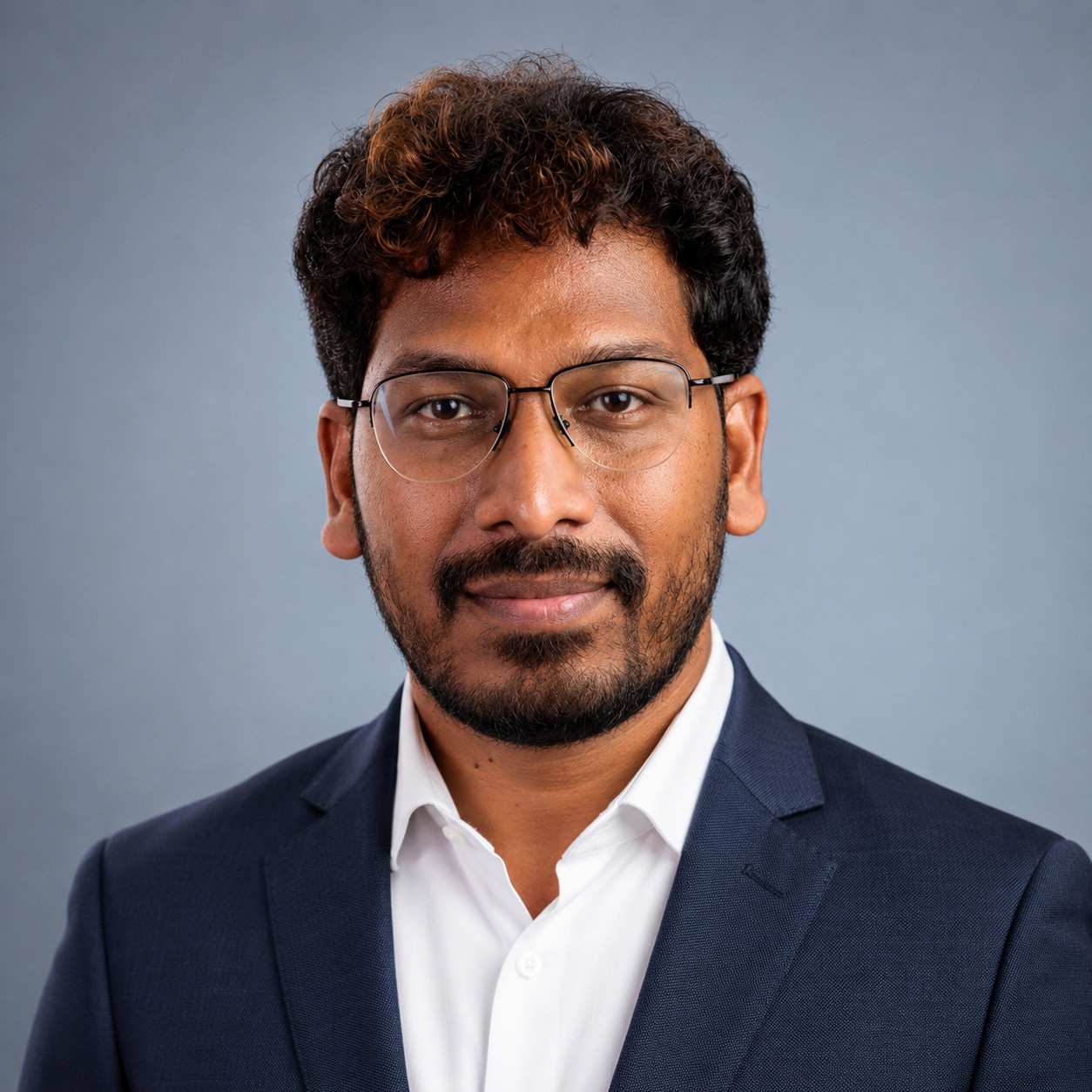
My name is Vamsi Krishna Boyanagari, and I am from India. I am a doctoral researcher at the Irish Centre for Social Gerontology, University of Galway, Ireland. My PhD is part of HOMEDEM, a Marie Skłodowska-Curie Actions Doctoral Network funded by the European Union.
My research focuses on autonomous living for people with dementia, resource allocation, and the role of design and technology. A central part of my PhD examines how the public values services that support people with dementia to live at home with greater choice and independence, and how much the public is willing to contribute towards such services.
I did not begin my academic journey thinking that I would eventually work in dementia research or economics. My background developed from biotechnology into public health, health systems and health economics. While working in public health in India, I became increasingly interested in population ageing and the question of how health and social care systems should respond to the needs of older people. This led me to study Global Ageing and Policy and, eventually, to pursue doctoral research connecting ageing, dementia, economics and public policy.
Marie Skłodowska-Curie Actions Doctoral Networks Details
I received a doctoral researcher position through the Marie Skłodowska-Curie Actions Doctoral Networks programme under Horizon Europe. My position is within the HOMEDEM Doctoral Network, and I am hosted by the University of Galway in Ireland. An MSCA Doctoral Network position is different from a conventional student scholarship. I was recruited as a doctoral researcher under an employment contract. The funding supports my doctoral salary and associated employment costs, together with research, training, networking and mobility opportunities within the doctoral network.
For me, the value of the MSCA programme goes beyond the financial support. The opportunity to work within an international network, receive interdisciplinary training, undertake secondments, attend conferences and work with researchers and organisations across Europe has been an important part of the experience.
Were You Offered Any Other Scholarships?
Yes. Before receiving my MSCA doctoral position, I received a Commonwealth Distance Learning Scholarship in 2018 to study MSc Global Ageing and Policy at the University of Southampton, United Kingdom. The scholarship was funded through the UK Department for International Development and administered by the Commonwealth Scholarship Commission in the UK.
For the 2018 scheme, the award covered full tuition fees and all compulsory costs associated with the distance-learning Master's programme, including any compulsory residential component. I prefer to describe the award as fully funded rather than give a monetary figure, because the financial value depended on the approved course costs.
Educational Background
My academic background spans biotechnology, public health, health economics and ageing. After my bachelor’s in Biotechnology, I moved towards a Master's degree in public health because I became more interested in population-level health problems and how health systems respond to them.
My public health education and subsequent research experience exposed me to health financing, health systems and policy evaluation. Later, the MSc Global Ageing and Policy at the University of Southampton gave me a more specialised understanding of ageing, social policy and the challenges associated with demographic change.
This combination became particularly useful when I applied for the HOMEDEM PhD. I already understood public health and health systems, had experience related to resource allocation and health financing, and had specialist academic training in ageing. The PhD provided an opportunity to bring these areas together while developing new expertise in dementia and health economics.
How Did You Prepare to Apply to the University of Galway?
How Did You Find Information About Marie Skłodowska-Curie Actions Doctoral Networks and University of Galway?
I did not start by searching for any available PhD. I took a targeted approach, and I was looking for funded doctoral opportunities connected with ageing, health economics, health policy, and related areas. When I found the HOMEDEM position, the research question immediately interested me. The project focused on autonomous living for people with dementia, resource allocation, design, and technology. I could see connections with my previous experience, while also seeing several areas where I would gain new research skills.
Before applying, I read about the individual doctoral project, HOMEDEM, the University of Galway, the Irish Centre for Social Gerontology and the research interests of the supervisors. I tried to understand both what I could contribute to the project and what I needed to learn through the PhD.
I regularly searched university vacancy pages, academic job websites, and platforms such as EURAXESS. For European doctoral opportunities, especially MSCA Doctoral Networks, EURAXESS is an important resource, as is LinkedIn. One lesson from my experience is to search by research interests rather than using only terms such as "PhD scholarship". Searching for combinations such as ageing, dementia, health economics, public health, social gerontology and MSCA Doctoral Network produces different opportunities. After finding an interesting position, I looked beyond the university name and country. I carefully looked at the research centre, supervisors, network partners, planned secondments, training opportunities, and the actual doctoral project. For a PhD, these factors have a major influence on the experience.
Did You Take Any Standardized Tests? If So, How Did You Prepare for Them?
I did not take the GRE or GMAT for my MSCA doctoral position. Language requirements depend on the host university and the applicant's previous education, so applicants should always check the specific requirements of the recruiting institution. Most of my preparation was therefore focused on the research application and interview. I concentrated on explaining my previous research clearly, understanding the proposed doctoral project, and demonstrating how my background was relevant to the position.
How Did You Prepare to Apply for the Marie Skłodowska-Curie Actions Doctoral Networks?
I carefully read the project description and mapped my experience against the requirements. My application then tried to show a clear progression. Public health gave me an understanding of health systems. My work related to health financing developed my interest in resource allocation. The MSc in Global Ageing and Policy gave me specialist knowledge of ageing. HOMEDEM offered an opportunity to bring these interests together within dementia research.
For the interview, I reviewed my previous projects in detail. I prepared to explain the research question, methods, my personal contribution, challenges, and what I learned. I also read about the supervisors, research centre and the wider HOMEDEM network. I did not try to present myself as already knowing every method required for the PhD. Instead, I focused on the skills I already had and my readiness to learn the methods I lacked.
One thing that really helped me is building my application around your experience and role fit. Get your application reviewed by your friends and/or colleagues or mentors. For interview preparation, I developed a two-minute explanation of my background, a two-minute explanation of my research interest, examples of my research, teamwork, problem-solving, and learning from failure.
How is Your Experience at the University of Galway?
The University of Galway has provided an interdisciplinary environment for my doctoral research. I am based at the Irish Centre for Social Gerontology within the J.E. Cairnes School of Business and Economics. This gives my PhD a useful combination of social gerontology, economics and policy perspectives.
The MSCA network structure has added another dimension. My doctoral training has included collaboration with researchers and organisations across Europe, conferences, network training and secondment-related activities. My work has also involved engagement with people living with dementia, family carers, researchers and policy stakeholders. The PhD has therefore involved more than producing a thesis. Training has included research methods, public involvement, communication, presentations, interdisciplinary collaboration and engagement with organisations working in dementia research and policy.
For anyone who is planning to apply for International PhDs, one suggestion would be to connect with current PhD students in that institution, ask about supervision frequency, access to training, funding support, teaching expectations, annual reviews, etc., so that these will give you a clearer picture of doctoral life than the university’s prospectus.
How Do You Rate the University of Galway Academically?
My academic experience has been strong because the research environment fits the interdisciplinary nature of my project. Dementia research involves health, social care, economics, rights, housing, technology, and community participation. Being located within a social gerontology research centre while also working in a business and economics school has supported this combination.
Access to supervisors and collaborators with expertise in ageing, economics and dementia research has also been important. For prospective doctoral applicants, I would place substantial weight on supervisor fit, research-centre expertise and the wider doctoral environment rather than relying mainly on university rankings.
How Does the University of Galway Support International Students?
As an international doctoral researcher, I have received support through the university and through the MSCA network. The MSCA structure is particularly valuable for international researchers because mobility and international collaboration are built into the programme.
Practical aspects of moving countries should still be researched carefully. Immigration permission, accommodation, taxation, healthcare, family arrangements and the cost of living need to be considered alongside the academic offer. Applicants should ask current doctoral researchers about these issues before accepting a position.
What Do You Think Made Your Application Stand Out?
I believe research fit was one of the strongest parts of my application. My previous work was relevant to the project, but I was not presenting myself as someone who already knew everything required for the PhD. There was a clear combination of relevant experience and areas where doctoral training was needed. I also clearly articulated what I don’t know that is required for this PhD, and explained that I will make a plan to develop those skills as part of my research training.
A second strength was the progression across my academic journey. Biotechnology, public health, health financing, ageing policy and dementia might initially appear to be different areas. In my application, I made the connection very clear by showing the progression pathway. The consistent interest was how health and social systems respond to population needs and how limited resources are allocated. In addition to this, my international scholarship experience and previous research work also demonstrated that I was able to work independently, adapt to different academic environments, and complete demanding academic programmes.
What Would You Have Done Differently if You Were Going Through the Process Again?
I would have strengthened my quantitative skills earlier, particularly statistics and econometrics. My PhD has involved discrete choice experiments and choice modelling, and a stronger quantitative foundation before starting would have made parts of the methodological learning process easier. I would also prepare much earlier for the practical aspects of international mobility. Getting the offer is only the beginning. Moving countries involves immigration documentation, accommodation, finances, family arrangements and adapting to a new academic and social environment.
Another change would be to maintain a detailed record of my research activities from the beginning of my career. Publications are easy to remember, but applications also ask about individual contributions, presentations, training, leadership, project responsibilities and impact. Keeping evidence of these activities makes later applications much easier.
What Advice Would You Give Those Looking to Apply for a Similar Scholarship?
My first advice is to read the individual doctoral project carefully and ask whether your previous education and experience connect with the research question. Research the supervisors, host institution, research centre and wider Doctoral Network. Check the eligibility requirements and mobility conditions before spending substantial time on the application. Do not send the same motivation letter to every position. The strongest applications are specific. Explain what you have already done, what questions emerged from those experiences, what skills you still need and why this particular doctoral project is the appropriate next stage.
For interviews, know your previous research well. Be ready to explain what you personally did, which methods were used, what problems occurred and what you learned. If the project requires a method you have never used, acknowledge it. Then explain which existing skills give you a foundation for learning it.
Ask for feedback on your application from someone who (is genuine and provides honest and critical feedback) understands academic recruitment, but keep your own voice and story. A polished statement that sounds generic is less useful than a clear statement supported by evidence that you put in your CV.
Apply early enough to give referees time. Contact referees before entering their names. Send them the vacancy, your CV, and a short explanation of why you are applying so their reference can be relevant.
An important aspect is to consider the whole doctoral experience. Look at the research question, supervision, salary or stipend (deductions most importantly), employment conditions, secondments, training programme, network partners, location, cost of living and career development opportunities.
My Commonwealth Scholarship taught me a similar lesson earlier in my journey. At the time, studying Global Ageing and Policy was simply the next logical step from my public health work. I did not know that several years later it would contribute to an MSCA PhD on dementia in Ireland. A scholarship does not need to be the final destination. A good scholarship should give you knowledge, experience and relationships that make the next stage possible.
Want to submit your
scholarship journey?
Submit Your Story Here!
More Scholarship Recipients

My name is Anna Nana Agyeiwaa Mensah, a professional nurse from Ghana. My interest in Global Health grew out of my experienc .... Read more
My name is Ratul Chakraborty, and I am from Bangladesh. My background is interdisciplinary, actually. Before coming to Germa .... Read more
My name is Mabel Zuñiga. I am a graduate student from Panama pursuing a Master’s degree in Public Policy at the Universit .... Read more
Leave A Comment