
How I Secured a Fully Funded Master’s at the University of Florida, United States Through the Fulbright Foreign Student Program
University: University of Florida
Degree: Master’s in Pharmaceutical Outcomes and Policy
Previous Education: Doctor of Pharmacy (PharmD), University of Monastir
Scholarship: Fulbright Foreign Student Program – Funding (University Tuition Fees, International Travel, Health Insurance, Monthly Living Stipend)
Social Media
The Journey
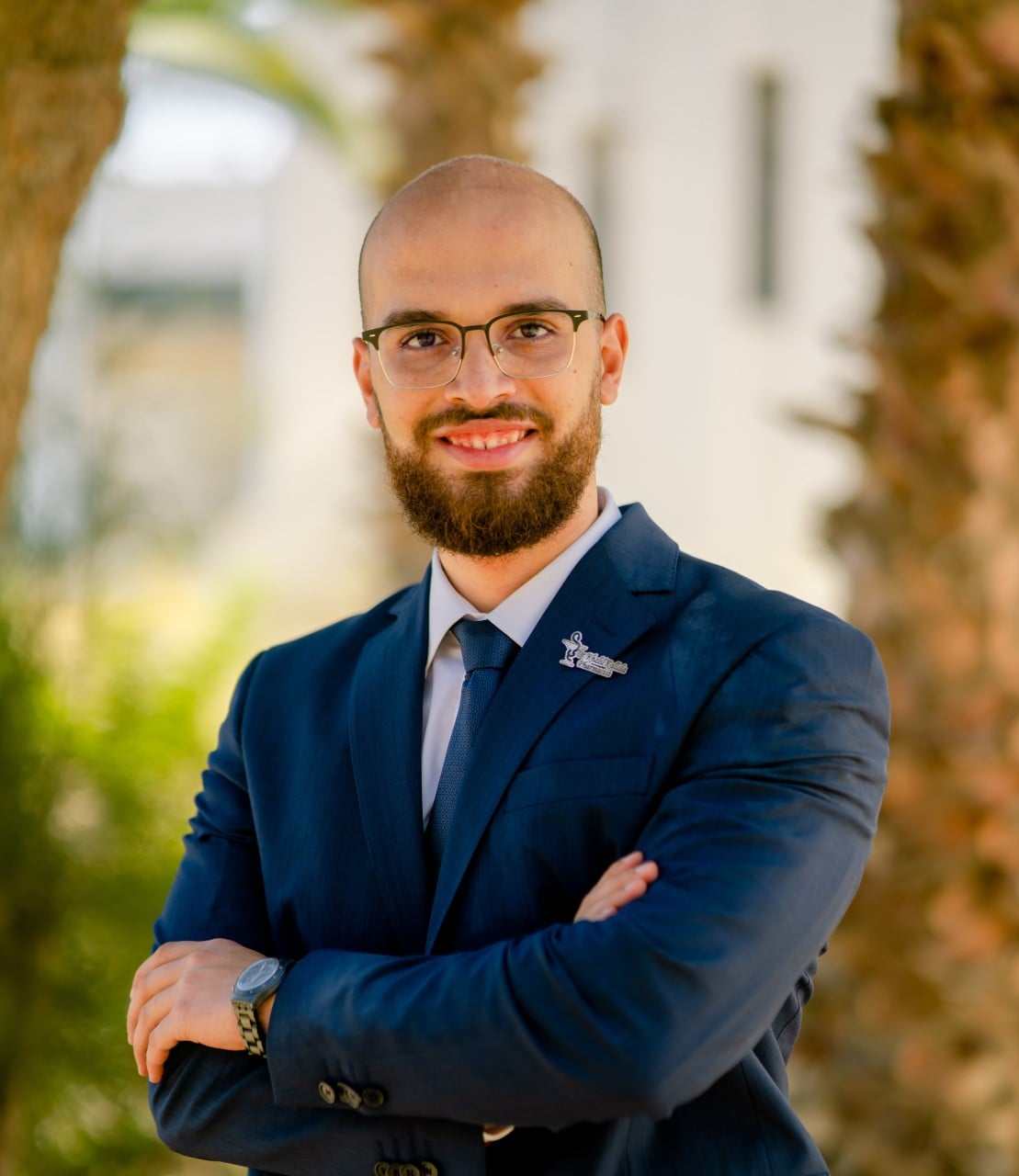
My name is Khalil Kallala, and I am a 27-year-old pharmacist from Tunisia. I earned my Doctor of Pharmacy (PharmD) degree from the University of Monastir in 2022.
After graduation, I gained professional experience in the pharmaceutical sector before applying to the Fulbright Foreign Student Program in 2024 to pursue a master’s degree in Pharmaceutical Outcomes and Policy at the University of Florida. My involvement in community initiatives, combined with my early professional experiences, motivated me to expand my expertise in health economics and outcomes research, with a particular focus on evaluating the clinical and economic impact of medical and pharmaceutical interventions.
The multidisciplinary nature of my master’s program has allowed me to build expertise in biostatistics, programming, economics, epidemiology, health policy, and research methodology. These skills complement the clinical and pharmacological knowledge I acquired during my PharmD studies and have enabled me to approach healthcare challenges from a broader and more analytical perspective. Through this combination of clinical training, research experience, and interdisciplinary education, I aim to contribute to evidence-based healthcare decision-making and the development of more effective and sustainable health policies.
Fulbright Foreign Student Program Details
I received the Fulbright Foreign Student Program scholarship to pursue my master’s degree at the University of Florida in the United States. The Fulbright Program is funded by the U.S. Department of State’s Bureau of Educational and Cultural Affairs and is administered by partner organizations, including Amideast in the Middle East and North Africa (MENA) region and the Institute of International Education (IIE).
The Fulbright Foreign Student Program covered university tuition fees, international travel expenses, health insurance, and a monthly living stipend throughout my graduate studies.
The amount of a Fulbright scholarship varies depending on several factors, such as the academic institution, program duration, cost of living in the host city, and the policies applicable to each participating country.
Educational Background
I earned my Doctor of Pharmacy (PharmD) degree from the University of Monastir in Tunisia in 2022, graduating with a GPA of 3.5/4. My pharmaceutical education provided me with a strong foundation in pharmacology, clinical pharmacy, therapeutics, public health, and the evaluation of medical and pharmaceutical interventions.
Through my PharmD training, I learned how medications and healthcare interventions affect patients from a clinical perspective. However, I became increasingly interested in broader questions related to the economic value of healthcare interventions, the efficient allocation of limited healthcare resources, and the role of research evidence in healthcare decision-making and policy. Pursuing a master’s degree in Pharmaceutical Outcomes and Policy at the University of Florida allowed me to complement my clinical and pharmaceutical knowledge with advanced training in health economics, epidemiology, biostatistics, programming, and research methodology.
How Did You Prepare to Apply to the University of Florida?
How Did You Find Information About the Fulbright Foreign Student Program and the University of Florida?
The Fulbright application process consisted of two main phases. The first phase involved applying for the Fulbright Foreign Student Program, while the second phase involved applying to four U.S. universities with the guidance of Fulbright advisers.
For the first phase, my primary sources of information were the official websites of Amideast and the Institute of International Education (IIE). These resources provided detailed information about the program’s eligibility criteria, application requirements, and selection process. They also offered useful guidance on preparing application materials, including the CV, personal statement, study objectives, and supplementary documents.
In addition to these online resources, Amideast Tunisia organized several webinars and information sessions that explained the different stages of the application process. Previous Fulbright scholars participated in some of these sessions and generously shared valuable advice based on their own experiences. I also personally contacted former Fulbright scholars through social media. Many of them thankfully were willing to provide useful insights into how to strengthen my application and prepare for the interview process.
The process of gathering information and preparing for the Fulbright scholarship did not begin when I submitted my application in 2024. I first learned about the program in 2020, while I was
still completing my PharmD studies. From that point onward, receiving a Fulbright scholarship became one of my long-term academic and professional goals. Over several years, I worked to strengthen my academic profile, develop my leadership and research skills, participate in civil society organizations, gain professional experience, and better understand the scholarship’s expectations and selection process. Therefore, my successful application was the result of several years of preparation and personal development.
During the second phase of the process, Fulbright advisers supported me in identifying and applying to four U.S. universities that matched my academic background and professional interests. They provided extensive guidance, resources, and databases to help me research suitable graduate programs and prepare my university applications.
Did You Take Any Standardized Tests? If So, How Did You Prepare for Them?
For the first phase of the Fulbright application process, I did not take any standardized tests. I submitted my Fulbright application without TOEFL, IELTS, GRE, or GMAT scores.
After successfully completing the interview process, I took the TOEFL iBT and GRE as part of my preparation for the second phase of the process, which involved applying to U.S. universities.
To prepare for both tests, I relied primarily on the official preparation guides and resources provided by the website of the Educational Testing Service (ETS). These materials were particularly useful because they provided detailed information about the structure and content of each test, as well as practice questions and full-length mock examinations.
One of the main difficulties I encountered during my preparation was time management. I was generally able to understand and answer the practice questions, but I struggled to complete them within the required time limits. To improve my performance, I regularly completed mock tests under realistic testing conditions and used a timer to monitor my progress. This strategy helped me become more familiar with the pace of the questions and improve my ability to manage the limited time available for each section.
Achieving a competitive TOEFL score is important for international students because U.S. universities use English-language proficiency tests as part of their admission requirements. Preparing for the TOEFL and GRE therefore represented an important step in becoming a competitive applicant and successfully navigating the U.S. university admission process.
How Did You Prepare to Apply for the Fulbright Foreign Student Program?
To prepare for the Fulbright application, I contacted several Fulbright alumni who generously shared their experiences and provided valuable advice on how to make my application distinctive and competitive. Their guidance helped me understand that a strong application is not simply a collection of academic achievements, extracurricular activities, and professional experiences. Instead, the different components of the application should come together to tell
a coherent and authentic story about the applicant’s background, goals, values, and future aspirations.
Throughout my undergraduate studies and early professional career, I worked to build a profile that reflected my interests in community service, leadership, cultural exchange, and scientific research. However, one of the greatest challenges I faced during the application process was learning how to connect these different experiences into a harmonious narrative. Several Fulbright alumni helped me understand how each piece of my background could contribute to the overall story of my academic and professional journey. Today, as a Fulbright alumnus myself, I try to provide aspiring candidates with the same guidance and support that I received during my own application process.
In my experience, a strong Fulbright application should demonstrate academic potential, leadership, commitment to cultural exchange, and a genuine desire to contribute to the applicant’s home country after completing the program. The application included several essays, recommendation letters, a CV, academic transcripts, certificates, and other supporting documents. Preparing these materials required significant reflection on my past experiences and future objectives.
Throughout the application process, I focused on answering several fundamental questions: Why did I choose to become a pharmacist? Why did I decide to transition from a primarily clinical and pharmaceutical background to pharmaceutical economics and health outcomes research? Why was the Fulbright Program the right opportunity for me, and why did I want to pursue graduate studies in the United States? How could I contribute to cultural and academic exchange between Tunisia and the United States? Finally, how would I use the knowledge, skills, and experiences gained through the Fulbright Program to contribute to Tunisia after completing my studies?
Answering these questions helped me develop a coherent narrative that connected my previous academic, professional, and community experiences with my graduate studies and long-term career goals.
How is Your Experience at the University of Florida?
My experience at the University of Florida was highly rewarding and formative, both academically and personally. The university offers extensive resources for learning, conducting research, connecting with students and professors, and building strong academic and professional networks. As one of the largest universities in the United States and a highly ranked public research institution, the University of Florida provided me with the opportunity to study in a diverse and intellectually stimulating environment.
My master’s degree in Pharmaceutical Outcomes and Policy allowed me to develop a strong foundation in health economics and outcomes research. Through multidisciplinary coursework in health economics, epidemiology, biostatistics, programming, and health policy, I acquired analytical and research skills that complemented my previous clinical and pharmaceutical training.
One of the University of Florida’s most valuable resources is HiPerGator, its high-performance supercomputer. This advanced infrastructure supports researchers working with large datasets, complex computational analyses, and artificial intelligence. Having access to such research resources reflects the university’s strong commitment to scientific innovation and advanced research.
Beyond academics, my experience at the University of Florida allowed me to interact with students, professors, and researchers from diverse academic, professional, and cultural backgrounds. These interactions expanded my perspective, strengthened my professional network, and contributed significantly to my personal and professional development.
Overall, studying at the University of Florida provided me with much more than an academic degree. It gave me the opportunity to develop new research and analytical skills, participate in a diverse academic community, build meaningful professional relationships, and prepare for a career focused on health economics, outcomes research, and evidence-based healthcare decision-making.
How Do You Rate the University of Florida Academically?
I would rate the University of Florida very highly from an academic perspective. The university provides an excellent environment for research, academic development, and professional growth, supported by extensive resources, student organizations, research opportunities, conferences, and networking activities. During my two years at the university, I discovered numerous opportunities to expand my knowledge and skills beyond the classroom. In fact, the range of resources and activities available was so extensive that two years did not feel sufficient to explore and benefit from all of them.
One of the aspects I appreciated most was the opportunity to complement my formal education with involvement in academic and professional organizations. I joined the North Florida Fulbright Chapter, where I had the opportunity to connect with Fulbright scholars and alumni from diverse countries, academic disciplines, and professional backgrounds. This experience strengthened the cultural exchange dimension of my Fulbright journey and allowed me to learn from people with experiences and perspectives different from my own.
I was also actively involved in the University of Florida student chapter of the International Society for Pharmacoeconomics and Outcomes Research (ISPOR). This involvement was
particularly relevant to my academic specialization in pharmaceutical outcomes and policy, as it allowed me to engage with other students interested in health economics and outcomes research, participate in academic and professional activities, and expand my network within the field.
My experiences with both organizations were highly rewarding. They gave me opportunities not only to learn from others but also to share my own knowledge, experiences, and perspectives. Interacting with students, researchers, professionals, and Fulbright scholars from different backgrounds contributed significantly to my academic, professional, and personal development.
How Does the University of Florida Support International Students?
The University of Florida provides extensive support to international students throughout their academic journey. From the beginning of my program, I had access to orientation sessions and resources that helped me understand the U.S. higher education system, university policies, immigration requirements, and the different academic and professional opportunities available on campus.
The University of Florida International Center plays an important role in supporting international students by providing guidance on immigration and visa requirements, travel, employment authorization, and other administrative matters. Navigating a new academic system and living in a foreign country can initially be challenging, and having access to dedicated international student services made this transition significantly easier.
What Do You Think Made Your Application Stand Out?
I believe what made my application stand out was the consistency between my previous experiences, my academic and professional goals, and the core values of the Fulbright Program. Rather than participating in extracurricular activities solely to strengthen my CV, I pursued opportunities that reflected my genuine interests in leadership, community service, cultural exchange, research, and healthcare.
My involvement in Enactus College of Pharmacy of Monastir, which I helped co-found, allowed me to develop my leadership skills and contribute to social entrepreneurship projects related to pharmacy and healthcare. Through AIESEC Ruspina and the Soliya program, I engaged in cultural exchange and interacted with students and young professionals from different countries and backgrounds. My participation in the Tunisian Organization of Debates strengthened my communication and critical-thinking skills while promoting constructive dialogue and pluralism.
I also worked to develop my research skills and scientific interests. I earned a Silver Badge through the Mini-PhD Program offered by the ReachSci Society at the University of Cambridge and joined InnovaMed, an organization focused on promoting medical and pharmaceutical innovation and research. These experiences helped me build an early foundation in research methodology and strengthened my skills in study design.
Most importantly, my application reflected a clear sense of direction. During my undergraduate studies, I developed an interest in health economics and began considering it as a long-term career path. From that point onward, I intentionally pursued academic, professional, and extracurricular experiences that could help me move toward this goal. By the time I applied for the Fulbright Program, I was able to present a coherent story connecting my pharmaceutical education, leadership experiences, involvement in cultural exchange, interest in research, and ambition to specialize in health economics.
Ultimately, I believe the strength of my application came not from any single achievement, but from the consistency and authenticity of my overall journey. Each experience contributed to a broader narrative about what I had accomplished, why I wanted to study health economics in the United States, and how I hoped to use my education and experience to contribute to Tunisia in the future.
What Would You Have Done Differently if You Were Going Through the Process Again?
Regarding the Fulbright and university application processes, I would not make any major changes. I was satisfied with the way I prepared my applications, sought advice from previous Fulbright scholars, and approached the different stages of the selection and university admission processes. However, if I could go through the experience again, I would approach finding housing in the United States very differently.
The Fulbright Program provides scholars with a monthly living stipend, but students are responsible for arranging their own housing. Before arriving in the United States, I secured an apartment online based on photographs and a virtual tour. Unfortunately, after arriving, I discovered that the actual living conditions did not meet my expectations.
Based on this experience, I would advise future international students, whenever financially and practically possible, to arrive before classes begin and temporarily stay in a hotel or other short-term accommodation near campus. This provides additional time to explore the area, visit apartments in person, compare different housing options, understand transportation and proximity to campus, and carefully review the conditions of a lease before signing it.
What Advice Would You Give Those Looking to Apply for a Similar Scholarship?
My main advice to anyone interested in applying for the Fulbright Foreign Student Program or a similar scholarship is to start preparing early. A successful application does not begin when you start writing your essays or preparing your CV. It begins years earlier through the academic, professional, and extracurricular experiences you choose to pursue.
During your undergraduate studies, I recommend seeking organizations, programs, and opportunities that genuinely align with your interests and long-term goals. Develop your leadership potential by actively contributing to organizations and taking responsibility for projects and initiatives rather than simply joining as many clubs as possible. Seek opportunities for cultural exchange and interaction with people from different backgrounds. At the same time, strengthen your research skills by participating in research projects, learning about scientific methodology, and, whenever possible, contributing to scientific publications or presentations.
It is also important to think carefully about how your education and future career can contribute to your home country. The Fulbright experience is not only about studying in the United States; it is also about acquiring knowledge, skills, and experiences that you can bring back and use to create a positive impact in your community and country. Applicants should therefore have a clear understanding of what they want to study, why they want to study it, and how they plan to use their education after completing the program.
Most importantly, be authentic and build a coherent story throughout your application. Your academic background, extracurricular activities, professional experiences, choice of graduate program, and future goals should complement one another and help the selection committee understand who you are and what you hope to accomplish. Do not participate in activities simply because you think they will look impressive on your CV. Choose experiences that genuinely reflect your interests, values, and ambitions.
Finally, do not hesitate to seek advice from previous Fulbright scholars and alumni. Their experiences can provide valuable insights into the application and interview processes. I personally benefited greatly from the guidance of Fulbright alumni when I was preparing my application, and I am now happy to do the same for future applicants. If you are interested in
applying for the Fulbright Foreign Student Program, I would be glad to answer your questions and share advice based on my own experience.
Want to submit your
scholarship journey?
Submit Your Story Here!
More Scholarship Recipients

My name is Humayun Nosheerwan. I am a Chevening Scholar, social entrepreneur, artist, higher education professional, and Fou .... Read more
I'm Hossam Hamdy, an Egyptian from Cairo, now based in Dubai, where I work in venture capital. My career sits at the interse .... Read more
My name is Ahmad Shoeb Hashmi, and I am a dentist from India currently pursuing a dual-degree Master of Public Health (MPH) .... Read more
Leave A Comment