
Fulbright Scholarship Scholar Juan Hevia from Argentina Shares His Journey of Securing a Fully Funded Master's at the Rice University, United States
University: Rice University
Degree: Master of Science in Data Science
Previous Education: Industrial Engineering, Instituto Tecnológico de Buenos Aires
Scholarship: Fulbright Scholarship – Funding for graduate studies (academic, professional, and personal development)
Social Media
LinkedIn: linkedin.com/in/juanse-hevia/
The Journey
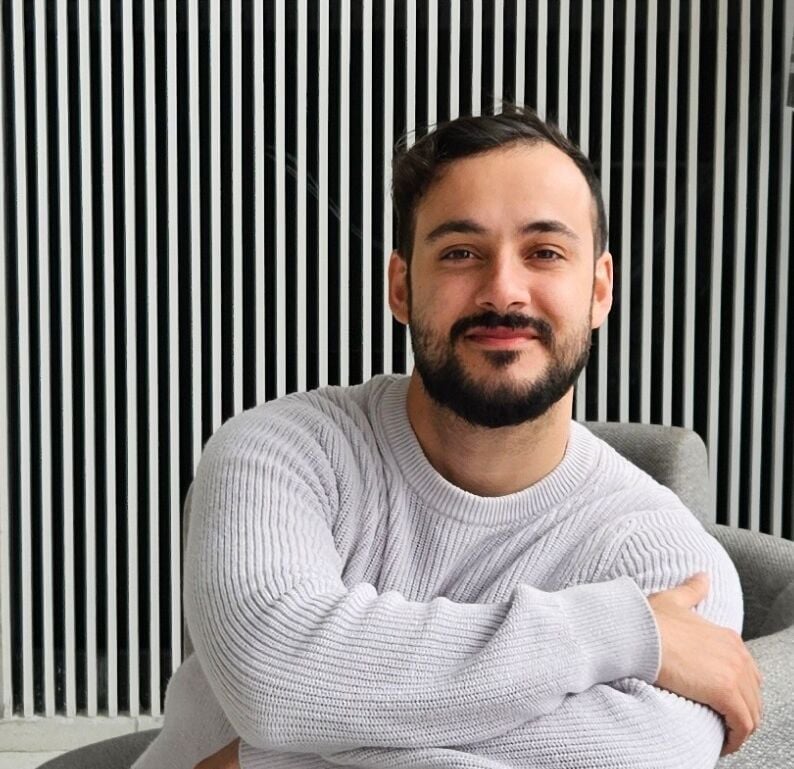
My name is Juan Hevia. I am from Argentina, and I am a machine learning engineer, founder, and Fulbright scholar. My work has always sat close to the intersection of technology, education, and social impact.
I pursued a Master of Science in Data Science at Rice University because I wanted to deepen my technical background in artificial intelligence and machine learning, while also learning how these tools could be applied to real problems across sectors. Before going to Rice, I had already worked in startups and machine learning, but I wanted a stronger academic foundation and a broader international perspective.
Fulbright became the opportunity that made that possible. It gave me access to world-class education, but it also changed the way I understood my responsibility as a technologist. I did not see graduate school as only a personal achievement. I saw it as a chance to bring back knowledge, networks, and perspective that could help me contribute to Argentina and to broader conversations about technology and society.
Fulbright Scholarship Details
I received a Fulbright scholarship to pursue my Master of Science in Data Science at Rice University in the United States.
Institution: Rice University
Degree: Master of Science in Data Science
Scholarship: Fulbright Scholarship
Amount: I’d rather not disclose
The scholarship supported my graduate studies and allowed me to join an academic environment where I could grow technically, professionally, and personally.
Educational Background
Before Rice, I studied Industrial Engineering at Instituto Tecnológico de Buenos Aires in Argentina. That degree gave me a strong foundation in systems thinking, quantitative analysis, operations, and problem-solving.
Professionally, I worked at Memorable, an applied computer vision startup, where I contributed as a machine learning engineer and data lead while the company grew from an early-stage team into a larger organization. That experience helped me understand how technical ideas become real products. I worked across machine learning, data infrastructure, project execution, and product constraints.
That mix of engineering, startup experience, and applied machine learning prepared me well for graduate studies in data science. I was not only interested in models in the abstract. I wanted to understand how to build systems that work in practice and can be useful for people and institutions.
Previous degree: Industrial Engineering, Instituto Tecnológico de Buenos Aires
GPA: N/A
Graduate degree: Master of Science in Data Science, Rice University
Graduate GPA: 3.9
How Did You Prepare to Apply to Rice University?
My preparation started with clarity about what I wanted to study and why. I knew I wanted to strengthen my background in data science and artificial intelligence, but I also wanted a program that would expose me to research, applied work, and an international academic environment.
I researched universities by looking at program structure, faculty, course offerings, career outcomes, and the type of technical training each program emphasized. I paid special attention to whether the program would help me grow beyond what I had already learned through work experience.
For Rice, the Master of Science in Data Science was attractive because it combined rigorous technical training with a practical orientation. What stood out even more was its research community. Rice had leading researchers working on topics that closely matched my interests at the time, including network science, generative AI, and reinforcement learning. Being part of an environment where cutting-edge research was actively shaping the field was incredibly appealing, and it offered the opportunity to learn from experts while building stronger foundations and continuing to think about real-world applications.
How Did You Find Information About the Fulbright Scholarship and Rice University?
I used a combination of official university websites, scholarship program pages, conversations with alumni, and information from Fulbright Argentina.
For scholarships, I focused on official sources because requirements can change, and details matter. I also found it valuable to speak with people who had gone through similar processes. Alumni can explain things that are not always clear from a website, such as how to frame your story, how to choose programs, and how to prepare for interviews.
One important lesson is that applicants should not only search for funding after choosing a university. Scholarships and academic programs should be researched together, because fit matters on both sides.
Did You Take Any Standardized Tests? If So, How Did You Prepare for Them?
I took the IELTS as part of the application process. To prepare, I focused on understanding the format of the exam, practicing under time constraints, and becoming comfortable with the speaking and writing sections.
My advice for standardized tests is to treat them as a requirement to manage well, not as the center of the application. A strong score helps, but the application is much more than the test. Your story, academic preparation, professional experience, recommendations, and clarity of purpose matter a lot.
How Did You Prepare to Apply for the Fulbright Scholarship?
For Fulbright, I spent a lot of time working on the narrative of my application. I wanted my application to explain not only what I had done, but also why studying in the United States made sense for my future work.
I tried to connect three pieces clearly.
First, my background in engineering, startups, and machine learning.
Second, my goal is to deepen my knowledge in data science and artificial intelligence.
Third, my interest in using that knowledge to contribute to society, especially by helping people and institutions adopt technology more effectively.
Fulbright looks for academic potential, but also for leadership, public purpose, and the ability to build bridges between countries. I tried to show that my goal was not only to study abroad, but to grow into someone who could bring knowledge back and apply it in meaningful ways.
How is Your Experience at Rice University?
My experience at Rice was deeply formative. Academically, it helped me strengthen my technical foundation in data science, machine learning, and applied AI. Personally, it placed me in an international environment where I was constantly learning from people with different backgrounds and perspectives.
Being a Fulbright scholar also shaped how I experienced the university. I felt that I was not only there as a student, but also as a representative of Argentina and as part of a broader community of people committed to international exchange.
Rice gave me access to strong academic training, thoughtful peers, and a culture that values both excellence and collaboration. What stood out most was the balance between intellectual rigor and genuine support. The academic environment was challenging in the best sense: professors expected students to think critically, engage deeply with complex ideas, and push beyond their comfort zones. At the same time, faculty and classmates were remarkably approachable and willing to help one another succeed. The university fostered a culture where curiosity was encouraged, interdisciplinary conversations were common, and students felt empowered to explore new interests and perspectives. As an international student, I also found Rice to be highly accommodating, with resources and communities that made it easier to adapt, build meaningful connections, and fully participate in campus life. The combination of academic excellence, openness, and a strong sense of community made Rice an exceptional place to learn and grow.
How Do You Rate Rice University Academically?
I would rate Rice very highly academically. The university combines rigorous technical training with a close academic environment. For me, that combination mattered. I wanted strong preparation in data science, but I also valued being in a place where students could interact closely with professors, classmates, and research communities.
One of the aspects I appreciated most was the balance between theory and application. Courses were academically demanding, but they were also designed to help students think about how data science and machine learning can be used to solve real-world problems. A great example was my opportunity to conduct research at the intersection of AI and education. It was one of the highlights of my time at Rice because it combined rigorous research with a clear social purpose. The experience reinforced my belief that AI is most impactful when it is used to expand access to knowledge and opportunity, and it showed me how academic research can inform practical solutions to important societal challenges.
The Master of Science in Data Science helped me deepen my understanding of machine learning and gave me more structure around concepts I had previously used in professional settings. It helped connect practical experience with academic depth. Beyond the technical skills, it strengthened my ability to think critically about data-driven systems, evaluate different approaches, and communicate complex ideas effectively. Those skills have continued to be valuable in my work in artificial intelligence, entrepreneurship, and technology policy.
How Does Rice University Support International Students?
Rice offers a supportive environment for international students. There are academic resources, administrative support, student communities, and opportunities to connect with people from many different countries.
For me, the broader Fulbright community was also very important. Fulbright creates a network around the academic experience. That network helps you feel that you are part of something larger than your individual degree.
International students still need to be proactive. Moving to a new country requires adaptation, and there are always cultural, academic, and personal challenges. But Rice and Fulbright both helped make that transition much easier.
What Did You Pursue After the Fulbright Scholarship?
After the scholarship, I continued working in artificial intelligence and technology. I am currently building an AI startup in stealth, focused on helping non-technical people and organizations use AI more effectively.
The startup is focused on AI access and adoption. Many people can benefit from AI, but they do not necessarily have the technical background to design workflows, evaluate tools, or turn ideas into working systems. I am interested in building tools that reduce that gap.
At the same time, I have been involved in AI adoption and governance work through the Observatory of AI, Innovation, Society, and Government at Austral University. Through that work, I have contributed to conversations around how governments and public institutions can adopt AI responsibly, build internal capabilities, and understand the social implications of these technologies.
In many ways, my current work is a continuation of my Fulbright experience. Fulbright gave me access to education, networks, and technical training. Now I want to build tools that expand access to powerful technologies for others.
What Do You Think Made Your Application Stand Out?
I think my application stood out because it had a clear connection between my past experience, my academic goals, and my future impact. I was deeply focused on communicating why I was a great bet for the program.
I was not applying to study data science only because it was an interesting field. I had already worked with machine learning in a startup environment, and I had seen how powerful these tools could be when applied well. At the same time, I wanted to build a stronger academic foundation and connect my technical work to broader social questions.
Fulbright is not only looking for strong students. It is looking for people who can act as bridges. I tried to show that I could be a bridge between Argentina and the United States, between technical knowledge and public value, and between advanced AI systems and the people who need access to them.
Looking Back, Would You Have Done Anything Differently During Your Time in the Program?
I would have started even earlier.
The application process requires reflection, not only organization. You need time to understand your own story, choose programs carefully, write strong essays, request recommendation letters, and prepare for interviews.
I would also have spoken with more alumni earlier in the process. Their advice can help you understand how to present your application with more clarity and confidence.
Additionally, I would have taken the GRE standard test. While it was not required for my program, having a strong GRE score can strengthen an application and expand the range of programs and opportunities available to applicants.
Finally, I would have worried less about trying to sound perfect. A strong application is not the one that uses the most polished language. It is the one that feels honest, coherent, and specific.
What Advice Would You Give Those Looking to Apply for a Similar Scholarship?
Start by understanding why you want the scholarship beyond the degree itself.
A good application should answer a few questions clearly. Why this field? Why this program? Why this country? Why now? And what will you do with the opportunity afterward?
Do not write a generic application. Scholarship committees read many essays from talented people. What makes your application memorable is the connection between your story, your goals, and the impact you want to have.
Also, ask for help. Talk to alumni, professors, mentors, and people who know your work. A scholarship application is personal, but it should not be prepared in isolation.
Most importantly, be honest about your motivation. Fulbright changed my life because it gave me access to education and perspective that I would not have had otherwise. But it also gave me a responsibility to use that experience well. If you can explain what that opportunity would mean for you and for the communities you care about, your application will be much stronger.
Want to submit your
scholarship journey?
Submit Your Story Here!
More Scholarship Recipients
My name is Shah Hussain, and I am from Khyber Pakhtunkhwa, Pakistan. I completed my Bachelor’s in Psychology at the Univer .... Read more
I am June from the Philippines. I am an educator for Social Sciences and Humanities. I recently earned my Master in Southeas .... Read more
Hi, my name is Abdul Hafeez, and I come from a small town called Nasirabad in Sindh, Pakistan. Currently, I am pursuing a ma .... Read more
Leave A Comment