
How I Secured a Fully Funded Master’s as a Ugandan Student at the African Institute for Mathematical Sciences Rwanda, Rwanda Through the Mastercard Foundation Scholarship
University: African Institute for Mathematical Sciences (AIMS), Rwanda
Degree: Master’s in Mathematical Epidemiology
Previous Education: Bachelor of Science in Mathematics and Statistics, Makerere University
Scholarship: Mastercard Foundation Scholarship – Full Funding (Tuition, Accommodation, Meals, Health Insurance, and Travel)
Social Media
LinkedIn: linkedin.com/in/joshua-pius-opio-health-data-analysis/
Fiverr: @joshua_pius
The Journey
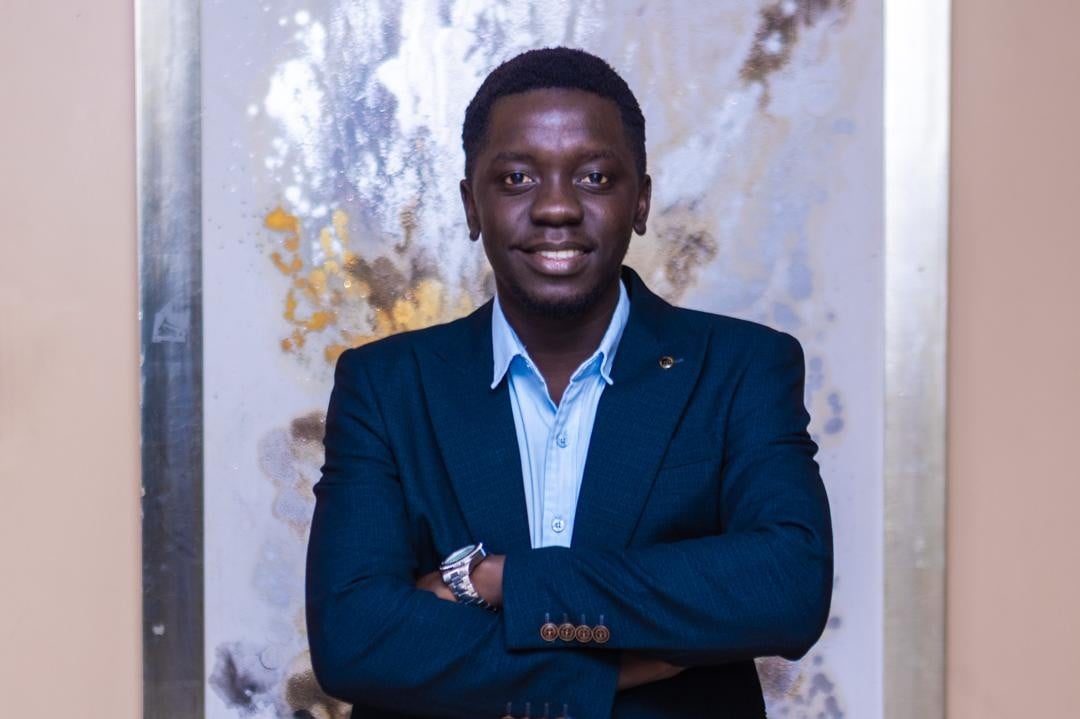
I am Joshua Pius Opio, a Ugandan from Akoremor, a small village in Kwania District in Northern Uganda. I come from a context where access to healthcare and other essential services is limited, and where many families must navigate preventable health challenges with minimal support systems.
Growing up in this environment, I was exposed early to the realities of weak health infrastructure. I observed how delayed or unavailable medical care often worsened conditions that could otherwise have been managed effectively. These experiences shaped my early awareness of public health challenges, even before I encountered them in an academic setting.
Alongside this, I developed a strong interest in mathematics during my early education. I was drawn to its logical structure and its ability to represent complex systems in a precise and interpretable way. At Makerere University, where I pursued a Bachelor of Science in Mathematics and Statistics (completed in 2025), this interest deepened as I began to see how statistical and mathematical methods can be applied to understand and address public health problems.
This convergence between my lived experience in Uganda and my academic training in mathematics ultimately guided my decision to pursue Mathematical Epidemiology.
Mastercard Foundation Scholarship Details
I was awarded a fully funded Mastercard Foundation Scholarship to pursue a Master’s degree in Mathematical Epidemiology at the African Institute for Mathematical Sciences (AIMS), Rwanda. The scholarship covers tuition, accommodation, meals, health insurance, and travel, allowing students to focus fully on academic training and research.
Being selected for this opportunity was significant for me, not only financially but also in terms of academic validation. It represented a belief in my potential to contribute to scientific research in public health.
Educational Background
I hold a Bachelor of Science in Mathematics and Statistics from Makerere University, awarded in 2025. My undergraduate training provided a strong foundation in statistical analysis, mathematical modelling, and data interpretation.
Key areas of training included probability theory, statistical inference, and mathematical modelling techniques that are directly applicable to epidemiology, including compartmental models such as SIR and SEIR frameworks. I also gained experience using R and Python for data analysis.
This training prepared me for advanced study in Mathematical Epidemiology by equipping me with both theoretical and computational skills relevant to disease modelling and public health analysis.
How Did You Prepare to Apply to the African Institute for Mathematical Sciences (AIMS), Rwanda?
I first learned about AIMS Rwanda during my final semester at Makerere University when one of my lecturers, Dr. Mahadi Ddamulira, briefly mentioned the programme during a class session. The information was later circulated again in a class WhatsApp group, which gave me an opportunity to review it more carefully.
At the time, I was preparing for final examinations, and I initially considered ignoring it due to competing academic demands. However, after reading more about the programme, I recognized its strong alignment with my academic interests and long-term goals.
The more I learned about AIMS and its mission to strengthen mathematical sciences across Africa, the more relevant it became to my own trajectory. I decided to apply despite the competitiveness of the programme and the limited time available during that academic period.
That initial exposure through my lecturer played an important role in bringing the opportunity to my attention, and I am grateful for that academic guidance.
Did You Take Any Standardized Tests? If So, How Did You Prepare for Them?
No. Standardized tests were not required for this programme.
How Did You Prepare to Apply for the Mastercard Foundation Scholarship?
I approached the application process through deliberate reflection on my academic background, personal experiences, and long-term research goals.
In preparing my personal statement, motivational statement, and supporting documents, I moved beyond simply listing achievements. Instead, I focused on constructing a coherent narrative that connects my upbringing in a resource-limited setting with my academic training in mathematics and my interest in applying quantitative methods to public health challenges, particularly in mathematical epidemiology.
I structured my application to clearly demonstrate this progression, showing how my experiences informed both my motivation and my intended research direction in disease modelling and data-driven public health.
To ensure quality and clarity, I prepared all documents using LATEX for professional formatting. I also sought feedback from peers and academic mentors, iteratively revised my drafts, and refined my statements to improve precision, coherence, and alignment with the objectives of the Mastercard Foundation Scholarship and the AIMS academic mission.
How is Your Experience at the African Institute for Mathematical Sciences (AIMS), Rwanda?
My experience at AIMS Rwanda has been both academically intensive and intellectually rewarding. The programme is structured in short, rigorous modules that require rapid mastery of advanced mathematical concepts.
Initially, the pace was challenging, as each module demanded full engagement within a short period. Over time, I adapted by improving my study strategies, time management, and collaborative learning practices.
Beyond academics, the environment is highly collaborative. Interacting with students from across Africa has broadened my perspective on both mathematics and its applications in diverse contexts.
How Do You Rate the African Institute for Mathematical Sciences (AIMS), Rwanda Academically?
I rate AIMS highly in terms of academic quality. The institution combines strong theoretical instruction with applied problem-solving. The curriculum emphasizes independent thinking, computational proficiency, and the application of mathematics to real-world challenges, particularly in science and public health.
How Does the African Institute for Mathematical Sciences (AIMS), Rwanda Support International Students?
AIMS provides comprehensive logistical and academic support, including accommodation, meals, health insurance, and travel coordination. This support allows students to focus entirely on their academic work.
The international composition of the student body also creates a collaborative learning environment where students learn from each other’s diverse academic and cultural backgrounds.
Are Your Classes Conducted in English or Kinyarwanda/French/Swahili?
All instructions and academic activities are conducted in English, enabling participation from students across the continent without language barriers.
AIMS welcomes students from both English-speaking and French-speaking countries across Africa.
For students who are not yet confident in English, AIMS provides English language support classes to help them improve their communication skills and comfortably keep up with the academic programme.
This is one of the institution's greatest strengths because it helps students overcome language barriers rather than allowing language to become an obstacle to learning.
What Did You Pursue After the Mastercard Foundation Scholarship?
I am currently finalizing my Master’s thesis, which focuses on the spatial distribution and clustering of malaria prevalence among school-aged children in Kenya. This work applies statistical and spatial modelling techniques to understand patterns of disease transmission.
Following my Master’s degree, I intend to pursue a PhD in epidemiology or a related field. My research interests lie at the intersection of statistical modelling, spatial analysis, and public health data, with the aim of improving disease surveillance and informing evidence-based intervention strategies across Africa.
Beyond academic progression, I am also open to opportunities in research institutions, public health organizations, and data-driven initiatives within Africa and globally. My goal is to continue developing my technical and analytical skills in real-world settings while contributing to impactful work that improves population health outcomes. I remain committed to continuous learning and to applying my expertise in environments where it can support meaningful scientific and societal progress.
Would Potential Students Have Any Problems Not Kinyarwanda, French, and Swahili?
No. Since all instruction and academic activities are conducted in English, students can complete the programme without knowledge of the local language.
What Do You Think Made Your Application Stand Out?
I believe my application stood out because it clearly connected my personal background with my academic goals in a specific and coherent way.
Rather than presenting general motivations, I demonstrated how my experiences in a resource-limited setting shaped my interest in mathematical epidemiology and public health modelling. This alignment between lived experience and academic direction formed the core of my application.
Looking Back, Would You Have Done Anything Differently During Your Time in the Program?
I would have started the application process earlier to allow more time for refinement and revision. I would also have sought more feedback at earlier stages of writing to improve clarity and structure.
What Advice Would You Give Those Looking to Apply for a Similar Scholarship?
Be clear about your motivation and ensure that your application reflects a consistent narrative between your background and your academic goals. Strong applications are not built on ambition alone, but on a demonstrated link between lived experience, academic preparation, and a clear problem you intend to address.
It is also important to understand the programme you are applying for in depth. For AIMS, this means appreciating its emphasis on mathematical rigor, applied problem-solving, and training researchers who can contribute to Africa’s scientific capacity. Applications should reflect this alignment rather than a generic interest in postgraduate study.
For Mastercard Foundation Scholars in particular, selection is not only about academic potential, but also about leadership and commitment to social impact. Being a Scholar comes with the responsibility of contributing to broader transformation in your community and continent. Applicants should therefore clearly articulate not only what they want to study, but also how they intend to use that training to address real societal challenges, particularly in Africa and the world at large.
“Education is the most powerful weapon which you can use to change the world.” , Nelson Mandela
Want to submit your
scholarship journey?
Submit Your Story Here!
More Scholarship Recipients

My name is Anna Nana Agyeiwaa Mensah, a professional nurse from Ghana. My interest in Global Health grew out of my experienc .... Read more
My name is Ratul Chakraborty, and I am from Bangladesh. My background is interdisciplinary, actually. Before coming to Germa .... Read more
My name is Mabel Zuñiga. I am a graduate student from Panama pursuing a Master’s degree in Public Policy at the Universit .... Read more
Leave A Comment