
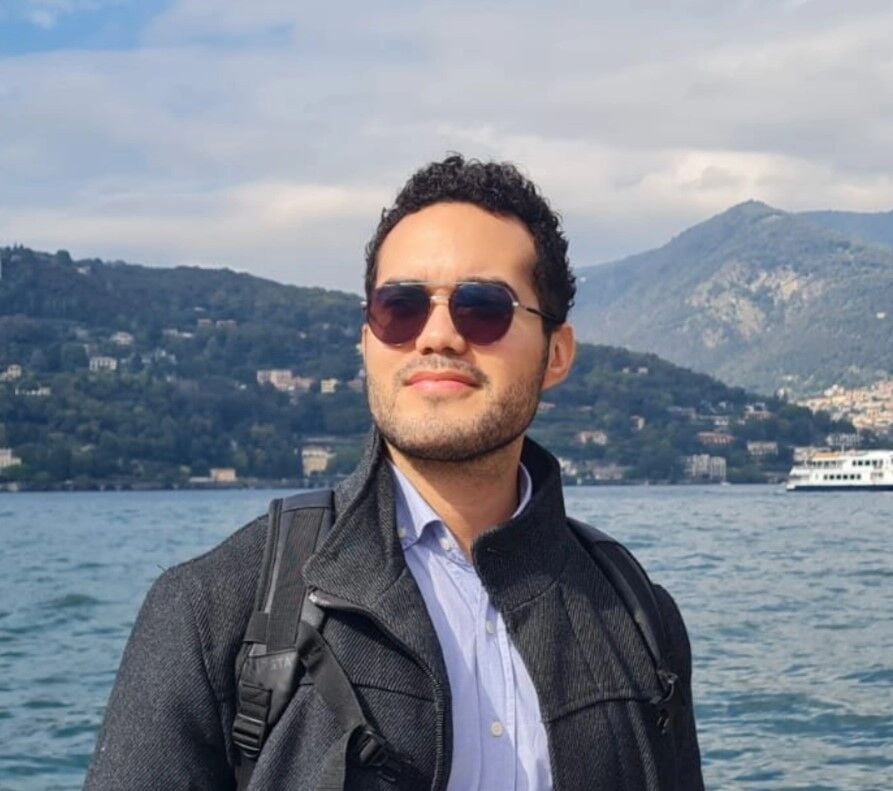
Marie Skłodowska-Curie Actions Doctoral Fellowship Scholar José Luis Padilla Agudelo from Colombia Shares His Journey of Securing a Fully Funded PhD at the University of Cádiz, Spain
University: University of Cádiz
Degree: PhD in Microbiology and Sustainable Agriculture
Previous Education: Microbiologist and Bioanalyst; Master’s in Microbiology, Industrial University of Santander (UIS)
Scholarship: Marie Skłodowska-Curie Actions (MSCA) Doctoral Fellowship under Horizon Europe Eco2Wine Doctoral Network – Full Funding (Monthly Salary, Mobility and Family Allowance, Research and Travel Funding)
Social Media
LinkedIn: linkedin.com/in/jose-luis-padilla-agudelo-4a13b026b/
Program Instagram: instagram.com/eco2wine
Program Website:https://eco2wine.eu/
The Journey
My name is José Luis Padilla Agudelo, and I am a Colombian PhD student based in Spain. My research is in microbiology and sustainable agriculture, where I am seeking to better understand how beneficial microorganisms and their metabolites can help reduce the use of chemical inputs in the wine industry.
I have always been interested in how microbiology can be applied to solve real agricultural problems. My background is in phytopathology, molecular and cellular biology, and biological alternatives for plant disease management. This PhD drew on my previous experience and allowed me to work within an international research network and contribute to a more sustainable future for viticulture.
Marie Skłodowska-Curie Actions Details
I was awarded a Marie Skłodowska-Curie Actions (MSCA) Doctoral Fellowship under the Horizon Europe programme. Along with other PhD students, I am part of the doctoral network Eco2Wine. I am hosted at the University of Cádiz (UCA) in Spain, where I carry out my research on microbiology, biological control, and molecular approaches. The scholarship includes a monthly salary, a mobility and family allowance, and research and travel funding. MSCA funding is quite generous and allows you to focus entirely on your research without worrying about supplementing your funding.
Educational Background
I am a microbiologist and bioanalyst, and I hold a master’s degree in microbiology from Industrial University of Santander (UIS) in Colombia. During my academic training and work experience, I developed a strong background in phytopathology, molecular and cellular biology, and the study of biological alternatives for plant disease management. My previous projects also included the identification of volatile organic compounds (VOCs), as well as work with cell lines, flow cytometry, Real-Time Cell Metabolic Analysis, and recombinant DNA technologies.
I think my educational background prepared me well for Eco2Wine because the project requires both strong microbiological expertise and the ability to apply laboratory findings to real agricultural systems. The excellent mentorship I received from my professors, together with the encouragement of interdisciplinary work throughout my studies, gave me the tools to reach these achievements.
How Did You Prepare to Apply to the University of Cádiz?
I prepared by carefully studying the Eco2Wine Doctoral Network, the host institution, and the objectives of the PhD position. I also reviewed how my previous experience could contribute to the specific work package and reflected on how to explain my motivation clearly: not only why I wanted a PhD, but why this PhD, this network, and this research topic matched my profile.
How Did You Find Information About Marie Skłodowska-Curie Actions and University of Cádiz?
I found information through scholarship and research job platforms commonly used for European academic opportunities, especially EURAXESS.
Did You Take Any Standardized Tests? If So, How Did You Prepare for Them?
For this application, English was an important part of the selection process. The thesis proposal, written communication, and interviews were conducted in English, and the consortium or host institution required a fluent level, approximately B2 or C1, to be able to carry out the project successfully.
How Did You Prepare to Apply for the Marie Skłodowska-Curie Actions?
I prepared by aligning my CV, motivation letter, one-minute introductory video, and interview answers with the goals of the Eco2Wine project. In the video, I introduced myself and explained what I would bring to the project. I focused on showing that my previous scientific experience was not only generally relevant, but directly connected to the advertised doctoral topic.
A key part of my preparation was learning how to communicate my profile clearly. MSCA applications are highly competitive, so it is not enough to simply list skills. You need to show how those skills can help address a specific problem within the project.
How is Your Experience at the University of Cádiz?
My experience at the University of Cádiz and within the Eco2Wine network has been highly enriching. The PhD is not limited to one laboratory or one institution; it is part of an international doctoral network that offers training, collaboration, mobility, and exposure to different scientific environments.
I would rate the University of Cádiz very positively from an academic and research perspective. The facilities, laboratory equipment, and technical capacity available to develop the project activities are very good. In addition, my supervisors have strong scientific backgrounds that are well aligned with the topic of my thesis, which has been very important for guiding my research.
How Does the University of Cádiz Support International Students?
The support comes through both the host university and the structure of the Marie Curie project, the Eco2Wine network. International doctoral candidates receive administrative guidance, supervision, network-level training, and the opportunity to interact with other doctoral candidates and researchers across institutions. Moving internationally for a PhD can be demanding, so having a structured doctoral network is a major advantage.
What Do You Think Made Your Application Stand Out?
I think my application stood out because my previous experience matched the scientific needs of the project very closely. Eco2Wine focuses on microbial interactions, biological control, and sustainable viticulture, and I had already worked on related topics before applying.
I was also able to explain how my background in microbiology, phytopathology, and molecular tools could contribute to the project and support the development of practical alternatives for disease control. In competitive fellowships, it is not only important to have strong technical skills, but also to show that you understand the project and can grow within it.
Looking Back, Would You Have Done Anything Differently During Your Time in the Program?
I would have spent even more time studying how MSCA Doctoral Networks function before starting, especially because these programmes combine research, mobility, training, deliverables, collaboration, and communication across several countries and institutions. Having a clearer idea of that structure from the beginning would have helped me adapt even faster.
What Advice Would You Give Those Looking to Apply for a Similar Scholarship?
My advice is to apply with strategy, not fear. MSCA Doctoral Fellowships are competitive, but many candidates underestimate how valuable their specific experiences can be when they explain them well. Read the project description carefully and identify the exact skills the position requires. Then, connect those requirements with clear evidence from your own background. It is not enough to say that you are motivated; you need to show how your previous work relates to the scientific aims of the project.
I would also recommend preparing your CV and motivation letter as a coherent story. The selection committee should understand who you are, what you have done, why the project matters to you, and what you can contribute. Finally, research the supervisors, host institution, and network, because in the interview it helps to show that you understand the science, the training structure, the mobility, and the expected impact.
Want to submit your
scholarship journey?
Submit Your Story Here!
More Scholarship Recipients
My name is Shah Hussain, and I am from Khyber Pakhtunkhwa, Pakistan. I completed my Bachelor’s in Psychology at the Univer .... Read more
I am June from the Philippines. I am an educator for Social Sciences and Humanities. I recently earned my Master in Southeas .... Read more
Hi, my name is Abdul Hafeez, and I come from a small town called Nasirabad in Sindh, Pakistan. Currently, I am pursuing a ma .... Read more
Leave A Comment