
How José Ignacio Pérez López, a Spanish Scholar, Secured a Fully Funded PhD Through the Gates Cambridge Scholarship
University: University of Cambridge
Degree: PhD in Chemistry
Previous Education: BSc in Biochemistry, University of Seville; Master’s in Molecular Genetics, University of Seville
Scholarship: Gates Cambridge Scholarship – Full-Cost Funding (University Fees, Stipend, Visa Costs, Immigration Health Surcharge, and Travel; Approximately £60,000 per Year)
Other Offered Scholarships: Fully Funded Scholarships through the Department of Chemistry and Cambridge International Trust, University of Cambridge
Social Media
LinkedIn: https://www.linkedin.com/in/jos%C3%A9-ignacio-p%C3%A9rez-l%C3%B3pez-48631025a/
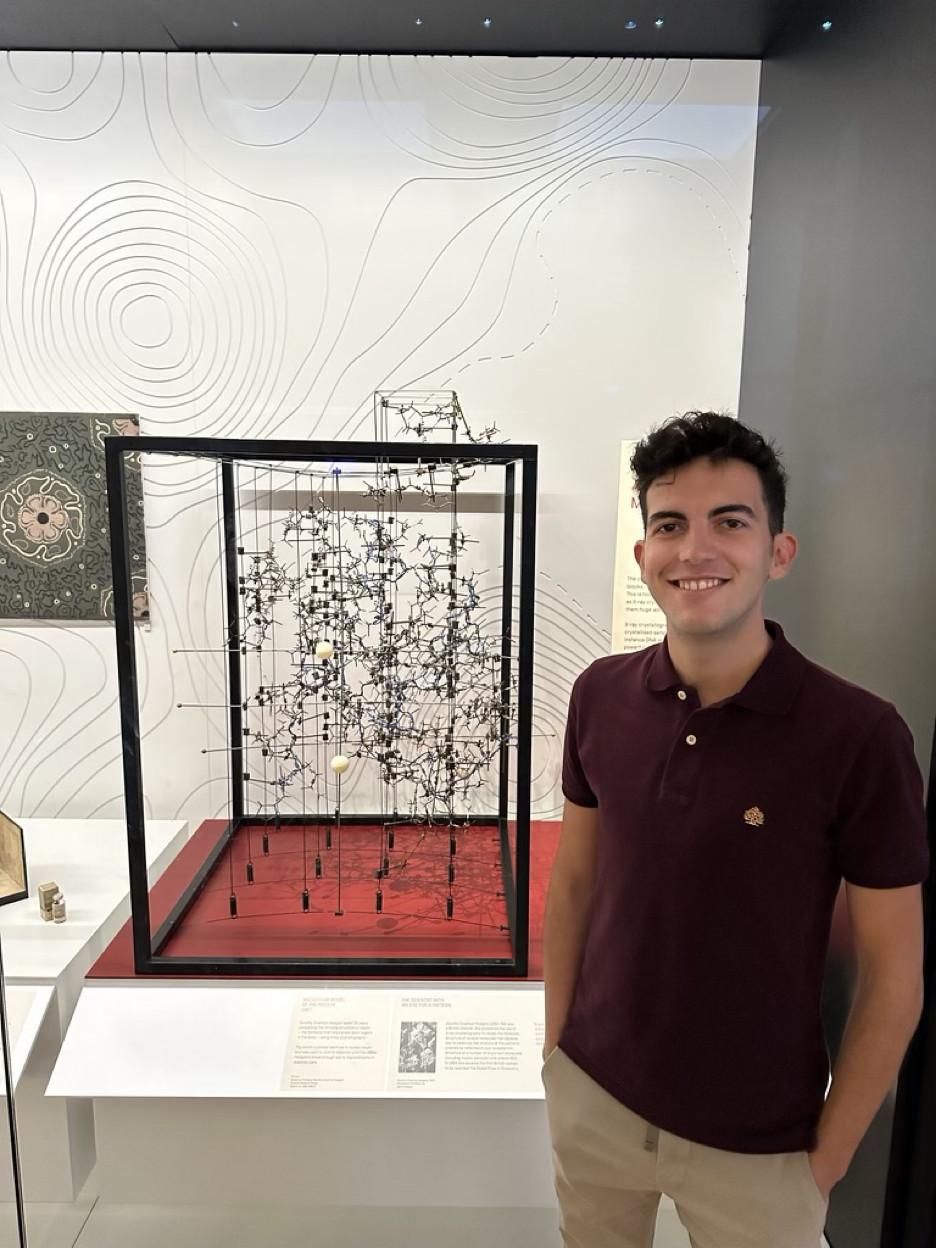
The Journey
My name is José Ignacio Pérez López, although most people call me Nacho. I am from Seville, in southern Spain, and I grew up in a working-class family, being the first generation to go to university. My motivation to pursue research is also personal. I have lived with migraines since I was a kid, and biological treatments, including Botox and anti-CGRP antibodies, have made a life-changing difference to me. That experience showed me how research can transform someone's life and led me to choose Biochemistry instead of Medicine for undergrad.
Outside science, music is a very important part of my life: I play the flute, spent ten years studying at the Seville Conservatory of Music, and was a flautist in the Philarmonia Orchestra for 4 years.
During my Biochemistry degree at the University of Seville, I became fascinated by how the structure of proteins, and sometimes their lack of structure, relates to their function. I joined a research group at the Institute for Chemical Research (CSIC) in Seville. There, I discovered biophysics and became fascinated by techniques such as nuclear magnetic resonance spectroscopy and molecular dynamics simulations. During my time there, I became especially interested in how proteins and nucleic acids organise into membrane-less compartments through phase transitions.
My interest in simulating these large systems led me to Professor Rosana Collepardo's group in Cambridge. An Erasmus-funded research internship gave me the opportunity to work with her team, especially with Dr Jan Huertas and Dr Julia Maristany, who encouraged me to apply for a PhD with the Collepardo Group. Rosana became a role model for me, and working in the group helped me realise that this was the kind of research I wanted to pursue: multidisciplinary teams working together in international collaborations. I really like to work at the interface of experiments and simulations.
However, getting a place and being able to take it up were two different things. The first time I applied, in 2023, I received an offer of admission but did not secure funding. I therefore pursued a master's degree in Seville and applied again. Another Erasmus-funded opportunity allowed me to return to Cambridge for my master's thesis, supervised by Dr Huertas. During my master's, I finally secured full funding for my PhD in 2024. I am now a Gates Cambridge Scholar pursuing a PhD in Chemistry at the University of Cambridge, supervised by Prof. Collepardo.
My research now focuses on chromatin, a polymeric mixture of DNA and proteins that packages our genetic material inside cells. I use simulations to investigate how histone variants and epigenetic modifications affect chromatin's physical behaviour, including its organisation and phase separation. What excites me the most is bringing together molecular biology, chemistry, and physics to understand how gene regulation is controlled physicochemically.
Gates Cambridge Scholarship Details
I received the Gates Cambridge Scholarship to pursue my PhD in Chemistry at the University of Cambridge. The programme selects scholars based on academic excellence, their reasons for choosing their course, a commitment to improving the lives of others, and leadership potential. The acceptance ratio is very low; around 1% of applicants get the scholarship.
It is a full-cost scholarship covering university fees and a stipend, as well as visa costs, the Immigration Health Surcharge, and travel at the beginning and end of the course. Additional academic-development funding, for activities such as conferences and courses, is available on a discretionary basis.
For my course, the funding package is worth approximately £60,000 per year. Most of it covers university fees, rather than being paid directly to me. Another major benefit of Gates is its community of scholars. We have a trip at the beginning of the scholarship as well as events and a common social/working building in the city centre, which allow us to interact, build friendships, and collaborate with other scholars.
Were You Offered Any Other Scholarships?
Yes. Apart from Gates, I was also offered other fully funded scholarships through the Department of Chemistry and the Cambridge International Trust, both internal University of Cambridge funding.
Educational Background
I completed my BSc in Biochemistry at the University of Seville in 2023, with a final average of 9.07/10. I graduated among the top three students in my cohort, recognised by the Spanish Society of Biochemistry and Molecular Biology. I then completed a master’s degree in Molecular Genetics at the same university in 2024, with a final average of 9.49/10. My master's thesis was the only one in my cohort awarded honours.
Alongside my studies, I worked part-time throughout my bachelor's degree to cover academic and living costs, and I secured scholarships from the Government and the Spanish Research Council to support me during my research (stipend). Balancing work, university, research and a chronic health condition was challenging, but it helped me develop the organisational skills and perseverance that I now bring to research.
My interest in combining disciplines actually began before university. At 15, I built a laser harp for a school technology project, bringing together music, coding and electronics. Later, my degree and research placements allowed me to connect that interest in coding with molecular biology. I gained experience in experimental techniques, including protein expression, purification and NMR spectroscopy, as well as molecular dynamics simulations.
That combination has been particularly valuable for my PhD. My research sits at the interface of biophysics and molecular biology, and my background helps me connect the physical behaviour we observe in simulations with the biological processes we are trying to understand. It has also helped me a lot to have experimental experience; it helps you understand the limitations of some approximations and how to compare them or translate them to simulation readouts.
How Did You Prepare to Apply to the University of Cambridge?
How Did You Find Information About Gates Cambridge Scholarship and University of Cambridge?
My starting point was research, not a list of universities or scholarships. I became interested in the work being done in the Collepardo Lab and contacted the group to learn more. Those conversations led to research internships and, eventually, to the possibility of applying for a PhD.
The group was also an important source of information for scholarship applications, but that information is easy to find online. I would add that the Cambridge system isn't very standard, so it’s very helpful to find someone who has navigated this process before.
Did You Take Any Standardized Tests? If So, How Did You Prepare for Them?
I took the TOEFL English-language test. Preparing for it was a financial challenge because I couldn’t afford a conventional preparation course. I was lucky that a friend's mother, Belen Agudo, is an English teacher. She helped me prepare for a greatly reduced fee, which I paid with money I earned from tutoring.
I also paid for some online practice resources, including mock tests with assessments. The test itself was expensive for me at the time, so I approached it knowing that I could only afford one attempt. Her support, together with those practice materials, was especially important in helping me prepare.
How Did You Prepare to Apply for the Gates Cambridge Scholarship?
I relied a lot on the support of people who had been through similar processes. Lab members shared their experiences, and I exchanged ideas with friends applying at the same time. I received feedback on my research proposal and practised through mock interviews with friends and other PhD students in the group.
In my Gates application, I connected my experience to the scholarship's criteria through concrete examples. Instead of just stating my academic excellence, I connected it to my research experience and results, explained why this particular PhD was the right next step for my career, and showed how I had demonstrated leadership and contributed to improving others' lives.
What Do You Think Made Your Application Stand Out?
While I can't pinpoint the exact reason the selection panel chose me, I believe it was a combination of my research experience, how well my background aligned with the PhD proposal, and my genuine enthusiasm. My grades were solid, though I wasn’t top of my class, nor did I attend an Ivy League school. I had been engaged in research early in my degree, gained experience in both experimental and computational methods, and received recommendations from those who knew my work closely.
I could also explain why I wanted this particular PhD. Since I had already been involved with the group, my motivation to apply wasn't solely because of Cambridge's reputation. I understood the research, had collaborated closely with the team, and was genuinely enthusiastic about the questions I aimed to explore.
Ultimately, my journey was somewhat unconventional. I faced many setbacks, including an initial application that didn't secure funding. This shows that you don't always need a perfect path to achieve a good position. Instead, learn from your experiences and consider how they can contribute to your personal development.
What Would You Have Done Differently if You Were Going Through the Process Again?
I believe I would feel less stressed about it. Throughout the process, you realize that nothing disastrous happens if you don’t succeed the first time, and that, in hindsight, the process should also be enjoyable. You meet some really interesting people doing what you aspire to do, so perhaps you could try to enjoy it more, since writing the application should be fun. For me, however, it was very stressful.
I also would remind myself that not receiving funding the first time doesn't mean the end of the journey. In my case, I completed a master's degree, continued gaining research experience, and applied again. Take the process seriously, but try not to treat each outcome as a verdict on your ability or your future.
What Advice Would You Give Those Looking to Apply for a Similar Scholarship?
Be yourself, but be specific. Rather than writing that you are passionate, committed, or a good leader, show what those qualities have looked like in practice. Choose examples that explain what you did, why it mattered, and what you learned. For Gates Cambridge, make the connection to all four criteria clear, rather than focusing only on academic achievement.
Ask for feedback and accept the comments from everyone who can help. A bad comment doesn’t mean you are bad; they are trying to help you succeed, so take it the same way. Conversations with potential supervisors, lab members, friends, and people who have applied before can help you express your ideas more clearly. Mock interviews were particularly useful for me. Also, the whole process is easier if the final application is yours: your ideas and your words. Coming up with a strong application takes a lot of reading, thinking, etc. So, you are already prepared.
Finally, don't assume that a non-traditional path means you don't belong. My own route included financial and social barriers, health challenges, and an unsuccessful attempt to secure funding. Those experiences are part of me; they have shaped me and given me experience. And somehow they are valuable.
Want to submit your
scholarship journey?
Submit Your Story Here!
More Scholarship Recipients
My name is Shah Hussain, and I am from Khyber Pakhtunkhwa, Pakistan. I completed my Bachelor’s in Psychology at the Univer .... Read more
I am June from the Philippines. I am an educator for Social Sciences and Humanities. I recently earned my Master in Southeas .... Read more
Hi, my name is Abdul Hafeez, and I come from a small town called Nasirabad in Sindh, Pakistan. Currently, I am pursuing a ma .... Read more
Leave A Comment