
How Issatay Jaxykeldinov, a Kazakh Scholar, Secured a Full-Tuition BBA at CUHK Through the Belt and Road Scholarship
University: The Chinese University of Hong Kong, Hong Kong
Degree: Integrated BBA, focusing on Finance and Business Analytics; third-year student
Previous Education: National School of Physics and Math, Almaty; graduated in May 2023 with honours and GPA 5.0/5.0
Scholarship: Belt and Road Scholarship: HK$480,000 in tuition fees over four years and a one-time HK$15,000 allowance for initial expenses
Social Media: LinkedIn
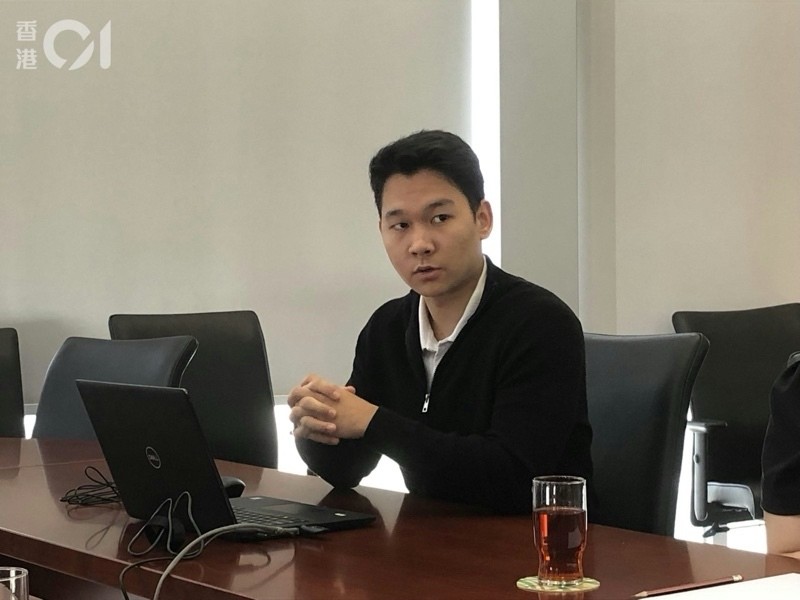
The Journey
My name is Issatay Jaxykeldinov. I’m from Almaty, Kazakhstan, and I’m a third-year Integrated BBA student at The Chinese University of Hong Kong, focusing on Finance and Business Analytics.
I became interested in finance around Grade 10. My father works in the field, so I had an early example of what that career could look like. What appealed to me was how closely it connected to everything happening in the world. Politics, technology, human behaviour — eventually, all of it finds its way into a financial decision.
I liked the idea of working in a field where paying attention to the world is part of your job. Hong Kong was an obvious place to explore that ambition.
Belt and Road Scholarship Details
I received the Hong Kong government’s Belt and Road Scholarship to study at The Chinese University of Hong Kong. My award covers HK$480,000 in tuition fees over four years, together with a one-time allowance of HK$15,000 for initial expenses.
That support made it possible for me to pursue my degree in Hong Kong. I’m grateful to the Hong Kong government for making that investment in me, especially at a stage when so much of what I could offer was still potential.
Educational Background
I graduated from the National School of Physics and Math in Almaty in May 2023, with a GPA of 5.0 out of 5.0 and a diploma with honours.
Outside school, I founded Almaty Maths Battles, a mathematics competition community that has since organised eight tournaments involving over 1,500 students from 24 cities across Kazakhstan. Over the course of the project, I raised $20,000 and led a team of 70 people, including judges, volunteers and PR staff.
Running it gave me an early education in responsibility. You can have a very convincing idea in your head. Then you have to persuade people to participate, find support, and actually deliver. Reality is quite a strict examiner.
Interestingly, I didn’t compete in Olympiads myself, although I recommend exploring them. My involvement came through creating opportunities for other students to compete.
How Did You Prepare to Apply for The Chinese University of Hong Kong?
Less systematically than I should have, honestly.
I knew I wanted to study finance, and Hong Kong appealed to me because of its position as a financial centre. But I didn’t have a carefully designed application strategy. CUHK was the strongest fit among the offers I received, and it was the place I was most excited to attend.
I also missed an interview invitation from HKU because I didn’t see the email. I wish that story had a more sophisticated explanation. It doesn’t.
Looking back, I was relaxed partly because I hadn’t fully understood the consequences of my own decisions. That’s something I’ve become more aware of with age. Sometimes you feel fearless simply because you haven’t thought far enough ahead.
Did You Take Any Standardized Tests? If So, How Did You Prepare for Them?
I took IELTS, the SAT, AP Microeconomics, and AP Macroeconomics. I’m going to exercise a little discretion and keep the scores to myself. They were hardly my finest work.
I hadn’t prepared with enough discipline. I was much more absorbed in projects and activities where I could see an immediate result. Building something held my attention. Exam preparation required a consistency I hadn’t developed yet.
It would be convenient to turn that into a philosophy about how I was too interested in the real world to care about exams. The honest explanation is that I could have worked harder.
My application still succeeded, and I think that’s encouraging for people whose scores are imperfect. But I wouldn’t use my outcome to defend every decision that led to it. You can get a good result and still have plenty to learn from how you got there.
If I were doing it again, I would prepare properly and aim as high as I could.
How Did You Prepare to Apply for the Belt and Road Scholarship?
CUHK contacted me to say that they had selected me for nomination. They guided the process, and I provided the documents and information needed for the application.
In my personal statement, I wrote about my experience and what I wanted to do with the opportunity. I made some fairly ambitious promises. At the time, I was very focused on convincing someone to believe in my potential.
Then they did. That makes your own words feel considerably more serious.
I’m still working towards the things I wrote about. I’m grateful to the Hong Kong government for supporting me, and I want my decisions over the next few years to justify that support.
There’s something slightly uncomfortable, in a useful way, about being given an opportunity you asked for. You lose the ability to keep wondering what you might have done if someone had given you a chance.
How Is Your Experience at The Chinese University of Hong Kong?
The academic adjustment was easier than I expected. My school background helped, and I found my business courses manageable. Although my GPA isn’t 4.0, I should probably show some restraint before declaring the whole thing easy.
Having room beyond coursework has allowed me to gain professional experience. I’ve worked at Habib Bank Zurich and PwC, and I’m currently in ALM Treasury at BNP Paribas.
Those experiences have changed how I approach learning. Once you’ve seen a decision being made at work, the theory behind it becomes much more interesting. You start asking better questions because you understand what is at stake.
I’ve also become more demanding of myself. Getting into university was an achievement, but you can only live off an admission letter for so long. Eventually, what matters is what you do after arriving.
How Do You Rate The Chinese University of Hong Kong Academically and Why?
My experience of the business programme has been positive. The coursework has been manageable for me, and I’ve had space to pursue professional experience alongside it. I can only speak for my own programme and the courses I’ve taken.
I’ve become cautious about calling a subject easy. Sometimes that means you understand it well. Sometimes it means you’ve only engaged with it at the level needed to pass the assessment.
That’s a question I increasingly ask myself. How much do I actually understand, and how much have I simply become good at being examined on?
Are Your Classes Conducted in English?
The classes I take are taught in English, and I’ve been able to follow my programme without knowing Cantonese.
What Did You Pursue After the Scholarship?
I’m still completing my degree, so I’m answering this from the middle of the story.
When you’re younger, a career is easy to imagine through company names and job titles. Working gives you a much more detailed picture. You discover the daily responsibilities, the decisions people make, and the skills you still need to develop.
I’ve become more ambitious through that exposure. I also have a much clearer understanding of how much work those ambitions require.
Would Students Have Academic Problems Without Knowing Cantonese?
Some courses are offered in Cantonese, so I check the teaching language when choosing classes. In my own experience, that has been straightforward. I would encourage applicants to check the language requirements for their specific programme and individual courses.
What Do You Think Made Your Application Stand Out?
I can’t know exactly what the selection committee thought. My own view is that my projects made the application more credible.
At that age, you’re unlikely to have an extraordinary professional track record. But you can still show what happens when you’re given a little freedom and responsibility. I tried to give them enough evidence to imagine what I might do with more.
What Would You Have Done Differently?
I would have prepared much more seriously for the exams and managed the application process with more care.
I was too comfortable leaving parts of my future to chance. Because things worked out, it would be easy to look back and call that confidence. Some of it was simply a lack of preparation.
That’s probably the biggest change in how I think now. I still want to take ambitious chances, but I want to earn better odds.
And I would check my inbox. Apparently, some life lessons arrive as unread emails.
What Advice Would You Give Those Applying for a Similar Scholarship?
Take your ambitions seriously enough to give them some evidence.
If you say you want to lead, take responsibility for something now. If you care about a problem, spend time understanding it and try to do something useful. Even a modest project can give you a great deal to say if you’ve done the work.
Finally, think about the promises you make in your application. You may actually get the opportunity to fulfil them.
Want to submit your
scholarship journey?
Submit Your Story Here!
More Scholarship Recipients
My name is Arnold Sidiprasetija, and I am from Indonesia. I received the 2026 Global Korea Scholarship to pursue a master's .... Read more
My name is Andrew Bandawe, and I am from Mozambique. I grew up in Niassa Province, a remote setting where access to opportun .... Read more

My name is Silvany Tavares, and I am from Cape Verde. I studied Biomedicine in Brazil, and later I got my Master’s in Biom .... Read more
- Bachelor's Scholarships
- Biomedical Engineering
- Brazil
- Cape Verdean Nationality
- China
- Chinese Government Scholarships
- FCT PALOP + Timor-Leste Scholarship
- Federal University of Uberlândia
- Fully Funded Scholarships
- Health
- Master's Scholarships
- NOVA University Lisbon
- Partially Funded Scholarships
- Ph.D. Scholarships
- Portugal
- Southeast University
Leave A Comment