
Marie Curie Scholarship Scholar Hadi Saniei from Iran Shares His Journey of Securing a Fully Funded PhD at the University of Padova, Italy
University: University of Padova
Degree: PhD in Materials/Polymer Engineering
Previous Education: Bachelor’s degree in Mechanical Engineering; Master’s degree in Mechanical/Bioengineering
Scholarship: Marie Curie Scholarship – Full Funding (Living Expenses, Other Related Costs)
Social Media
LinkedIn: linkedin.com/in/hadi-saniei-3362a51b4/
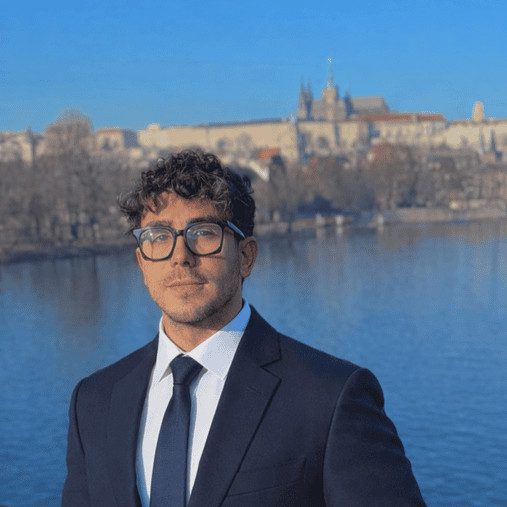
The Journey
My name is Hadi Saniei, and I am from Iran. I have been awarded a fully funded PhD position in Materials/Polymer Engineering at the University of Padova in Italy. My academic background includes a Bachelor’s degree in Mechanical Engineering and a Master’s degree in Mechanical/Bioengineering, which I completed with a GPA of 4.0/4.0.
I decided to pursue further education in materials and polymer engineering because this field has always been one of my main academic interests and, in many ways, my dream field. I have always been fascinated by how polymers and advanced materials can be designed, modified, and applied in different industries and research areas. The interdisciplinary nature of this field also attracted me, as it combines engineering, chemistry, biology, and advanced research methods.
Marie Curie Scholarship Details
I received a fully funded Marie Curie scholarship for my PhD studies at the University of Padova, Italy. The scholarship covers my living expenses and other related costs, allowing me to focus fully on my research and academic development.
Educational Background
Before starting my PhD, I completed my Master’s degree in Mechanical/Bioengineering with a GPA of 4.0/4.0 and my Bachelor’s degree in Mechanical Engineering. My previous education helped me build a strong foundation in engineering principles, materials science, and research methodology.
During my Master’s degree, I became more familiar with scientific research, academic writing, and experimental work. One of the most important parts of my academic background was publishing an ISI scientific article in my field, which I believe played a major role in strengthening my PhD application.
How Did You Prepare to Apply to the University of Padova?
I prepared myself for PhD-level applications by improving different aspects of my academic and professional profile. First, I worked on publishing a scientific ISI paper in my field, as having research output is very important for PhD applications. I also improved my English skills, especially for the IELTS exam.
In addition, I learned relevant software programs in my field, improved my research skills, and worked on my problem-solving and scientific writing abilities. I believe that preparing for a PhD application is not only about having good grades; it is also about showing that you are ready to work independently, think critically, and contribute to research.
How Did You Find Information About the Marie Curie Scholarship and the University of Padova?
Finding a PhD position can be a tiring and time-consuming process, but consistency is the most important factor. Applicants should not give up and should apply to as many relevant positions as possible. I used different methods and platforms to find PhD positions. I searched university websites, published papers in my field, checked academic position websites, and contacted professors directly by email. I also used LinkedIn, and in fact, I found my PhD position through LinkedIn.
Did You Take Any Standardized Tests? If So, How Did You Prepare for Them?
Yes, I took the IELTS Academic exam and received an overall score of 7.0. There are many resources available for IELTS preparation, and this can sometimes confuse candidates because they face a huge number of books, websites, and online materials. What worked for me was focusing on one good source and reviewing it several times instead of jumping from one source to another.
I also strongly recommend the Cambridge IELTS books, because they include real exam-style tests. My suggestion for future candidates is to treat these practice tests like the real exam. They should create conditions similar to the actual test, follow the official timing, and complete the tests seriously. This helps build both confidence and time-management skills.
How Did You Prepare to Apply for the Marie Curie Scholarship?
For the scholarship application, I focused on improving the most important parts of my profile. My published paper during my Master’s degree was one of the strongest parts of my application. I also tried to improve my English skills, research experience, and scientific writing.
Moreover, I kept my knowledge updated by reading scientific articles in my field. I believe this helped me understand current research trends and prepare better for interviews, proposals, and academic discussions.
What Do You Think Made Your Application Stand Out?
In my opinion, my published paper during my Master’s degree had the strongest influence on my application. It showed that I had research experience and that I was able to contribute to scientific work.
The second important factor was my English ability. For international PhD positions, especially in Europe, a good level of English can make a big difference. I also tried to keep myself updated by reading scientific papers in my field, which helped me show genuine interest and knowledge during the application process.
Looking Back, Would You Have Done Anything Differently During Your Time in the Program?
If I could go back and go through the process again, I would allocate more time to improving my English skills. For non-native English-speaking candidates, having a strong level of English is extremely important. In my opinion, good English skills can even compensate for some weaknesses in other parts of the application.
What Advice Would You Give Those Looking to Apply for a Similar Scholarship?
My first and strongest piece of advice for candidates who want to apply for PhD positions is to improve their English and reach a very good level. English is essential for writing, interviews, research communication, and academic life.
My second piece of advice is to learn how to use different AI tools effectively. In today’s academic world, artificial intelligence is becoming increasingly important, and students should know how to use AI tools responsibly and productively in their own fields. I can see that many professors and research groups are becoming more interested in applying artificial intelligence to different scientific areas. Therefore, if a candidate understands how AI can be used in their field, it can strongly improve their application.
My third piece of advice is to try to publish a scientific paper in a good journal during the Master’s degree. A published paper can significantly strengthen the CV and show that the candidate has research experience.
My fourth suggestion is to keep your knowledge updated by reading scientific articles regularly. I also believe that candidates should not focus only on one narrow field. In academia and scientific research, many topics are becoming interdisciplinary. Therefore, it is helpful to have at least a basic understanding of different fields and majors, even if you are not deeply specialized in all of them.
Overall, consistency is very important. Finding a PhD position may take time, and rejection is part of the process. However, candidates should continue applying, improving their profile, and looking for opportunities through different platforms.
Want to submit your
scholarship journey?
Submit Your Story Here!
More Scholarship Recipients
My name is Shah Hussain, and I am from Khyber Pakhtunkhwa, Pakistan. I completed my Bachelor’s in Psychology at the Univer .... Read more
I am June from the Philippines. I am an educator for Social Sciences and Humanities. I recently earned my Master in Southeas .... Read more
Hi, my name is Abdul Hafeez, and I come from a small town called Nasirabad in Sindh, Pakistan. Currently, I am pursuing a ma .... Read more
Leave A Comment