
How Gina Dogliotti Secured a Fulbright-ANII Scholarship for a Forestry Ph.D. at NC State
University: North Carolina State University (United States)
Degree: Ph.D. in Forestry and Environmental Resources, started in fall 2025
Previous Education: Agricultural Engineering degree and master’s in Agricultural Sciences, Universidad de la República (Uruguay). Research internship at the University of British Columbia (Canada).
Scholarship: Fulbright-ANII Scholarship, awarded by the Fulbright Commission in Uruguay and ANII. The award includes an allowance intended to help cover living expenses.
Social Media
LinkedIn: linkedin.com/in/ACoAACXoeLQBt00VFrVxOp_G0BgBzoDs2VFPuf0/
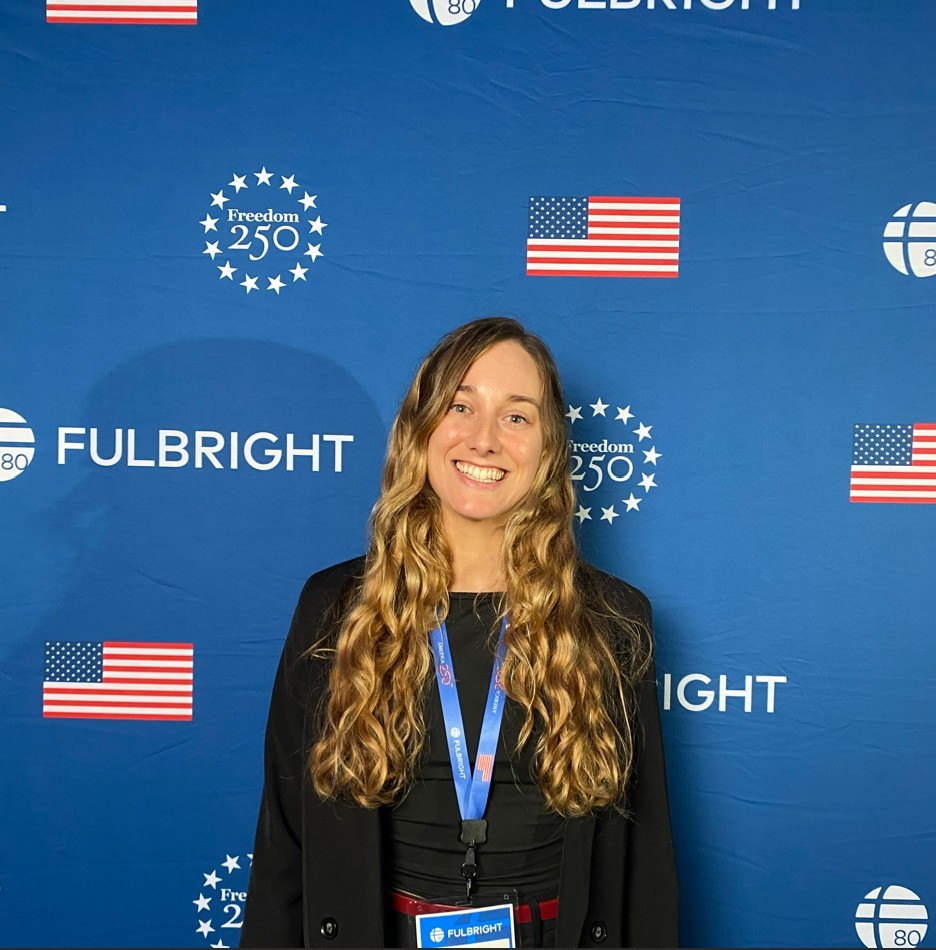
The Journey
My name is Gina Dogliotti, and I am from Uruguay, a small country in South America where agriculture and forestry play an important role in the economy. I am an Agricultural Engineer with a Master's degree in Agricultural Sciences from Universidad de la República, where I also worked as an assistant professor and researcher in the Forestry Department. I am currently pursuing a PhD in Forestry and Environmental Resources at North Carolina State University (NC State), in the United States.
Over the past few decades, forest plantations have expanded considerably in Uruguay, becoming one of the country's major economic activities. However, much of this expansion has taken place on land previously occupied by natural grasslands, raising important questions and public debate about the environmental consequences of afforestation, particularly its effects on water resources.
My PhD research addresses these questions by combining long-term hydrological data, remote sensing, and forest ecophysiology to better understand how eucalyptus and pine plantations use water and influence water availability. I work with a unique paired-watershed experiment established in Uruguay in the late 1990s through a collaboration between NC State and a U.S. forestry company, and currently managed by INIA (Uruguay's National Agricultural Research Institute). The experiment provides approximately 25 years of hydrological records, offering an exceptional opportunity to investigate long-term forest-water interactions.
I decided to pursue a PhD because I wanted to contribute to a field that is both scientifically challenging and directly relevant to my country.
Fulbright-ANII Scholarship Details
- Scholarship: Fulbright-ANII Scholarship.
- Institutions: Fulbright Commission Uruguay and ANII (Uruguay's National Agency for Research and Innovation).
- Host institution: North Carolina State University.
- Degree: PhD in Forestry and Environmental Resources.
- Start date: Fall 2025.
Regarding the financial support, Fulbright provides a general allowance intended to help cover living expenses in the host country. However, the exact financial arrangements depend on the scholarship and university.
One important lesson I would share with future applicants is to clarify the tuition arrangements as early as possible. The Fulbright allowance does not necessarily cover the full cost of university tuition, so it is essential to understand whether the university, department, or academic advisor can provide a tuition waiver or additional financial support. This can make a significant difference when planning your studies abroad.
Educational Background
I hold a degree in Agricultural Engineering and a Master's in Agricultural Sciences, both from Universidad de la República in Uruguay.
During my undergraduate studies, I spent two years working in the Laboratory of Plant Evolution and Domestication, where I also conducted my undergraduate thesis. This experience introduced me to scientific research and helped me develop a strong interest in understanding plant-environment interactions.
My Master's research focused on the design and evaluation of silvopastoral systems, particularly the interactions between trees, pasture production, and the surrounding environment. As part of my graduate studies, I completed a research internship at the University of British Columbia in Vancouver, Canada. There, I gained experience with the 3-PG forest growth model and LiDAR data analysis, which significantly broadened my technical skills and research perspective.
I also had the opportunity to present my research at the International Congress of Silvopastoral Systems and the IUFRO 2023 conference, where I received the Journal of Forest Business Research Award for Best Young Researcher Presentation.
Since 2021, I have been working in the Forestry Department at Universidad de la República, combining research, teaching, and supervision of undergraduate students. These experiences helped me develop both the technical background and the academic perspective needed to pursue doctoral research in forest hydrology and ecophysiology.
How Did You Prepare to Apply to North Carolina State University?
My path was more project-driven than ranking-driven. Rather than starting by looking for the highest-ranked universities, I focused on finding a research opportunity that genuinely matched my interests and long-term goals.
Through my Master's thesis committee, I learned about the long-term paired-watershed experiment in Uruguay that NC State had helped establish. The project immediately caught my attention because it addressed questions I had been interested in throughout my academic career.
This connection eventually led me to NC State and to my PhD advisor, Dr. Rachel Cook. Once I identified a strong match between the research project, the advisor's expertise, and my own research interests, choosing the institution became a much more straightforward decision.
I believe this is an important point for prospective PhD students: finding the right research group and advisor can be just as important as choosing the university itself.
How Did You Find Information About the Fulbright-ANII Scholarship and North Carolina State University?
My academic network played a key role in identifying the right institution and research opportunity. Conversations with my Master's committee members helped me connect with researchers and learn about ongoing projects.
For the scholarship, I relied primarily on the Fulbright Commission in Uruguay. It organizes several information sessions before the application deadline, which were extremely helpful in understanding the program, the selection criteria, and what was expected in each section of the application.
I strongly recommend attending these sessions and taking advantage of the opportunity to ask questions directly to the scholarship coordinators.
Did You Take Any Standardized Tests? If So, How Did You Prepare for Them?
Yes, I took the TOEFL as part of my university application.
I had studied English in Uruguay for approximately six years before applying. This background was fundamental, not only for meeting the university's language requirements but also for making the most of the academic and personal experience abroad.
Looking back, I would have started preparing for the TOEFL earlier and dedicated more time specifically to the exam format. Being comfortable communicating in English is important, but standardized tests also require familiarity with their structure and timing.
How Did You Prepare to Apply for the Fulbright-ANII Scholarship?
The Fulbright-ANII application required several forms containing personal and academic information, a personal statement, a study objectives essay, and recommendation letters.
The Fulbright information sessions were particularly useful in understanding how to approach each component. For recommendation letters, I chose people who had worked closely with me and could provide specific examples of my academic abilities, research experience, and personal qualities, rather than simply asking the most senior academics I knew.
For the essays, I focused on answering three fundamental questions: What did I want to study? Why was it important? And how could that knowledge benefit Uruguay?
In my personal statement, I wanted to tell a story rather than simply list academic achievements. I described my journey from biology and agronomy toward forestry research, my experience in teaching and scientific research, and some personal aspects of my life. I also included triple jump, a sport I have practiced since I was 16. It has taught me discipline, perseverance, and how to balance demanding personal and professional goals.
In the study objectives essay, I focused more specifically on the forestry context in Uruguay, the scientific questions I wanted to address, and the research capacity I hoped to develop through the PhD.
I think it is important to understand that these essays serve different purposes. One allows the committee to get to know you as a person, while the other demonstrates that you have a clear academic direction and a realistic plan.
What Do You Think Made Your Application Stand Out?
I believe the strongest aspect of my application was having a clear and coherent plan.
I knew what I wanted to research, why the topic mattered, and how the knowledge and experience gained abroad could contribute to my country when I returned.
My research addresses a relevant and sometimes controversial environmental question in Uruguay: how forest plantations influence water resources. It also builds on an existing long-term research collaboration between Uruguay and the United States, giving the project a strong scientific foundation and an international dimension.
Another important aspect was my professional background. I was already working at Universidad de la República, teaching, conducting research, and contributing to the training of future forestry professionals. This meant I had a clear pathway to apply the knowledge and experience gained during my PhD.
Ultimately, I think a strong scholarship application should demonstrate more than academic excellence. It should show a connection between your background, your proposed studies, and the contribution you hope to make in your home country.
What Would You Have Done Differently?
I would have started preparing for the TOEFL much earlier.
Although I already had a good foundation in English, preparing specifically for the exam requires time and practice, especially to become familiar with its structure and improve performance under time constraints.
I would also recommend starting the overall application process as early as possible. Having enough time to reflect on your research objectives, prepare your essays, coordinate recommendation letters, and review every document makes the experience much less stressful and allows you to submit a stronger application.
What Advice Would You Give Those Looking to Apply for a Similar Scholarship?
My main advice would be to develop a clear idea of what you want to do, why you want to do it, and how it can contribute to your home country.
For scholarships such as Fulbright, academic excellence is certainly important, but I believe it is equally important to demonstrate purpose, commitment, and a realistic vision of how you will use the opportunity.
A few practical recommendations I would share are:
- Start early. Language tests, university applications, research proposals, and scholarship essays all require time. Do not underestimate how long each step takes.
- Find the right academic fit. If you are applying for a PhD, look beyond university rankings. Identify researchers whose work genuinely interests you and explore whether your research goals align.
- Build meaningful recommendation letters. Choose people who know your work well and can provide concrete examples of your abilities and potential.
- Use the resources available. Attend information sessions, contact scholarship coordinators, and ask questions. These opportunities can help you understand what the selection committee is looking for.
- Tell your story. Your application should not read like a CV. Explain how you got where you are, what motivates you, and where you want to go. Your personal experiences and the decisions that shaped your academic journey are part of what makes your application unique.
- Think about your impact. Especially for scholarships that emphasize international exchange and development, explain how your education will benefit your home country and how you plan to contribute in the future.
Finally, I would encourage applicants not to limit themselves by assuming that studying abroad is only possible for people from large universities or countries with extensive research resources. Sometimes, having a very specific research question, a strong academic network, and a clear motivation can open doors to opportunities you had not initially imagined.
Disclaimer
The views expressed here are my own and do not represent those of the Fulbright Program, the U.S. Department of State, or ANII.
Want to submit your
scholarship journey?
Submit Your Story Here!
More Scholarship Recipients
My name is Boubou Tine, and I am from Senegal. I am an English teacher in the Senegalese public education system, where I ha .... Read more

My name is Le Lan Phuong, and I grew up in the northern midlands and mountainous region of Vietnam. I graduated from the Nat .... Read more
My name is Bruna Moreira. I am from Portugal and am currently pursuing a master’s in arts management at Hongik University, .... Read more
- China
- China Three Gorges Scholarship
- Fully Funded Scholarships
- Global Korea Scholarship
- Hongik University
- Management
- Master's Scholarships
- Non-Degree Scholarships
- Partially Funded Scholarships
- Political Science
- Portuguese Nationality
- South Korea
- Tsinghua University
- United States
- University of Tennessee at Chattanooga
Leave A Comment