
Marie Skłodowska-Curie Actions Doctoral Network Fellowship Scholar Ghulam Bahoo from Pakistan Shares His Journey of Securing a Fully Funded PhD at Scuola Superiore Sant'Anna, Italy
University: Scuola Superiore Sant’Anna
Degree: PhD in Photonics and Optical Networking
Previous Education: MSc in Information Technology at the National University of Science and Technology (NUST), Islamabad
Scholarship: Marie Skłodowska-Curie Actions (MSCA) Doctoral Network Fellowship — NESTOR Project – Funding (Monthly Living Allowance, Mobility Allowance, Research and Conference Travel Funding)
Other Offered Scholarships (if any): Hongik Global Scholarship for a fully funded PhD programme at Hongik University, South Korea – Fully Funded (Tuition and Living Expenses)
Social Media
LinkedIn: linkedin.com/in/ghulam-bahoo-121346212/
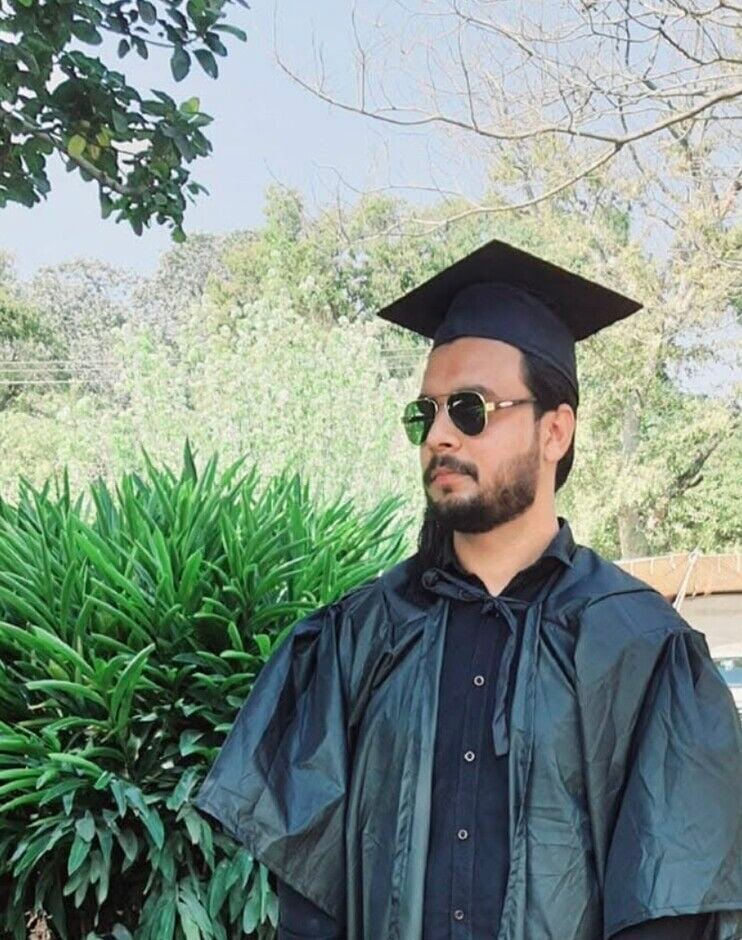
The Journey
My name is Ghulam Bahoo. I am from Pakistan and currently based in Pisa, Italy, where I am pursuing a PhD as a Marie Skłodowska-Curie Fellow at Scuola Superiore Sant'Anna. My research focuses on photonics and optical networking. Specifically, advancing open, vendor-neutral solutions for disaggregated optical systems. I decided to pursue a PhD because I wanted to contribute meaningfully to the shift towards open networking architectures, a problem space that genuinely excites me and one where I felt I had something valuable to offer.
Marie Skłodowska-Curie Actions Details
Institution: Scuola Superiore Sant'Anna, Pisa, Italy
Scholarship: Marie Skłodowska-Curie Actions (MSCA) Doctoral Network Fellowship , NESTOR Project, funded under EU Horizon Europe.
Funding: Approximately €4,010 per month (living allowance, adjusted by Italy's country correction coefficient) plus a €710 monthly mobility allowance, along with comprehensive research and conference travel funding.
Were You Offered Any Other Scholarships?
Yes. I was also offered the Hongik Global Scholarship for a fully funded PhD programme at Hongik University, South Korea , covering tuition and living expenses. I ultimately chose the Marie Curie fellowship because it more closely aligns with my research interests in open optical networking.
Educational Background
I completed my MSc in Information Technology at the National University of Science and Technology (NUST), Islamabad. My graduate coursework in Software Defined Networking, Advanced Computer Networks, and Network Performance Analysis provided the academic foundation that directly prepared me for research in this field.
How Did You Prepare to Apply to Scuola Superiore Sant'Anna?
My approach was deliberate; I searched specifically for PhD opportunities that were closely aligned with my research interests, skill set, and industrial background. Rather than applying broadly, I applied to only two scholarships, both of which were a strong fit, and I was fortunate to receive offers from both. I came across the Marie Curie NESTOR opportunity through LinkedIn, which I found to be a very effective channel for discovering open research positions in Europe.
Did You Take Any Standardized Tests? If So, How Did You Prepare for Them?
Yes, I took the IELTS and achieved a band score of 6.5.
My preparation involved consistent practice and delivering online training and timed mock tests.
How Did You Prepare to Apply for the Marie Skłodowska-Curie Actions?
I read the fellowship announcement thoroughly , the project description, the eligibility criteria, and the evaluation guidelines. Since the research topic was already defined by the NESTOR project, my focus was on preparing a well-structured and technically feasible research plan that demonstrated a clear understanding of the problem and a credible path to execution. I ensured that my proposed methodology was realistic within the project's scope and timeline, which I believe gave the application a concreteness that stood out.
How is Your Experience at Scuola Superiore Sant'Anna?
Excellent. The environment at Sant'Anna is genuinely supportive and intellectually stimulating. There is a strong culture of collaborative research, and the supervision I have received has been both engaged and constructive.
Are Your Classes Conducted in English or Italian?
At the doctoral level, all research activities, meetings, and communications within the NESTOR network are conducted in English. Some administrative procedures are in Italian, but this presents no obstacle to academic work.
Would Potential Students Have Any Problems Not Knowing Italian?
Not at the research level , English is the working language for all academic purposes. That said, a basic knowledge of Italian is beneficial for navigating daily life in Pisa and integrating into the local community.
What Do You Think Made Your Application Stand Out?
I believe the key was the quality and clarity of the research plan. I read the project announcement carefully, understood precisely what was being asked, and submitted a well-structured, feasible research proposal with a clear execution strategy. The topic was predefined by the project, but how you demonstrate your ability to take ownership of it and deliver , that is what differentiates applicants. I also think my industrial background in open networking gave the application a practical credibility that complemented the academic component.
Want to submit your
scholarship journey?
Submit Your Story Here!
More Scholarship Recipients
My name is Shah Hussain, and I am from Khyber Pakhtunkhwa, Pakistan. I completed my Bachelor’s in Psychology at the Univer .... Read more
I am June from the Philippines. I am an educator for Social Sciences and Humanities. I recently earned my Master in Southeas .... Read more
Hi, my name is Abdul Hafeez, and I come from a small town called Nasirabad in Sindh, Pakistan. Currently, I am pursuing a ma .... Read more
Leave A Comment