
How I Secured a Fully Funded PhD at Université Côte d’Azur, France Through the LongTREC Marie Skłodowska-Curie Actions Doctoral Network
University: Université Côte d’Azur
Degree: PhD
Previous Education: Bachelor’s in Industrial Biochemistry, University of Limerick; Master of Science in Biomedical Genomics, University of Galway
Scholarship: LongTREC Marie Skłodowska-Curie Actions Doctoral Network – Salaried Funding (Living Allowance, Mobility Allowance, Family Allowance if Relevant, Social Security, Healthcare, Pension Contributions)
Social Media
LinkedIn: linkedin.com/in/eamon-mcandrew/
The Journey
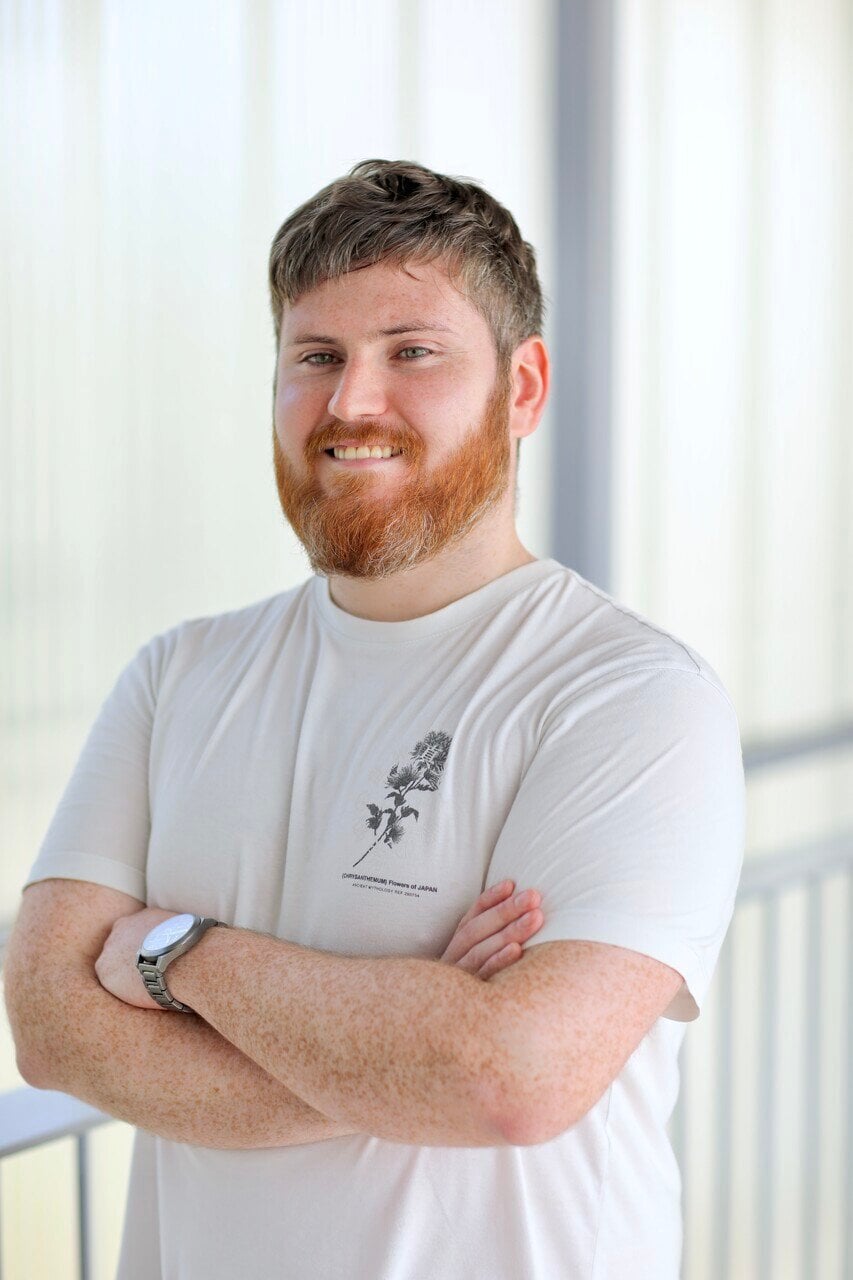
Originally from Ireland, I am currently pursuing my PhD at Université Côte d’Azur as part of the LongTREC consortium, conducting my research at the Institut de Pharmacologie Moléculaire et Cellulaire (IPMC) in Sophia Antipolis, near Nice, France. Before beginning my doctorate, I worked as a research assistant at the University of Galway, where I applied deep learning to COVID-19 medical image analysis and explored its applications in single-cell RNA-seq data. I have always loved biology, especially genomics, and I have also always been drawn to computational problem-solving, so bioinformatics felt like the perfect field for further study. My research now centers on long-read single-cell and spatial transcriptomics, where I aim to refine computational pipelines and apply them to new datasets to explore isoform diversity and better understand how alternative splicing contributes to cellular function.
Marie Skłodowska-Curie Actions Doctoral Network Details
I am supported through LongTREC, a Marie Skłodowska-Curie Actions Doctoral Network funded under the EU’s Horizon Europe programme. Rather than a one-off scholarship, this support comes as a salaried position, with a living allowance adjusted for the host country, a mobility allowance, and, if relevant, an additional family allowance. It is an employment contract rather than a stipend, so it includes social security cover, healthcare, and pension contributions for a fixed three-year term.
The network also provides training, collaboration, and secondments, which are funded research visits to another institution in the network. I did two: one at Oxford Nanopore Technologies’ headquarters in the UK, and one with the Genomics of Gene Expression group in Valencia. Both focused on long-read sequencing, the first on the technology side and the second on analysing the data it produces.
Were You Offered Any Other Scholarships?
No. LongTREC was the offer I accepted.
Educational Background
Before starting my PhD, I completed a Bachelor’s degree in Industrial Biochemistry at the University of Limerick, Ireland, graduating with Second Class Honours, Grade I (2:1) and a final QCA of 3.09/4.00. I then completed a Master of Science in Biomedical Genomics at the University of Galway, Ireland, graduating with First Class Honours and an overall mark of 86.22%, which corresponds to an official recommended US equivalent of A / 4.000.
My undergraduate studies provided broad training across the life sciences, including biochemistry, molecular biology, microbiology, analytical chemistry, and mathematics, alongside substantial exposure to wet-lab and experimental techniques. My master’s degree then allowed me to specialise more deeply in genomics and computational approaches to biological questions, which prepared me well for interdisciplinary research in bioinformatics and transcriptomics.
How Did You Prepare to Apply to Université Côte d’Azur?
How Did You Find Information About Marie Skłodowska-Curie Actions Doctoral Network and Université Côte d’Azur?
I found information through a combination of sources, including EURAXESS, LinkedIn, and opportunities shared through academic networks. In some cases, positions were circulated by email within departments or forwarded by lecturers and supervisors. Using a mix of formal platforms and word of mouth worked well, as some opportunities appear on major academic job boards while others are most visible through research communities and university networks.
Did You Take Any Standardized Tests? If So, How Did You Prepare for Them?
I did not need to take any standardized tests. Since I had already completed my previous education in English, language testing was not required.
How Did You Prepare to Apply for the Marie Skłodowska-Curie Actions Doctoral Network?
I researched each opportunity in depth and focused on positions that strongly fit my background and interests. Rather than applying very broadly without much direction, I tried to identify projects where my previous training in biochemistry, genomics, and computational biology would be genuinely relevant. I found it important to understand not only the project itself, but also the research environment, the host institution, and the kinds of questions the group was trying to address. I was also fortunate to have excellent mentors during both my undergraduate and master’s degrees. Their guidance was valuable throughout, whether that meant helping me identify suitable opportunities, offering advice on how to present my experience clearly, or proofreading my application materials.
How is Your Experience at Université Côte d’Azur?
The research environment has been the strongest part. There is real expertise across different areas on one site, and being part of an interdisciplinary and international network alongside that has made it a stimulating place to work. It has been a good environment for developing as a researcher and for growing more confident in my work.
How Do You Rate Université Côte d’Azur Academically?
Very highly. Université Côte d’Azur strongly emphasises interdisciplinary research in the life sciences, with programmes and funding structures that support work at the interface of biology and other fields. IPMC is a joint CNRS and Université Côte d’Azur institute in Sophia Antipolis, with research teams and shared technical platforms on one site. For me, the value has been the proximity of biology, genomics, and computational groups, which makes cross-field collaboration routine rather than something you have to arrange. Being part of both the host institute and the wider LongTREC network has strengthened that further through additional training and secondment opportunities.
How Does Université Côte d’Azur Support International Students?
The support mattered most in the first few weeks. I had help with getting set up and with finding temporary accommodation, which made the transition much smoother. Moving to a new country involves a lot of practical adjustment, and having people who had done it before was worth more than any amount of advance reading.
Are Your Classes Conducted in English or French?
There is a mix of both, but many are offered in English, and everything mandatory for my programme is available in English in some form. In practice, I have been able to fully participate in the academic side of the PhD without language being a barrier. Would fluent French open up more options? Yes, of course.
What Did You Pursue After the Marie Skłodowska-Curie Actions Doctoral Network?
I am in the final year of the PhD, with my defence scheduled for December 2026. My first preference afterwards is a postdoc in academia, though I am open to exploring industry as well, since computational biology roles there are evolving quickly.
Would Potential Students Have Any Problems Not Knowing French?
Knowing the native language is an advantage, as it opens up access to more classes and makes it easier to participate fully in certain conversations and aspects of academic life. That said, I would not consider it a major academic barrier. It is still possible to engage fully with the programme’s core requirements and progress well without already knowing the local language.
Socially and administratively, it looks different. The residence permit, social security registration, bank, lease, and booking medical appointments are all conducted in French, and while you can get through them with translation help, it is slow and occasionally stressful. ChatGPT and Claude have been a major advance here, but a barrier still exists.
What Do You Think Made Your Application Stand Out?
The effort I put into my personal statements and cover letters. Academic background and research experience are obviously important, but it also makes a real difference when an application clearly communicates why a candidate is interested in a specific project and why they are a good fit. In my case, that came down to direct overlap between what I had already done and what the project needed. As a research assistant, I had worked on deep learning for medical image analysis and applied similar approaches to single-cell RNA-seq. The advertised project was long-read single-cell transcriptomics. I could point to specific prior work rather than assert general enthusiasm.
What Would You Have Done Differently if You Were Going Through the Process Again?
I don’t think I would change anything major, but I would have had more confidence in myself throughout the process. I spent more time than necessary wondering whether I was a strong enough fit for some opportunities. Looking back, I would have trusted my background more and started tailoring each application earlier.
What Advice Would You Give Those Looking to Apply for a Similar Scholarship?
On what to apply for. Focus on opportunities that genuinely match your interests and strengths, rather than applying as broadly as possible without much direction. It makes a real difference when your application clearly shows why you are interested in a project and why you are a good fit. Take time with your personal statement and cover letter, as these are often the best places to communicate your motivations in a way that feels personal and convincing. If possible, ask supervisors, lecturers, or more senior researchers for feedback on your materials.
- On your grades. My undergraduate result was a 2:1, not a first, and it did not prevent me from getting a competitive PhD position. The master’s mattered more, and so did the research experience that followed. If your undergraduate degree was solid rather than exceptional, that is not disqualifying.
- On how MSCA networks recruit. There is no central EU application. The network handles recruitment, and how that works varies. Some networks run a single portal where you apply once and indicate which projects interest you. Others advertise each position separately, so you apply to individual host institutions. Check the network’s website early, because it determines whether you write one application or several.
- On the mobility rule. MSCA Doctoral Networks apply a mobility rule. You cannot have lived or worked in the host country for more than 12 months in the 36 months before recruitment. Check this against the current call text before you invest time in an application.
- On the money. MSCA rules set the salary, and a country correction coefficient adjusts it, so the headline figure means different things in different places. National rules also tax it, and those rules vary widely. Look up the net figure in the host country rather than assuming the gross number is comparable across offers. Sites like Salary After Tax give a rough net estimate, and ChatGPT and Claude help you build a quick picture of what living there actually costs: rent, transport, groceries, and so on. Do this before you accept, not after you arrive.
- On choosing a group. You are choosing a supervisor and a group as much as a project. Look at what the group has published recently, whether students finish, and where they go afterwards. If you can talk to a current or former PhD student before you accept, do it. This is standard advice for any PhD, and it applies just as much to funded network positions.
- On the interview. Expect to be asked why this project rather than a general “why a PhD.” Have a few specific questions ready about the project and the group, since asking something concrete signals you read the description. If you are asked to present, keep the science accessible, as the panel will not all be specialists in your area.
- On language. Start learning the local language before you arrive rather than after, since proficiency takes a long time and I have not mastered it yet. Language courses for incoming international staff and students are often available, so ask your host institution what it offers, ideally before you move.
- Finally. Do not be put off by how competitive these look. What is being assessed is fit with a particular project, not a general ranking of candidates, so a strong application from someone whose background matches the work is in a better position than the raw application numbers suggest.
Want to submit your
scholarship journey?
Submit Your Story Here!
More Scholarship Recipients
My name is Shah Hussain, and I am from Khyber Pakhtunkhwa, Pakistan. I completed my Bachelor’s in Psychology at the Univer .... Read more
I am June from the Philippines. I am an educator for Social Sciences and Humanities. I recently earned my Master in Southeas .... Read more
Hi, my name is Abdul Hafeez, and I come from a small town called Nasirabad in Sindh, Pakistan. Currently, I am pursuing a ma .... Read more
Leave A Comment