
How I Secured a Fully Funded Bachelor's at The Chinese University of Hong Kong (CUHK), Hong Kong Through the Belt and Road Scholarship
University: The Chinese University of Hong Kong
Degree: Bachelor of Engineering in Information Engineering
Previous Education: Secondary education at Specialized School No. 4, Uzbekistan
Scholarship: Belt and Road Scholarship – Full Funding (Full tuition for the normal duration of the degree and a one-time HKD 15,000 relocation allowance)
Other Offered Scholarships: CUHK Faculty Scholarship – HKD 50,000 per year; Morningside College Scholarship – HKD 16,000 per year
Social Media
LinkedIn: linkedin.com/in/dulatkhan/
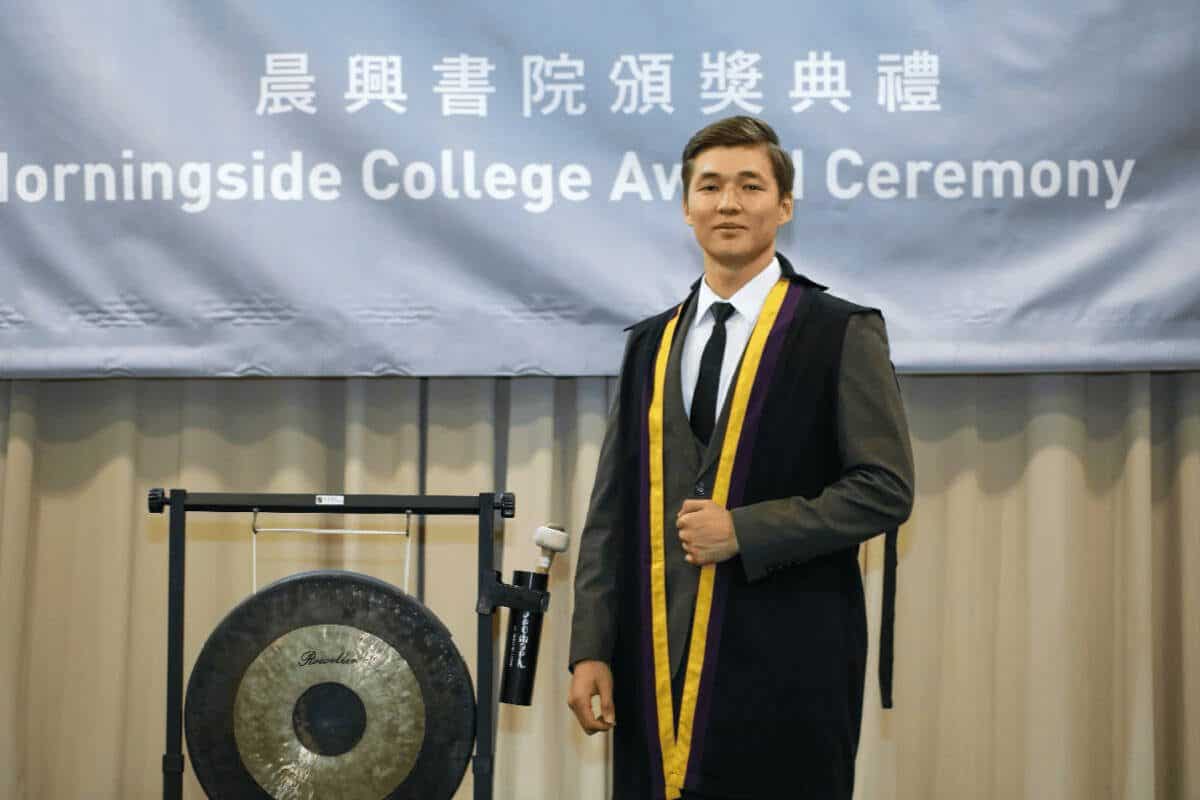
The Journey
My name is Dulatkhan Janisbekov, and I'm from Uzbekistan. Right now I'm doing a Bachelor of Engineering in Information Engineering at The Chinese University of Hong Kong (CUHK).
I've always liked technology, especially AI, programming, and how it can actually solve problems people deal with in real life. When I was growing up, I also noticed how much it matters whether young people have access to good education and technology or not, and that pushed me to also start teaching and mentoring other students, not just study engineering for myself.
I picked Information Engineering because it mixes computer science, programming, communications, electronics, and data- basically everything I was already interested in on my own. I felt like this would give me the technical base to actually build things later, not just learn theory.
Belt and Road Scholarship Details
I got the Belt and Road Scholarship for my undergraduate studies at CUHK.
It covers full tuition for the whole normal length of the degree, and I also got a one-time HKD 15,000 relocation allowance in my first year.
Honestly, without this scholarship, I don't think my family could have afforded sending me to study in Hong Kong. It opened up a lot of things for me, academic, professional, and just meeting people from different cultures.
Were You Offered Any Other Scholarships?
Yes, besides Belt and Road, I also got two more from CUHK:
- Faculty Scholarship – HKD 50,000 per year
- Morningside College Scholarship – HKD 16,000 per year
These felt like extra recognition of what I'd done academically, so it meant a lot to get them on top of the main scholarship.
Educational Background
Before CUHK, I went to Specialized School No. 4 in Uzbekistan, which was strong in math.
At first it was hard because most classes were in Russian, not my first language, but I adjusted over time and ended up one of the top students. I kept the highest grades for the last six years of school and got a Gold Medal from the Ministry of Education of Uzbekistan.
Math was always my strongest subject. I won my school's math Olympiad twice, and I made it to the semifinals of a national competition run by PDP University, where I also got some prize money.
Outside school, I taught myself programming, Python, Java, C++, and some data science math too, through Coursera, Duke University courses, Oracle Academy, Udacity, GeekBrains, and One Million Uzbek Coders.
So by the time I applied, I already had this mix of strong math, self-taught programming, and just being used to studying hard on my own.
How Did You Prepare to Apply to The Chinese University of Hong Kong?
I started by looking at universities that were strong in engineering, CS, AI, that kind of field.
I compared them on reputation, the actual curriculum, scholarships available, what language classes were in, how they support international students, research and internship opportunities, location, and what happens after graduation.
I went through admission requirements for each one carefully and got my documents ready ahead of time: transcripts, test scores, recommendation letters, activities, personal statements, certificates, everything.
The essays took me the most time, honestly. I didn't want to just list achievements; I wanted to actually explain why I did the things I did and how they connect to what I want in the future.
To stay on top of everything, I made myself a plan tracking deadlines for each school.
How Did You Find Information About Belt and Road Scholarship and The Chinese University of Hong Kong?
Mostly from official university and scholarship websites, admissions pages, eligibility rules, deadlines, all of that.
But I also learned a lot just from talking to teachers, current students, alumni, and friends who had already gone through this process.
Hearing their actual experience helped me figure out what to prepare, and then I'd double-check everything against the official website before applying.
Did You Take Any Standardized Tests? If So, How Did You Prepare for Them?
Yes, I took the SAT. My superscore was 1,490 , 790 Math and 700 Reading and Writing. My best single sitting was 1,450.
To prepare, I first got familiar with the test format and figured out where I was weak. I used official practice materials, did timed practice tests, and went back over my mistakes a lot.
For Math, it was mostly about accuracy and not rushing into careless mistakes. For Reading and Writing, I worked on grammar, vocabulary in context, and really understanding why the wrong answers were wrong, not just memorizing the right one.
The biggest thing that helped was tracking my mistakes instead of just doing more and more practice tests; I'd notice the same type of error coming up and focus on fixing that specifically.
How Did You Prepare to Apply for the Scholarships?
I treated the scholarship part as part of the whole application, not something separate I'd deal with at the end.
I tried to keep one consistent story across everything: my academics, leadership, community stuff, my background, and where I wanted to go with all of it.
Some of what I included:
Helped students who couldn't afford paid courses
International youth and innovation programs
- Strong academic record
- National Gold Medal
- Math competition results
- Student Council president
- Self-taught programming
- Volunteered translating science and business articles into Uzbek
I also wanted to show that the scholarship wouldn't just help me; I wanted to keep using whatever I learned to support other students too.
How Has Your Experience at Cuhk Been?
Rewarding but also genuinely hard at times, if I'm being honest.
I just finished my first year. I studied programming, engineering basics, math, computer systems, all the foundational stuff for Information Engineering.
University engineering needs way more independence than high school: lectures, tutorials, labs, coding assignments, group projects, exams, plus everything outside class, all at once.
First year taught me to manage my time better, ask for help when I actually need it instead of struggling alone, and work with other students under pressure.
CUHK is also very international; I've met people from Hong Kong, Mainland China, Central Asia, Europe, Africa, all over. Talking to people from so many backgrounds made me more open-minded, honestly.
Being in Hong Kong also means I'm close to internships, innovation programs, startups, tech companies, the whole Greater Bay Area scene.
How Do You Rate Cuhk Academically?
Very highly, honestly.
It has a strong reputation in Hong Kong, Asia, and beyond, and the engineering side is demanding; you get both theory and hands-on work.
In Information Engineering specifically, we cover programming, math, electronics, computer systems, communications, AI, data- a wide mix.
The workload is intense, especially adjusting to a new system as an international student, but it does push you to become more disciplined and better at solving harder problems.
There's also a lot of room for research, internships, exchange, entrepreneurship, and competitions if you go look for them.
How Does The Chinese University of Hong Kong Support International Students?
There's orientation, academic advising, university housing, career services, language classes, student clubs, and the college system.
Every undergrad belongs to a college, a smaller community inside the bigger university. I'm in Morningside College.
International students can join cultural activities, societies, mentorship, exchange, career fairs, internships, social events, a lot going on.
But you do have to be proactive about it: check your emails, go to info sessions, actually talk to professors and advisors, apply for things yourself. It won't just come to you.
Are Your Classes Conducted in English or Cantonese?
Mostly English.
Materials, assignments, exams, textbooks, all in English. Sometimes professors will explain something informally in Cantonese or Mandarin, but you can do all your academic work in English.
CUHK also offers Mandarin and Cantonese classes if you want to pick it up, which helps with daily life and later on for jobs in Hong Kong.
Would Potential Students Have Any Problems Not Knowing Cantonese?
No, not really. My program runs in English, so not knowing Cantonese or Mandarin doesn't stop you from following lectures, doing assignments, or taking exams.
That said, knowing a bit of Cantonese or Mandarin does make daily life easier: ordering food, talking to local students, and some internships with local clients.
So I'd say learn at least the basics if you can, not because you need it for the degree, but it makes everything more comfortable.
What Did You Pursue After the Belt and Road Scholarship?
I just finished my first year. This summer I'm doing an internship to see how what I learned in class actually applies in a real job.
Alongside that, I keep working on my programming, look into AI more, and get ready for next year.
I also still help other students applying to universities and scholarships, especially ones looking at Hong Kong or Asia in general.
Going forward, I want more internships, maybe research, and eventually work in tech, possibly start my own thing one day.
What Do You Think Made Your Application Stand Out?
I think it was that I didn't rely on just one big achievement; it was more that everything connected together: academics, leadership, community work, and a clear reason behind why I wanted to study engineering.
- Consistent grades
- Strong in math specifically
- Self-taught programming
- Leadership experience
- Cared about access to education
- Teaching/mentoring other students
- International background
- Clear reason for choosing engineering
- Actually created opportunities instead of waiting for them
I tried to make the essays personal too, not just what I did, but why it mattered to me and where it was pointing.
What Would You Have Done Differently if You Were Going Through the Process Again?
I'd start earlier and plan things out in more detail.
I'd research each university and scholarship more specifically so my applications felt more personalized instead of similar to each other.
I'd also reach out to current students and alumni sooner; they can tell you things about the actual day-to-day, cost of living, scholarships, internships that you can't really find on a website.
And I'd give myself more time on essays: brainstorm, draft, get feedback, revise, instead of rushing that process.
I probably would've applied to more scholarships too, just to have more options.
What Advice Would You Give Those Looking to Apply for a Similar Scholarship?
Start early; you'll need transcripts, recommendation letters, test scores, essays, certificates, sometimes translations, and that all takes longer than you think.
Have a clear story about who you are, not just your grades, what you've been through, what you've contributed, where you're headed.
Be specific in essays. Don't just say you're hardworking; show it with an actual example.
Stay organized; a simple spreadsheet with deadlines and requirements for each school saves you a lot of stress.
And don't count yourself out before the committee even sees your application. A lot of good students never apply because they assume they're not competitive enough; let them decide, not you.
Getting the Belt and Road Scholarship, plus the Faculty and Morningside College Scholarships, really changed things for me. I hope sharing this can show other students, especially from lower-income backgrounds, that this kind of opportunity is possible.
Want to submit your
scholarship journey?
Submit Your Story Here!
More Scholarship Recipients

My name is Humayun Nosheerwan. I am a Chevening Scholar, social entrepreneur, artist, higher education professional, and Fou .... Read more
I'm Hossam Hamdy, an Egyptian from Cairo, now based in Dubai, where I work in venture capital. My career sits at the interse .... Read more
My name is Ahmad Shoeb Hashmi, and I am a dentist from India currently pursuing a dual-degree Master of Public Health (MPH) .... Read more
Leave A Comment