
How Dr Simon Okomo Aloo, a Kenyan Scientist, Funded Master’s and Doctoral Studies in South Korea and Australia Through Multiple Scholarships
University: Monash University
Degree: PhD in Biomedicine
Previous Education: BSc in Food Science and Nutrition, Karatina University (GPA: 3.82/4.00); MSc (4.49/4.50) and PhD (4.32/4.50) in Food Science and Biotechnology, Kangwon National University
Scholarship: Monash Graduate Scholarship – Approximately AUD 43,000 Annual MGS Stipend at the Time of Award; Baker Top-Up from 2026
Other Offered Scholarships: Earlier accepted Korean funding: GKS, BEST-KNU and BK21; Australian Government RTP Scholarship at University of Wollongong (2025; Declined)
LinkedIn: Dr Simon Okomo Aloo
Website: Personal Academic Website
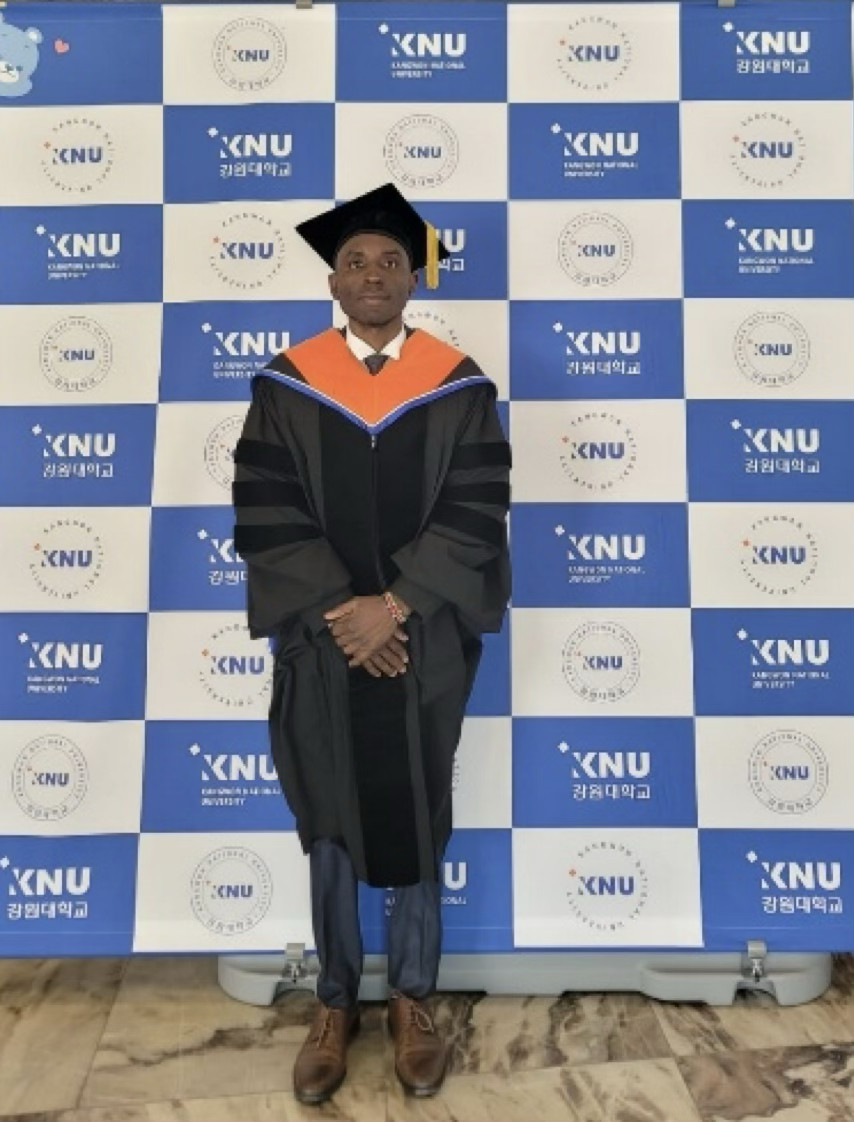
The Journey
My name is Dr Simon Okomo Aloo. I am a Kenyan interdisciplinary food and biomedical scientist working at the intersection of nutrition, food systems, lipid metabolism, and cardiometabolic health.
From childhood, I aspired to pursue a career in medicine. However, I did not attain the required entry qualifications for admission to medical school through the Kenya Certificate of Secondary Education (KCSE) examination. Instead, I was placed in Food Science and Nutrition, a discipline I had not initially envisioned pursuing. I embraced the opportunity, developed a passion for the field, and gradually transitioned from food, nutrition and biotechnology to biomedical research.
My academic journey began at Karatina University in Kenya, where I pursued a Bachelor of Science in Food Science and Nutrition, graduating with First Class Honours in 2018. In the same year, I was among four Kenyan students selected from a cohort of 20 African undergraduate students for the Global Korea Scholarship for Undergraduate Students (GKS-U). I subsequently received an Excellence Award through the programme. This opportunity opened the door to my international academic journey in South Korea.
In 2019, I received the Korean Government Scholarship for Graduate Studies (GKS-G), which enabled me to pursue a master’s in food science and biotechnology at Kangwon National University (KNU), Republic of Korea. After my Master’s, I received both BK and BEST-KNU scholarships, which enabled me to pursue doctoral studies in the same area. My postgraduate research focused on functional foods, probiotics, metabolic health, and the potential of fermented plant-based foods to improve obesity-related and neurodegenerative conditions.
After completing my first PhD in Food Science and Biotechnology in 2024, I moved to Australia in 2025 to pursue a second PhD in Biomedicine at Monash University and the Baker Heart and Diabetes Institute.
My current research investigates how genetic variations influence lipid metabolism and contribute to cardiometabolic diseases. Specifically, I develop and apply stable-isotope lipid-tracing methodologies using individualised lymphoblastoid cell lines derived from human cohorts to investigate differences in lipid metabolic pathways.
Beyond academia, I am the Founder and Chairperson of the Alliance for Cardiometabolic Health and Research–Kenya (ACMHR-K), a non-profit organisation advancing research, education, policy advocacy, training, and community engagement in cardiometabolic health.
GKS, BEST-KNU, BK21 and Monash Scholarship Details
I have been fortunate to receive several competitive scholarships throughout my academic journey in South Korea and Australia. These opportunities have supported my undergraduate, master's, doctoral, and current research training.
My major scholarships include:
A. Global Korea Scholarship for Undergraduate Students (GKS-U), 2018
- Awarding body: Government of the Republic of Korea.
- Study destination: South Korea.
- Programme: Undergraduate scholarship programme.
- Scholarship coverage: Comprehensive government-funded support, including tuition fees, living allowance, airfare, Korean language training, and other applicable benefits.
This was my first major international scholarship and an important turning point in my academic journey.
B. Korean Government Scholarship for Graduate Studies (GKS-G), 2019–2022
- Awarding body: Government of the Republic of Korea.
- Institution: Kangwon National University.
- Programme: Master’s degree in food science and biotechnology.
- Scholarship coverage: Tuition fees, monthly living allowance, airfare, language training where applicable, and other scholarship benefits.
This scholarship enabled me to pursue postgraduate education in South Korea and develop a strong foundation in scientific research.
C. Bring Excellent Students to Kangwon National University (BEST-KNU) Scholarship, 2022–2024
- Institution: Kangwon National University.
- Programme: Doctoral studies in Food Science and Biotechnology.
Scholarship: University-funded academic support for outstanding international students.
D. Brain Korea 21 (BK21) Fellowship, 2022–2024
- Institution: Kangwon National University.
- Programme: Doctoral research in Food Science and Biotechnology.
Scholarship: Research fellowship supporting postgraduate research and academic development.
E. Monash Graduate Scholarship (MGS), 2025–Present
- Institution: Monash University, Australia.
- Programme: PhD in Biomedicine.
- Scholarship amount: Approximately AUD 43,000 annually, based on the stipend rate at the time of my award.
- Coverage: Living stipend and applicable scholarship benefits.
F. Baker Bright Spark Top-Up Scholarship, 2026–Present
- Institution: Baker Heart and Diabetes Institute, Australia.
- Programme: PhD in Biomedicine.
Scholarship: Additional financial support supplementing my Monash Graduate Scholarship.
Collectively, these scholarships have enabled me to pursue international education and research across three countries without bearing the full financial cost of my studies.
Other Offered Scholarships
Yes. In addition to the scholarships I accepted, I received an Australian Government Research Training Program (RTP) Scholarship offer from the University of Wollongong in 2025.
Although I was offered this scholarship, I ultimately declined it in favour of pursuing my doctoral research at Monash University and the Baker Heart and Diabetes Institute, where the research opportunities were more closely aligned with my interests.
One important lesson from my experience is that prospective students should explore opportunities across multiple institutions rather than concentrating on a single university or scholarship programme.
Receiving a scholarship offer is an important achievement, but it is equally important to evaluate the research environment, potential supervisors, institutional strengths, and long-term career opportunities before making a final decision.
Educational Background
My academic background comprises three completed degrees and my current doctoral training.
Bachelor of Science in Food Science and Nutrition – Karatina University, Kenya (2014–2018)
- Degree classification: First Class Honours.
- GPA: 3.82/4.00.
- Academic ranking: Top 1% of my class.
Master of Science in Food Science and Biotechnology – Kangwon National University, South Korea (2020–2022)
- GPA: 4.49/4.50.
- Academic ranking: Top 1% of my class.
Research: Anti-obesity effects of alfalfa sprouts fermented with Pediococcus acidilactici, using Caenorhabditis elegans as an experimental model.
Recognition
- Kangwon National University Outstanding Academic Achievement Award, presented by the university president.
- National Institute for International Education (NIIED) Outstanding Academic Achievement Award, presented by the Deputy Prime Minister of Korea and awarded to only one student per category (BSc, MSc, and PhD)
Doctor of Philosophy in Food Science and Biotechnology – Kangwon National University, South Korea (2022–2024)
- GPA: 4.32/4.50.
- Academic ranking: Top 1% of my class.
Research: Investigating the potential of Pediococcus acidilactici-fermented hempseed to alleviate obesity and obesity-associated Alzheimer's disease-like conditions using microbiome, metabolomics, and molecular approaches.
Recognition: Outstanding PhD Student Award, one of five students selected university-wide, and Outstanding Research Achievement Award.
Doctor of Philosophy in Biomedicine – Monash University and Baker Heart and Diabetes Institute, Australia (2025–Present)
My current doctoral research investigates how genetic variations influence lipid metabolism and contribute to cardiometabolic diseases. I use stable-isotope lipid-tracing approaches in individualised lymphoblastoid cell lines derived from human cohort studies to investigate lipid metabolic fluxes and identify genetic drivers of lipid dysregulation.
How Did You Prepare to Apply to Kangwon National University and Monash University?
I approached university applications strategically by first identifying my academic interests and then exploring institutions whose research strengths aligned with those interests.
For my postgraduate education, I was particularly interested in South Korea because of its investment in science, technology, research, and international education. The Global Korea Scholarship provided an opportunity to access this academic environment. I researched universities, academic programmes, research laboratories, and potential supervisors. I paid particular attention to faculty members' research interests and whether their expertise aligned with my intended area of study.
For my subsequent doctoral studies in Australia, I wanted to expand my expertise beyond food science and biotechnology into molecular and biomedical investigations of cardiometabolic diseases. I therefore prioritised research environments with strong expertise in lipid metabolism, cardiovascular research, and metabolic disease.
My advice is to avoid selecting universities simply because they offer scholarships. Instead, identify institutions where you can develop academically and professionally in your chosen field.
How Did You Find Information About Monash Graduate Scholarship and Monash University?
I primarily relied on university websites, government scholarship portals, official scholarship announcements, and academic networks.
For South Korea, I explored the Korean Government Scholarship Programme and information provided by Korean universities. I also consulted university websites to understand admission requirements, available programmes, and scholarship opportunities.
For Australia, I explored postgraduate research scholarship opportunities offered by universities and identified research groups working in areas relevant to my interests.
Academic publications and Google Scholar were also useful in identifying researchers and potential supervisors whose work aligned with my research interests. I emailed potential supervisors, attaching all my credentials, including publications and awards.
I strongly recommend that prospective applicants regularly visit official university and government scholarship websites rather than relying exclusively on third-party scholarship advertisements.
Did You Take Any Standardized Tests? If So, How Did You Prepare for Them?
Yes. For my application to study in Australia, I took the International English Language Testing System (IELTS) examination to meet the university's English-language proficiency requirements. Interestingly, I prepared for the examination for only three days. At the time, I was also preparing for my PhD defence in South Korea, so I had to balance preparation for two important academic milestones simultaneously.
My previous education in Kenya, where English was the language of instruction, had provided a strong foundation in academic English, which was helpful during my IELTS preparation.
My experience taught me the importance of developing strong academic and language skills throughout one's education rather than relying entirely on last-minute preparation.
Nevertheless, I encourage prospective international students to check the specific English-language requirements of their intended universities and scholarships early and allow sufficient time to prepare for any required examinations.
How Did You Prepare to Apply for GKS, BEST-KNU, BK21, Monash and Baker Funding?
I believe my preparation involved three important areas: academic excellence, research experience, and a clear academic vision.
- First, I prioritised academic performance throughout my undergraduate studies. Graduating with First Class Honours and ranking among the top students in my class helped demonstrate my academic potential.
- Second, I actively developed my research experience. I understood that postgraduate scholarships, particularly those supporting research degrees, require more than good academic grades. Research experience, scientific curiosity, problem-solving abilities, and the potential to contribute to knowledge are equally important.
- Third, I worked on developing a clear research direction. My academic interests evolved from food science and nutrition into functional foods, biotechnology, microbiome research, and eventually molecular mechanisms of cardiometabolic diseases.
I also invested time in preparing my application documents, including academic transcripts, my CV, research proposals, statements of purpose, and recommendation letters.
One important lesson I learned is that a scholarship application should communicate more than academic achievements. It should demonstrate who you are, what you want to achieve, why you have selected a particular institution, and how the scholarship will contribute to your long-term goals.
How Was Your Experience at Kangwon National University and Monash University?
My experience at Kangwon National University was transformative, both academically and personally.
Moving from Kenya to South Korea exposed me to a different academic system, research culture, and way of life. It challenged me to become more independent, adaptable, and confident in an international research environment.
Academically, I had opportunities to work with experienced researchers, access laboratory infrastructure, participate in scientific conferences, and publish research in internationally recognised journals.
One of the most influential aspects of my experience was the mentorship I received from my PhD supervisor, Professor Deog-Hwan Oh. He consistently encouraged me to work hard, pursue research excellence, and develop as an independent scientist. His mentorship and support contributed significantly to my ability to complete my PhD within two years while building a substantial research portfolio.
I also interacted with students and researchers from different countries, which broadened my understanding of international scientific collaboration and exposed me to different perspectives.
My experience at Monash University and the Baker Heart and Diabetes Institute has similarly provided opportunities to develop advanced biomedical research skills and work within a specialised cardiovascular and metabolic disease research environment.
Overall, studying in these institutions has helped shape my scientific interests, research capabilities, and professional ambitions.
How Do You Rate Kangwon National University and Monash University Academically?
I would rate Kangwon National University highly for its postgraduate research training, academic environment, and opportunities for international students.
The university provided the laboratory infrastructure, academic supervision, and research exposure necessary for me to develop as an independent researcher. My experience there enabled me to complete both my master's and first doctoral degrees and publish research in internationally recognised scientific journals.
I particularly valued the research-oriented environment, which encouraged scientific curiosity, practical laboratory experience, and active participation in academic activities.
I also value the academic environment at Monash University and the Baker Heart and Diabetes Institute. Their research collaboration provides access to specialised expertise, advanced research infrastructure, and interdisciplinary opportunities for investigating cardiovascular and metabolic diseases.
Both institutions have played important roles in my academic development, although they have contributed to different stages and areas of my scientific training.
How Do Kangwon National University and Monash University Support International Students?
My experience in South Korea was particularly positive because of the opportunities provided through the Korean Government Scholarship Programme.
The scholarship made postgraduate education financially accessible by covering major educational and living expenses. It also provided support for adapting to the Korean academic and social environment.
Korean language training was particularly valuable in helping me navigate everyday life, communicate with local people, and integrate into the community.
At Kangwon National University, the international academic environment also provided opportunities to interact with students and researchers from different backgrounds.
In Australia, my scholarship support from Monash University and the Baker Heart and Diabetes Institute has enabled me to concentrate on my research and professional development.
In my experience, financial support, language preparation, access to research infrastructure, and an inclusive academic environment are important components of successful international student support.
What Is the Language of Instruction?
My postgraduate classes at Kangwon National University were conducted in Korean.
Studying in a non-English-speaking country required me to adapt to a different academic and linguistic environment. Although English was important for scientific communication, research publications, and international academic engagement, learning Korean was essential for following my formal classes and participating more fully in university life.
This experience taught me the importance of preparing for the language requirements of a chosen study destination.
I would encourage prospective international students to establish the language of instruction before applying and to learn the local language, even if they intend to study in an English-speaking academic environment.
What Did You Pursue After the Monash Graduate Scholarship?
After completing my first PhD, I moved to Australia in 2025 to pursue a second PhD in Biomedicine at Monash University and the Baker Heart and Diabetes Institute. This transition allowed me to expand my scientific expertise into molecular and biomedical investigations of cardiometabolic diseases.
Beyond my doctoral research, I established the Alliance for Cardiometabolic Health and Research–Kenya (ACMHR-K), a non-profit organisation focused on advancing cardiometabolic disease prevention and management through research, education, training, policy advocacy, and community engagement. My long-term ambition is to establish a strong research and public health platform through ACMHR-K that connects scientific discoveries with practical health interventions, particularly in Africa.
Would Potential Students Have Any Problems Not Knowing Korean?
Not necessarily. From my experience in South Korea, international students can pursue postgraduate education in a non-English-speaking country, although the language of instruction and programme requirements must be considered carefully.
In my case, my formal classes at Kangwon National University were conducted in Korean. Therefore, learning the local language was important not only for everyday communication but also for my academic participation.
Learning Korean helped me navigate daily life, communicate with local people, and integrate into the broader community.
My advice is to distinguish between the language requirements of an academic programme and the language needed for everyday living. Prospective students should establish the language of instruction before applying and prepare accordingly.
Learning the local language can significantly improve the overall international student experience.
What Do You Think Made Your Application Stand Out?
I believe several factors contributed to the success of my scholarship applications.
Consistent Academic Excellence
I maintained strong academic performance from my undergraduate studies through postgraduate education. I graduated with First Class Honours in Kenya and subsequently ranked among the top 1% of my master's and doctoral cohorts in South Korea.
Research Experience and Productivity
Research experience and productivity were particularly important in my application to Australia. During my postgraduate studies in South Korea, I built a strong research portfolio, with a focus on publishing in reputable, high-impact scientific journals. Monash University places a substantial emphasis on research output when assessing applicants, making my publication record a key strength of my application. By the time I applied to Monash, I had published 18 first-author articles, including papers in leading journals such as Critical Reviews in Food Science and Nutrition (Impact Factor: 11.5), Food Chemistry (Impact Factor: 10.4), and Food Bioscience, among others.
A Clear and Evolving Research Direction
My academic progression demonstrates a consistent interest in understanding metabolic health. I moved from food science and nutrition into biotechnology, functional foods, microbiome research, metabolomics, and biomedical investigations of cardiometabolic diseases.
Rather than changing fields without direction, I built on the knowledge and skills acquired at each academic stage.
Academic Recognition and Awards
I received several competitive academic distinctions, including the Korean Ministry of Education National Outstanding Academic Achievement Award, KNU Outstanding Master's Student Award, Outstanding PhD Student Award, and research presentation awards from Korean scientific societies.
Leadership and Commitment to Impact
Beyond academic achievements, I have engaged in mentorship, international student leadership, and public health initiatives.
I believe my applications communicated both my academic capabilities and a clear vision of how further education would contribute to my long-term goals.
What Would You Have Done Differently If You Were Going Through the Process Again?
If I were starting my scholarship journey again, I would begin preparing much earlier and invest even more time in building academic and professional networks.
I would place greater emphasis on developing a strong academic profile before applying. This would include gaining research experience, participating in scientific conferences, approaching lecturers for research opportunities, developing relationships with potential academic referees, and learning how to communicate research interests effectively.
I would also explore a wider range of scholarship opportunities and institutions rather than focusing too narrowly on a few possibilities.
Another important lesson is the value of documenting academic achievements. Keeping updated transcripts, certificates, research outputs, recommendation contacts, and a well-organised CV makes the application process considerably easier.
Most importantly, I would remind myself that scholarship applications require patience and persistence. Rejection or delays should not be interpreted as the end of one's academic ambitions.
What Advice Would You Give Those Looking to Apply for a Similar Scholarship?
My first advice is to believe that international education is possible, regardless of where you come from or your financial background. I come from Kenya, and my journey to international postgraduate education was made possible through academic commitment and scholarship opportunities. Financial limitations should not automatically discourage talented students from pursuing their academic ambitions.
- Second, work hard to maintain a strong academic record. Although grades are not the only consideration, they demonstrate commitment and academic potential.
- Third, develop research experience as early as possible. Participate in undergraduate research projects, approach lecturers about research opportunities, attend conferences, and, where possible, contribute to scientific publications.
- Fourth, identify universities and supervisors whose research interests align with yours. A well-matched application is often more compelling than a generic application sent to numerous institutions.
Fifth, prepare your application documents carefully. Your CV, statement of purpose, research proposal, recommendation letters, and academic transcripts should communicate a consistent academic and professional direction.
Sixth, explore different scholarship opportunities and identify a suitable supervisor who can support your growth. Finally, be persistent in your pursuits.
Additional Information and Professional Profile
I am an interdisciplinary food and biomedical scientist whose research focuses on understanding the biological mechanisms underlying cardiometabolic diseases and translating scientific discoveries into improved health outcomes.
My work connects nutrition, food science, biotechnology, microbiome research, lipid metabolism, and biomedical science.
Beyond my academic activities, I lead the Alliance for Cardiometabolic Health and Research–Kenya (ACMHR-K), through which I work towards strengthening cardiometabolic research, capacity development, public health education, and policy engagement in Kenya.
My academic and professional profile, including my research interests, publications, and ongoing work, is available through my personal academic website:
Want to submit your
scholarship journey?
Submit Your Story Here!
More Scholarship Recipients
My name is Stanley Hau. I grew up in the Netherlands and have lived in several places since, which taught me to adapt quickl .... Read more
I’m Chamodi Senanayake from Sri Lanka. I got the opportunity to receive the full Erasmus Mundus scholarship for the Europe .... Read more

My name is Lamia Barakat, and I am an Egyptian educator with a deep passion for teaching, learning new languages, cultural e .... Read more
Leave A Comment