
How I Secured a Fully Funded PhD at AgroParisTech/Université de Lorraine, France Through the Eiffel Excellence Scholarship
University: AgroParisTech / Université de Lorraine
Degree: PhD in Wood Sciences
Previous Education: Bachelor’s in Tropical Forestry; Master’s in Forest Resources Management
Scholarship: Eiffel Excellence Scholarship – PhD Funding (€2,000 Monthly Allowance)
Other Offered Scholarships: Beninese Government Excellence Scholarship – Funding for Agricultural Technical High School of Akodeha; Turkish Government Excellence Scholarship – Funding for an Engineering Degree in Natural Sciences; Beninese Government Excellence Scholarship – Funding for a Bachelor’s Degree
Social Media
LinkedIn: linkedin.com/in/charbel-paterson-hountondji-24b3a9231/
The Journey
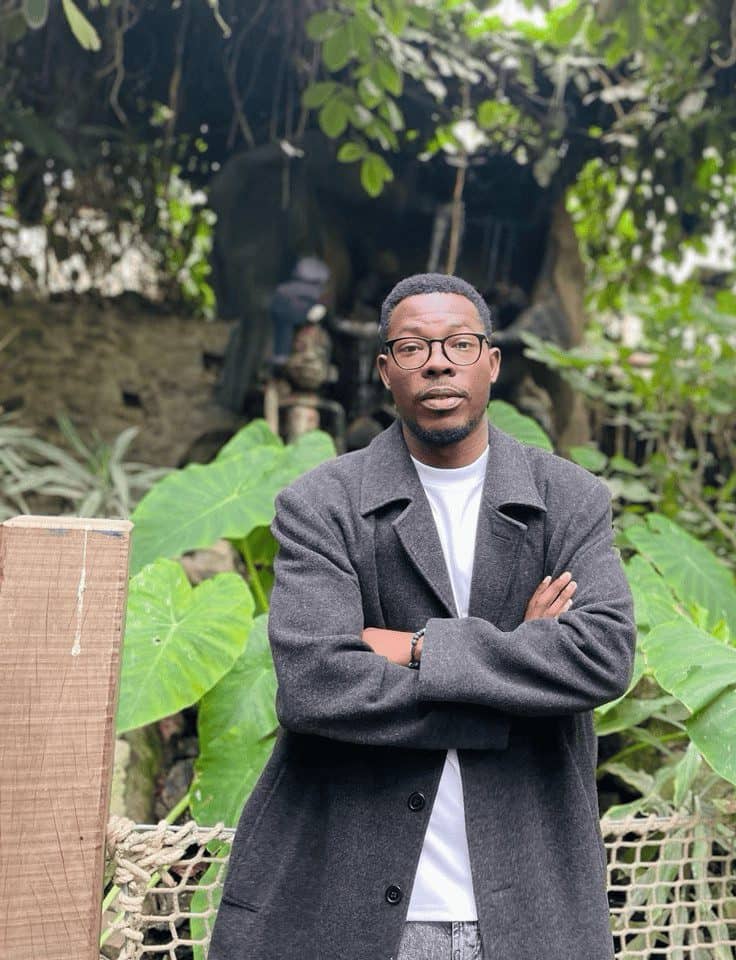
Hi, I’m Charbel Paterson HOUNTONDJI, originally from Benin. As a Forest Engineer currently pursuing a PhD in Wood Sciences, my research focuses on a vital mission: upgrading the physical and chemical properties of low-durability plantation wood. By making this timber more resilient, we can actively champion sustainable forest management across West Africa.
My academic journey has been driven by curiosity and a hands-on approach. I hold a unique background with dual high school diplomas, one in vocational forestry and another in scientific biology, followed by a Bachelor’s in Tropical Forestry and a Master’s in Forest Resources Management back home in Benin.
My connection to nature isn't new; as a kid, I was the one glued to the screen watching nature documentaries and forest-themed animations. Recently, discovering Wood Sciences was a true revelation. Far from pulling me away from my roots, it was the missing piece of the puzzle. It allows me to bridge the gap and master the entire 'Forest-to-Wood' value chain.
Eiffel Excellence Scholarship Details
I have been honored to receive the prestigious Eiffel Excellence Scholarship from the French Government on two separate occasions, first for my Master’s degree and currently for my PhD. Established by the French Ministry for Europe and Foreign Affairs, this highly selective program is designed to help France’s top-tier higher education institutions attract the brightest international talents. The scholarship provides crucial financial support, currently valued at €1,200 per month for master’s students and €2,000 per month for PhD candidates.
Were You Offered Any Other Scholarships?
Yes, I have been fortunate to fund almost my entire academic journey through merit-based scholarships. My path started early: right after junior high, I won a highly competitive Beninese Government Excellence Scholarship (by national exam) to attend the Agricultural Technical High School of Akodeha.
Upon graduating, I was offered two prestigious options: a Turkish Government Excellence Scholarship to pursue an engineering degree in natural sciences, and another Beninese Government Excellence Scholarship for a Bachelor's degree. I ultimately accepted the latter. This solid foundation paved the way for my selection for the prestigious Eiffel Excellence Scholarship for my Master’s, which was subsequently renewed for my PhD.
Educational Background
My academic journey has been defined by a commitment to excellence and high performance. I graduated with a High School Diploma in Forestry, scoring an outstanding 17.68/20 (with Highest Honors), ranking among the top students nationwide in Benin. I sustained this momentum during my Bachelor’s degree, graduating with a 16.95/20 GPA (with Highest Honors), and subsequently earned my Master's degree with Honors. Throughout my studies, I was consistently ranked as the top student in my class or secured a spot in the top three.
Beyond the numbers, this educational background served as an invaluable training ground. It taught me perseverance, instilled a culture of excellence, and built the self-confidence necessary to tackle complex research. These formative years directly prepared me for the rigor of Wood Sciences, proving that I have both the technical foundation and the mental resilience to thrive in high-level scientific research.
How Did You Prepare to Apply to AgroParisTech / Université de Lorraine?
Did You Take Any Standardized Tests? If So, How Did You Prepare for Them?
When I was applying, information was far less accessible than it is today; there was very little content online. By the way, I want to commend you for this initiative; it will undoubtedly serve as a crucial roadmap for future candidates. Back then, I had to be proactive: I reached out to former scholars on LinkedIn. Even though only a couple replied, and fairly briefly, their advice provided just enough direction to help me build a winning application strategy.
As for standardized tests, none were required for my specific application process.
How Did You Prepare to Apply for the Eiffel Excellence Scholarship?
Preparation was the cornerstone of my strategy: I started a full year before the application deadline. I took a proactive, highly structured approach, meticulously gathering every required document, drafting my statements, and keeping a close watch on key submission dates. Planning this far ahead ensured that every piece of my portfolio reflected the quality, attention to detail, and rigor needed for such a competitive selection.
How is Your Experience at AgroParisTech / Université de Lorraine?
Honestly, my journey at this institution has been an incredible ride, split into two great chapters. It all started with my Master’s. Coming in as a first-time Eiffel Scholar, I was immediately struck by the quality of the environment. That’s where everything clicked for me regarding Wood Sciences; the professors and facilities helped me see how I could take my forestry background to the next level.
Because my Master's experience was so rewarding, staying here for my PhD and winning the Eiffel Scholarship again to do so, was a no-brainer! Transitioning into doctoral research within the same walls was seamless. I didn't waste a single day adapting; I could jump straight into my research on wood durability for West Africa with mentors who already knew my work ethic. Looking back, completing both degrees at this same institution truly gave me the stability and momentum I needed to thrive.
How Do You Rate AgroParisTech / Université de Lorraine Academically?
Without hesitation, I’d give the institution a solid 10/10. Having spent several years here, first for my Master’s and now for my PhD, I’ve seen the academic quality from every angle, and it truly delivers.
The professors aren't just top-tier researchers in Wood Sciences; they are mentors who challenge you to push your scientific boundaries. During my Master’s, the hands-on lab work and high-level coursework gave me a rock-solid foundation. That’s precisely why I didn't hesitate for a second to stay for my PhD when I received my second Eiffel Scholarship. The continuity, the access to cutting-edge equipment, and the intellectual environment make it an outstanding place for high-level research.
How Does AgroParisTech / Université de Lorraine Support International Students?
The institution provides top-tier, comprehensive support for international students. From the moment I arrived for my Master’s as an Eiffel Scholar, the administrative teams provided invaluable assistance with visa procedures, housing arrangements, and settling into France smoothly.
Beyond logistics, there is a genuine culture of inclusion. The international relations office organizes orientation programs that help students adapt quickly to the French academic system and integrate socially. Furthermore, academic advisors and thesis directors offer dedicated mentorship, ensuring that international researchers have all the technical, cultural, and administrative resources needed to focus entirely on their scientific goals.
Are Your Classes Conducted in English or French?
The courses and academic activities are conducted in French, which is the official language of both France and my home country, Benin. This shared language made my academic transition seamless during both my Master’s and PhD programs. However, given the global nature of Wood Sciences, scientific literature, international conferences, and research publications are extensively handled in English, allowing me to fully operate in a bilingual scientific environment.
What Did You Pursue After the Eiffel Excellence Scholarship?
After completing my Master’s degree under my first Eiffel Scholarship, I directly transitioned into doctoral research (PhD) at the same institution, having been awarded a second Eiffel Excellence Scholarship. Building on the strong foundation laid during my Master's, I am currently dedicated to advanced research in Wood Sciences, focusing on enhancing the physico-chemical properties of low-durability plantation timber to promote sustainable forest management in West Africa.
Would Potential Students Have Any Problems Not Knowing French?
For Master’s programs, a good command of French is essential, as coursework and institutional administration are fully in French. However, for PhD candidates and researchers, the dynamic is somewhat different. While knowing French is highly recommended for smooth integration into daily life, academic research is deeply international. Literature, publications, and scientific discussions heavily rely on English. Therefore, non-French speakers might face initial adaptation challenges in coursework or daily logistics, but they can still succeed in research-focused environments where English is widely used.
What Do You Think Made Your Application Stand Out?
Looking back, I think three things really made the difference: consistency, passion, and purpose.
On paper, my grades and rankings showed that I was dedicated, being valedictorian or in the top three throughout my studies, with mentions Très Bien, which set a solid foundation. But beyond the numbers, my application told a coherent story. I was able to connect my childhood love for nature documentaries to a solid technical background, showing how Wood Sciences was the natural next step in my forestry journey. Most importantly, I wasn't just asking for a scholarship; I was bringing a vision to solve a concrete problem back home in West Africa. That combination of academic proof and a meaningful goal is what I think resonated most with the committee.
What Would You Have Done Differently if You Were Going Through the Process Again?
Honestly, given that my journey led to securing two Eiffel Excellence Scholarships, the core strategy was solid. However, if I were to do it again, I would reach out to potential research supervisors and mentors even earlier in the process.
While I actively contacted alumni on LinkedIn, reaching out earlier to professors and research lab directors to align my scientific vision with their ongoing projects would have made the transition even smoother. I would also place an earlier emphasis on building an international network within Wood Sciences right from the Master's phase, rather than waiting for the PhD stage.
What Advice Would You Give Those Looking to Apply for a Similar Scholarship?
My top advice for future applicants comes down to three key principles: Anticipate, connect, and articulate your purpose.
Prepare early: Start building your application at least a year in advance. High-caliber scholarships like the Eiffel require pristine documentation and polished essays; rushing at the last minute shows.
Build a cohesive story: Don't just list your grades or degrees. Show how your past choices, current passion, and future goals connect into a logical path. Make it clear why this specific program is the missing piece in your trajectory.
Demonstrate real-world impact: Clearly explain how your research or studies will solve a concrete problem, especially for your home country or region. Scholarship committees invest in vision and potential, not just academic transcripts.
Want to submit your
scholarship journey?
Submit Your Story Here!
More Scholarship Recipients
My name is Shah Hussain, and I am from Khyber Pakhtunkhwa, Pakistan. I completed my Bachelor’s in Psychology at the Univer .... Read more
I am June from the Philippines. I am an educator for Social Sciences and Humanities. I recently earned my Master in Southeas .... Read more
Hi, my name is Abdul Hafeez, and I come from a small town called Nasirabad in Sindh, Pakistan. Currently, I am pursuing a ma .... Read more
Leave A Comment