
How I Secured a Fully Funded Master’s at Nantes Université, France Through the France Excellence Eiffel Scholarship
University: Nantes Université (IAE Nantes)
Degree: Master’s in Econometrics and Statistics (Applied Econometrics)
Previous Education: Bachelor’s in Economics (Economic and Financial Engineering), Faculty of Economic Sciences and Management of Tunis El Manar
Scholarship: France Excellence Eiffel Scholarship – Funding (Monthly Allowance of €1,200, International Transport, Insurance, Certain Cultural Activities)
Other Offered Scholarships: Tunisia-Burkina Faso Cooperation Scholarship – Undergraduate Study Funding
Social Media
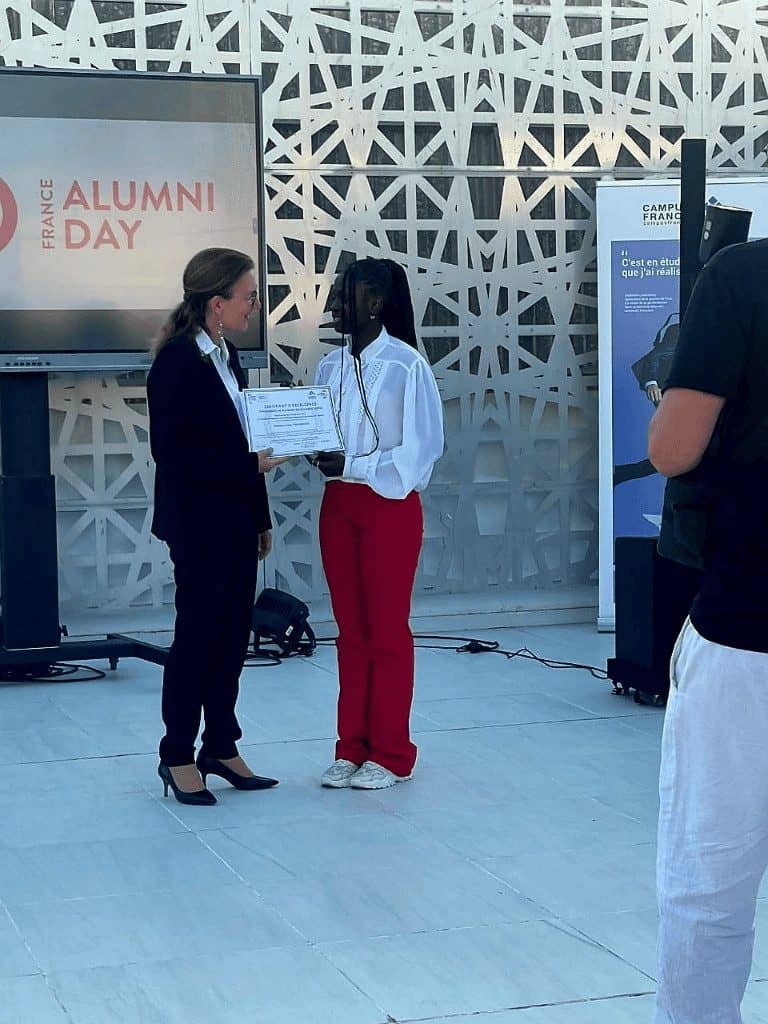
The Journey
My name is Céline THIOMBIANO. I come from Burkina Faso, and I am currently in Master 2 Econometrics and Statistics, Applied Econometrics track at IAE Nantes, France. I hold a Bachelor's degree in Economics, with a specialization in Economic and Financial Engineering from the Faculty of Economic Sciences and Management of Tunis El Manar.
The choice to pursue my training in Econometrics and Statistics was motivated by my ambition to specialize in the quantitative analysis of economic phenomena and to contribute to decision-making within institutions. Nowadays, with the advancement of technology and the increasing availability of data, there is a growing need to rely on rigorous analysis to understand economic dynamics, anticipate market developments, and guide public policies.
I therefore oriented myself toward this field because it allows for combining a scientific approach with concrete challenges, which are to transform complex data into useful information, enlighten strategic decisions, and bring an objective vision in contexts where uncertainty is high.
France Excellence Eiffel Scholarship Details
The France Excellence Eiffel scholarship is a French government program intended for international students. It funds Master's or Doctoral studies through a monthly allowance of €1,200 for a Master's and €2,100 for a PHD, and covers several other costs related to the stay in France, such as international transport, insurance, and certain cultural activities.
Were You Offered Any Other Scholarships?
I was also a beneficiary of the Tunisia-Burkina Faso Cooperation scholarship, granted by the Burkinabé government as part of my undergraduate studies.
Educational Background
I obtained a scientific baccalaureate with "Very Good" honors and a national ranking of 4th, which allowed me to be selected for the Tunisia-Burkina Faso cooperation scholarship. Thanks to this program, I pursued a Bachelor's degree in Economics, specializing in Economic and Financial Engineering, which I validated with "Very Good" honors, being the vice-valedictorian of my class. At the end of this training, I was selected for the Eiffel scholarship to pursue a Master's in Econometrics and Statistics, currently in progress.
My first cycle constituted a decisive step in my orientation toward applied econometrics. It provided me with solid foundations in economic theory and quantitative methods, which are essential for rigorously analyzing economic phenomena and for evolving in a field where mastery of statistical and econometric tools is central.
How Did You Prepare to Apply for the France Excellence Eiffel Scholarship?
I identified and developed my knowledge about the Scholarship by participating in webinars on scholarships, organized within associations of which I am a member, and also by following informative videos on the internet.
Regarding the choice of the institution, my ambition to specialize in econometrics dates back to my first year of university. Thus, by starting my preparation for the scholarship, I also undertook research on French universities offering solid training in this field. This is how I discovered Nantes Université, whose Applied Econometrics program stands out for the quality of its supervision, the richness of its teachings, and the possibility of combining economic theory and quantitative analysis.
Did You Take Any Standardized Tests? If So, How Did You Prepare for Them?
I did not have to prepare for a language test during my application since the training is taught in French, my native language.
After identifying the university I wished to apply to, the next step was to submit my application. The institution conducts an internal preselection of candidates before forwarding the shortlisted applications to Campus France for the final evaluation.
The application window at the university ran from midOctober to midNovember, during which applicants were required to complete an online form and upload all supporting documents directly (CV, statement of purpose, transcripts, ranking certificates, awards and distinctions, etc.). I received a positive response from the university in December, after which my file was transferred for the final selection phase.
For the preparation of my CV and statement of purpose, I drew inspiration from the guidance shared by former scholarship recipients I had contacted, as well as advice found in YouTube videos and academic blogs.
How is Your Experience at Nantes Université (IAE Nantes)?
Still enrolled in the program as part of the scholarship, my first year of the Master’s degree has been exceptionally rich in learning opportunities. It allowed me to carry out several concrete projects and to take part in professional talks delivered by practitioners and alumni, which strengthened my understanding of the field’s professional challenges.
One of the distinctive features of this Master’s program is its dual orientation, combining both research and professional integration. Throughout the year, we work on applied projects, real case studies, and practical simulations, enabling us to develop strong operational skills while also acquiring the methodological foundations required for research.
How Do You Rate Nantes Université (IAE Nantes) Academically?
From an academic standpoint, I hold the institution in very high regard. The courses are rigorous, well-structured, and aligned with current standards in econometrics and data-driven research. The applied projects, the quality of the teaching support, and the expertise of the instructors enable students to develop strong, immediately applicable skills, whether for professional practice or for further advanced studies.
How Does Nantes Université (IAE Nantes) Support International Students?
Nantes Université offers very good support to international students. The welcome is structured thanks to the "Guichet Unique" (Single Window), which centralizes essential procedures (enrollment, housing, health, residence permit). The dedicated services are accessible and reactive, which facilitates integration upon arrival. The university has also obtained the "Bienvenue en France" level 3-star label, proof of the quality of its welcome.
Are Your Classes Conducted in English or French?
Our classes are indeed taught in French, the language of the country.
What Did You Pursue After the France Excellence Eiffel Scholarship?
With a clear research-oriented vision, I intend to pursue further studies after this Master’s degree by enrolling in a doctoral program. My goal is to develop an in-depth expertise in applied econometrics and to contribute to academic research through a PhD thesis, building on the themes I have already begun to explore, particularly in finance, public policy evaluation, and development economics.
Would Potential Students Have Any Problems Not Knowing French?
Within the Applied Econometrics Master’s program at IAE Nantes, proficiency in French is important, as most courses, teaching materials, and assessments are delivered in the country’s native language. A student who does not speak French may initially face certain challenges, particularly when following theoretical lectures, participating in tutorials, or understanding the instructions for applied projects.
However, the university provides resources to support students’ adaptation, including French as a foreign language courses offered by the Language Center. In addition, instructors remain accessible and willing to clarify essential concepts whenever needed. With personal commitment and a gradual acquisition of the language, such students can successfully adapt and complete the program.
What Do You Think Made Your Application Stand Out?
I believe that the excellence of my academic record, from the time of my baccalauréat onward, was the decisive factor in my selection, as it is the primary criterion considered for potential admission. This strength was further reinforced by the overall quality of my application, particularly the clarity of my professional goals, the coherence of my academic choices, and my involvement in student associations, all of which reflect my motivation and my ability to contribute to collective initiatives.
But, in my view, what made the greatest difference is the solidity of my academic background: the consistency of my results, my steady progression, and the rigor I have developed over the years. Together, these elements demonstrate a genuine potential to succeed in a demanding program.
What Would You Have Done Differently if You Were Going Through the Process Again?
I do not believe I would have done anything differently if I had to go through the process again. I prepared my application with seriousness, beginning my research as early as the second year of my Bachelor’s degree, seeking advice and engaging with former scholarship recipients who were extremely supportive. This consistent investment was essential in building a strong application and securing such a highly selective scholarship, especially since I applied while still awaiting the official award of my Bachelor’s degree.
What Advice Would You Give Those Looking to Apply for a Similar Scholarship?
Do not wait until the last minute to start looking for opportunities. It is essential to have a clear vision of one’s future goals and to begin preparing early, as seeking funding to pursue further studies requires giving one’s best in the current academic program.
It is also important to know how to search for information: consult official websites, read eligibility criteria carefully, review the applications of past awardees when available, and select the host university objectively by ensuring that the desired program aligns with one’s academic background and by learning about the expectations of the program.
I also recommend seeking guidance: engaging with former scholarship recipients, professors, or academic advisors helps avoid common mistakes and provides valuable insight into what constitutes a strong application.
Finally, great care should be given to the quality of the application: a clear, coherent, and well-argued professional project, relevant recommendation letters, and a polished presentation truly make a difference in such a highly selective process.
Want to submit your
scholarship journey?
Submit Your Story Here!
More Scholarship Recipients

My name is Humayun Nosheerwan. I am a Chevening Scholar, social entrepreneur, artist, higher education professional, and Fou .... Read more
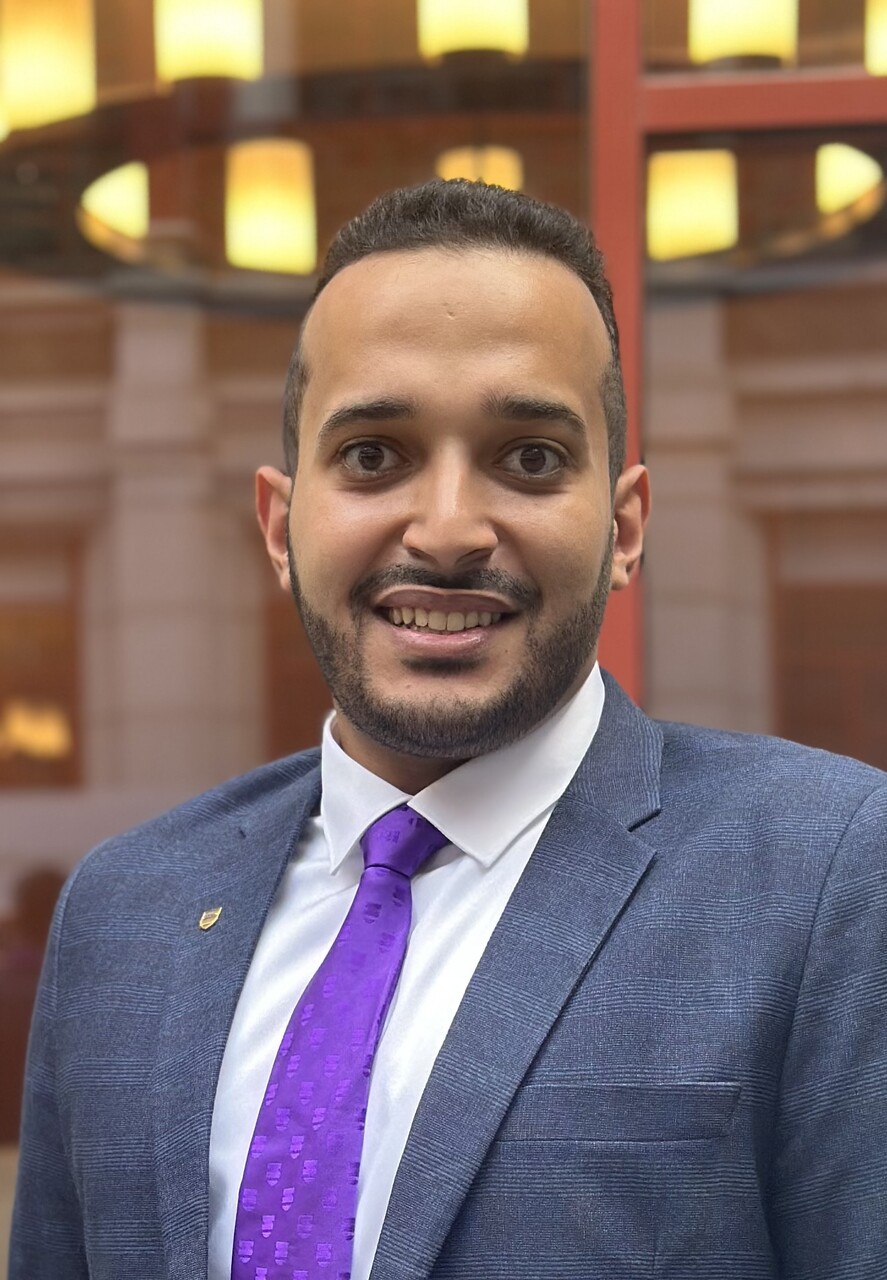
I'm Hossam Hamdy, an Egyptian from Cairo, now based in Dubai, where I work in venture capital. My career sits at the interse .... Read more
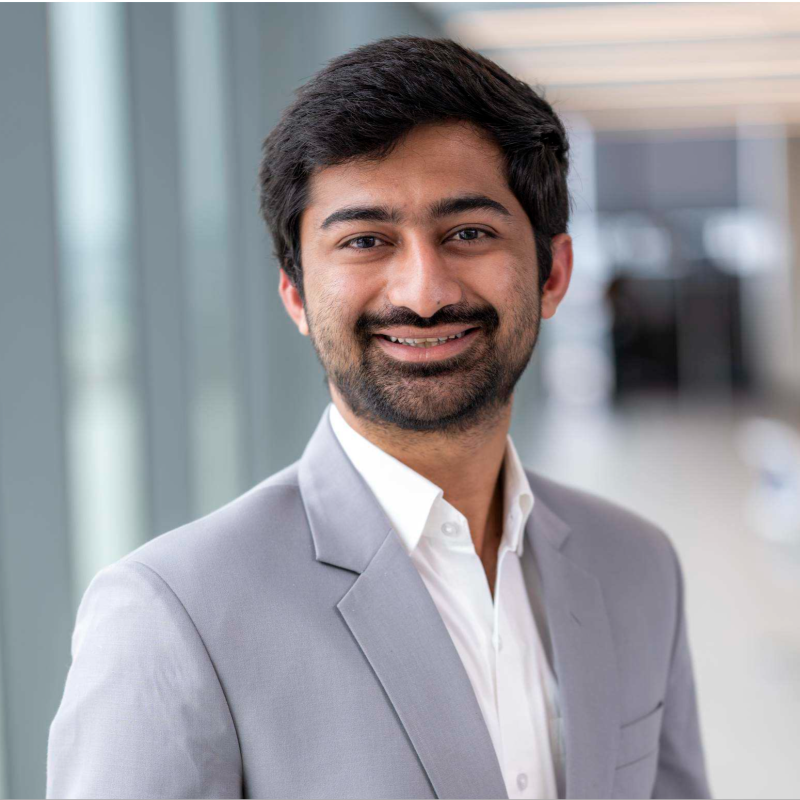
My name is Ahmad Shoeb Hashmi, and I am a dentist from India currently pursuing a dual-degree Master of Public Health (MPH) .... Read more
Leave A Comment