
How Catarina Teixeira, a Portuguese Scholar, Secured a Partially Funded PhD Research Stay at Weill Cornell Through the Fulbright Research Grant
University: University of Bern (Postdoctoral Research); Weill Cornell Medicine (Fulbright Research Host)
Degree: PhD in Pathology and Molecular Genetics
Previous Education: Bachelor’s in Genetics and Biotechnology at the University of Trás-os-Montes e Alto Douro; Master’s in Molecular Biology and Genetics at the University of Lisbon; PhD in Pathology and Molecular Genetics at ICBAS, University of Porto
Scholarship: Fulbright Research Grant with the Support of FCT – Partially Funded (J-1 Visa Sponsorship and Fee Waiver, Health Coverage, Pre-departure Orientation, Administrative Support)
Other Offered Scholarships: FLAD Scholarship (€5,400 Research Grant); FCT Doctoral Fellowship (PhD Salary Support)
Social Media
The Journey
My name is Catarina Teixeira, and I am from Portugal. I studied Genetics and Biotechnology at the University of Trás-os-Montes e Alto Douro, then completed my MSc in Molecular Biology and Genetics at the University of Lisbon, where I first worked on RNA modifications in bladder cancer.
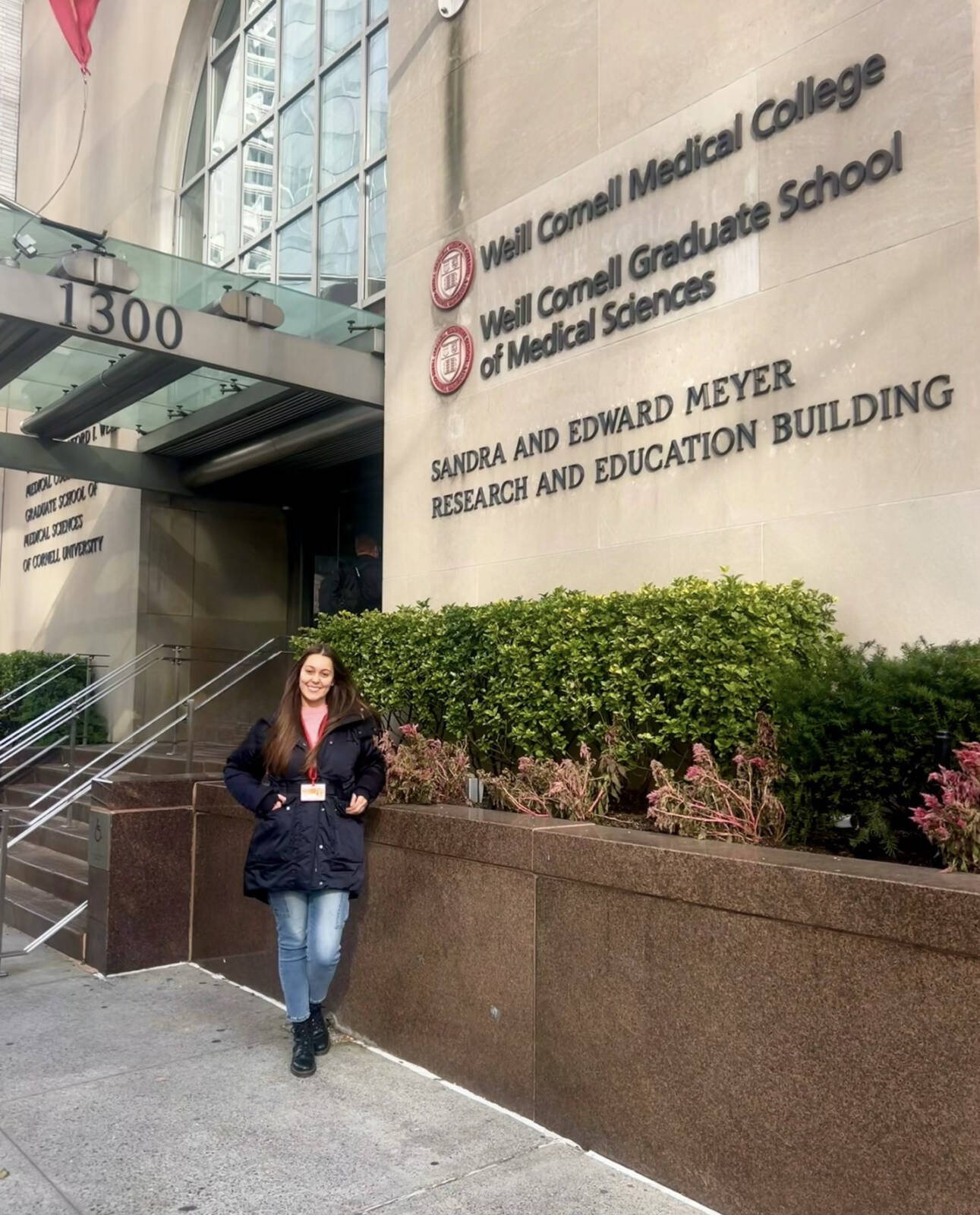
I then did my PhD in Pathology and Molecular Genetics at ICBAS, University of Porto, in the Cancer Biology and Epigenetics Group at IPO-Porto. My thesis focused on epitranscriptomic alterations in kidney cancer. In 2024, I received a Fulbright Scholarship and a FLAD Scholarship to spend a research period at Weill Cornell Medicine in New York, in Prof. Samie Jaffrey's lab, one of the groups that helped establish the field of RNA modifications.
I am now a postdoctoral researcher at the University of Bern, Switzerland, working on epigenetic drivers of chemotherapy resistance in pancreatic cancer.
Scholarships Details
Fulbright Research Grant with the support of FCT, academic year 2024/2025, awarded by the Fulbright Commission Portugal
- Host institution: Weill Cornell Medicine, Graduate School of Medical Sciences, Department of Pharmacology, New York, USA (Prof. Samie Jaffrey's lab)
- Duration: six months (October 2024 - April 2025)
- Benefits: J-1 visa sponsorship and visa fee waiver, health coverage through the Accident and Sickness Program for Exchanges (ASPE), pre-departure orientation, support from the Fulbright Commission and the Institute of International Education during the stay, and access to the Fulbright alumni network.
- Complementary funding: €5,400 research grant from the Luso-American Development Foundation (FLAD) for the same research stay. My salary during the stay was covered by my FCT doctoral fellowship (normal Portugal salary).
Were You Offered Any Other Scholarships?
Yes, as mentioned above: the FCT Doctoral Fellowship (Portuguese Foundation for Science and Technology), which funded my PhD salary, and the FLAD grant (€5,400) for the research stay in New York.
How Did You Prepare to Apply to the Institutions?
Doing part of my PhD research in the US had always been a goal. I chose the Fulbright because it is a well-established program in Portugal, and its main value for me was the support with the visa process and the administrative side of the stay.
I made a list of institutions and labs I wanted to work with and discussed it with my PhD supervisor. Together, we agreed that Prof. Samie Jaffrey's lab at Weill Cornell Medicine was the best fit for my project. I contacted him directly, and after two interviews, he agreed to host me as a Fulbright scholar. Only then did I submit my application.
In parallel, I applied to FLAD for financial support, which I received. I also applied to the Boehringer Ingelheim Fonds (BIF) and EMBO travel grants, which I did not get.
How Did You Find Information About Scholarships and Institutions?
I already knew Prof. Samie Jaffrey's work from the literature, since his lab developed several of the methods used in my field. I contacted him directly, presented my project, and he agreed to host me and provided an invitation letter, which is required for the Fulbright application.
I learned about the Fulbright Research Grant through the Fulbright Commission Portugal website and my supervisor. The FLAD grant was announced through the Fulbright network.
Did You Take Any Standardized Tests? If So, How Did You Prepare for Them?
No. The Fulbright Research Grant did not require standardized tests. My English proficiency was assessed through the application itself and the interviews.
How Did You Prepare to Apply for the Scholarships?
Once Prof. Jaffrey agreed to host me, I prepared the Fulbright application, which included: a research proposal describing the project I would carry out at Weill Cornell, a personal statement, an affiliation letter from the host lab, recommendation letters, my CV, and academic transcripts.
The research proposal took the most work. I wrote it with input from my PhD supervisor and Prof. Jaffrey, so the project was scientifically solid and clearly needed the expertise and tools of his lab. In the personal statement, I focused on why this stay mattered for my career and what I would bring back to Portugal.
How is Your Experience at the Institutions?
My six months at Weill Cornell were the most intense period of my PhD. I learned new techniques, but what stayed with me most were new ways of working and of thinking about a scientific question.
The lab had people from many countries and backgrounds, and the way they discussed data and challenged ideas changed how I approach my own research. New York was expensive and demanding, but also very stimulating, and the Fulbright network gave me contact with researchers outside my field that I would not have met otherwise.
How Do You Rate the Institutions Academically?
Very highly. Weill Cornell Medicine combines strong basic research with close links to clinical work, and Prof. Jaffrey's lab developed several of the methods that define the RNA modification field. Working there gave me access to tools and expertise I could not have found in Portugal.
How Do the Institutions Support International Students?
Weill Cornell has an office for international scholars that handled my J-1 registration and onboarding. Fulbright and the Institute of International Education also supported me before and during the stay. Day-to-day, the lab was very international, which made settling in much easier.
Are Your Classes Conducted in English or the Countries' Native Languages?
My stay was research-based, so I did not attend classes, but all lab work, meetings, and seminars were in English.
What Did You Pursue After the Scholarship?
After returning, I finished my PhD at ICBAS/IPO-Porto and moved to the University of Bern as a postdoctoral researcher.
What Do You Think Made Your Application Stand Out?
I applied with a confirmed host and a project built together with that host. Prof. Jaffrey had already interviewed me and agreed to supervise the work, and the proposal was written with input from him and my PhD supervisor. It showed clearly why the project needed his lab and how the results would feed back into my PhD and into research in Portugal.
What Would You Have Done Differently if You Were Going Through the Process Again?
I would plan the budget earlier. My salary was a Portuguese fellowship, and New York is very expensive, so the FLAD grant made a real difference. I would look for more complementary funding from the start and apply to more sources at once. If possible, I would also plan a longer stay, since six months goes by very quickly in a research project.
What Advice Would You Give Those Looking to Apply for a Similar Scholarship?
Secure your host before you apply. Contact the lab directly, present a concrete project, and build the proposal with them. Apply to several funding sources in parallel, and do not be discouraged by rejections. I was turned down by BIF and EMBO and still made the stay happen. Finally, talk to former Fulbright grantees, who are usually happy to help.
Want to submit your
scholarship journey?
Submit Your Story Here!
More Scholarship Recipients
Hi, I'm Ushna from Pakistan. I recently completed my M.Sc. in Chemistry at the School of Science, Tianjin University, China, .... Read more
I chose my university major for a surprisingly simple reason: I realized I really didn't like numbers. When I was trying to .... Read more
Oftobkhon Akhadjonova, 24 years old, from Uzbekistan. Work experience: Intern at the Centre for Professional and Lifelong E .... Read more
Leave A Comment