
How I Secured a Fully Funded Master’s at CentraleSupélec / Université Paris-Saclay, France Through the Eiffel Excellence Scholarship
University: Université Gustave Eiffel
Degree: PhD in Offshore Geotechnics
Previous Education: Master’s in Geomechanics, CentraleSupélec / Université Paris-Saclay and École nationale des ponts et chaussées; Bachelor’s in Civil Engineering, Çukurova University
Scholarship: Eiffel Excellence Scholarship – Full Funding (Monthly Allowance, International Flight, Health Insurance, Housing Assistance, Cultural Activities, and Registration Fee Exemption)
Other Offered Scholarships: Türkiye Bursları Scholarship – Full Funding (Tuition, Accommodation, Health Insurance, Flights, Monthly Stipend, and One-Year Turkish Language Course), Çukurova University; Beninese Government Scholarship – Funding for Studies at École Polytechnique d’Abomey-Calavi
Social Media
LinkedIn: linkedin.com/in/aubeda-moussa-a19aa1192/
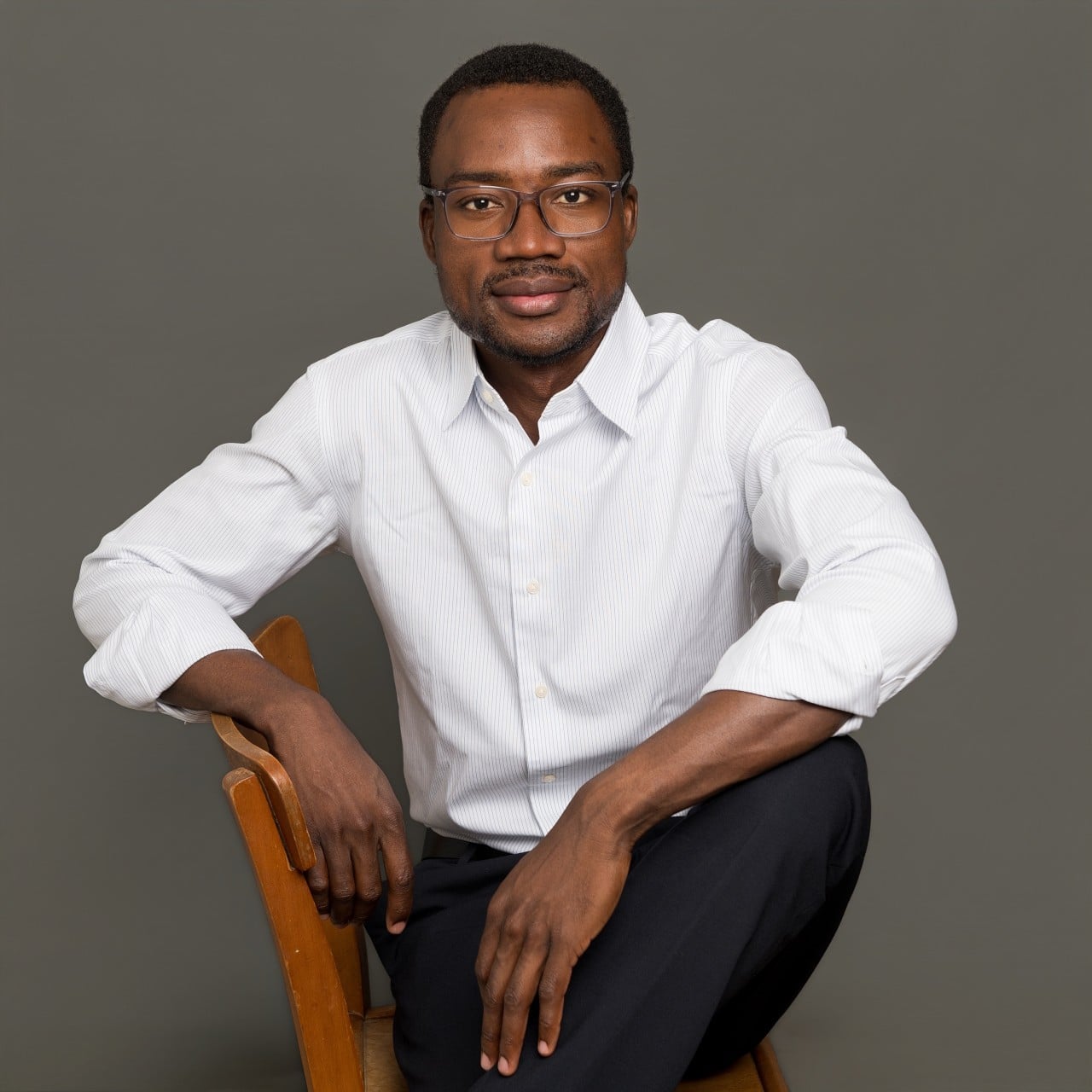
The Journey
My name is Aubeda Moussa. I am from Kouande, a small city in the north of Benin, and I am currently a PhD researcher in offshore geotechnics at Université Gustave Eiffel in Nantes, France, where I work on anchoring systems for floating wind turbines. Before that, I completed a Master's in geomechanics in France with the Eiffel Excellence Scholarship and a Bachelor's in civil engineering in Turkey with the Türkiye Bursları scholarship.
I chose geotechnics because of a gap I saw at home. In Benin, civil engineering essentially means buildings for the most part; specialisations like geotechnics barely exist, and for large projects the experts come from abroad. I decided to become one of the specialists my region has to import, with the long-term goal of bringing that expertise back.
Eiffel Excellence Scholarship Details
I received the Eiffel Excellence Scholarship, funded by the French Ministry for Europe and Foreign Affairs, for the full two years of my Master's (2023-2025): the M1 in Civil Engineering, Geomechanics track, at CentraleSupélec / Université Paris-Saclay, then the M2 Geomechanics and Underground in the MSROE track (Mechanics of Soils, Rocks and Structures in their Environment), taught mainly at CentraleSupélec and the École nationale des ponts et chaussées (ENPC). The scholarship paid a tax-free monthly allowance of €1,181 (raised to €1,200 as of January 2026) for 24 months, plus my international flight, health insurance, help with housing, and cultural activities. Eiffel does not pay tuition directly, but French government scholarship holders are exempt from registration fees at public institutions, so in practice I paid nothing to study.
Were You Offered Any Other Scholarships?
Yes, two. Before France, I won the Türkiye Bursları scholarship from the Turkish government for my Bachelor's in civil engineering at Çukurova University in Adana. It is one of the most complete packages that exists: full tuition, a dormitory place, health insurance, flight tickets, a monthly stipend (currently around 5000 TL per month for undergraduates; the amount is adjusted over time), and, before the degree even starts, a fully funded one-year Turkish language course at TÖMER. There is also a detail few applicants know: the program has a merit track that doubles your monthly stipend if your GPA stays at 3.5/4.00 or above. Mine did, so I received the doubled stipend for two years. Excellence keeps paying even after you win the scholarship. Earlier, I also received a Beninese government scholarship awarded to top-ranked students at the Baccalaureate, which covered my studies at the École Polytechnique d'Abomey-Calavi (EPAC).
Educational Background
My record starts before university: I was top of my class throughout high school and finished second nationwide in my track at the Baccalaureate (Bac F4) in 2016. That ranking earned me the Beninese scholarship to EPAC, and it is the same asset that carried every application afterwards. During my second year at EPAC, I won Türkiye Bursları and left for Turkey in September 2018. After the Turkish language year, I completed my Bachelor's from 2019 to 2023, graduating with a GPA of 3.86/4.00, first of the entire engineering faculty, in a program taught in Turkish. In France, I completed my Master's with an average of 15.75/20; anyone familiar with grading at CentraleSupélec and ENPC knows what that number costs. Each stage prepared the next: high school excellence gave me the ranking that opened the first doors, the Bachelor's gave me the fundamentals, and choosing all my final-year electives in geotechnics gave my Master's application a coherent story rather than a generic one.
How Did You Prepare to Apply to Université Gustave Eiffel?
How Did You Find Information About Eiffel Excellence Scholarship and Université Gustave Eiffel?
Through my network, both times, and this is a real strategy, not luck. I learned about Türkiye Bursları from a friend who had applied the previous year and failed; his experience taught me what the process looked like before I ever opened the portal. I learned about Eiffel from a friend whose friend had won it. At the time, I was focused on Canada and the United States, but my friends knew my academic record and pushed me toward it. The lesson: tell people around you what you are looking for. Your network can be a scholarship database as well, and people who failed an application are some of the most useful sources you will find.
Did You Take Any Standardized Tests? If So, How Did You Prepare for Them?
TÖMER certification for Turkish, which the scholarship's language year prepares you for, and IELTS for English. The IELTS story is the one worth telling. When I arrived in Turkey, I spoke only French. But I wanted options after graduation, including scholarships in English-speaking countries, so from my first year I taught myself English alongside learning Turkish. I took the IELTS in my final year, while doing my capstone project. It was not easy. But when the CentraleSupélec opportunity appeared, taught in English, I could apply immediately while others could not. I did not prepare for the IELTS for that program; I prepared it for opportunities I could not yet see. That is the whole point.
How Did You Prepare to Apply for the Eiffel Excellence Scholarship?
The most important thing to understand about the Eiffel Excellence scholarship is this: you cannot apply for it yourself. Only French institutions can nominate candidates to Campus France. So, the real application is to the institution. My sequence: I applied to the Master's at CentraleSupélec around October-November. Once accepted, we worked together on the scholarship file, updating documents that needed it, and the institution submitted my nomination by mid-January. Results came at the beginning of April. It is very competitive, and your institution's support is decisive, so treat the admission application as the scholarship application. One more thing about the file itself: it is not only transcripts. It includes your CV and your story, and Eiffel's stated purpose is to train the future decision-makers of the private and public sectors. Committees read files with that in mind, so what you have done outside the classroom belongs in there too.
For Türkiye Bursları, everything goes through the online portal; no prior admission needed: the program places you in one of the universities you selected in your application (you can currently list up to 12 choices). I applied from Benin during my second year at EPAC, then had an interview in Cotonou. The questions were what you would expect from any scholarship interview: your background, your motivation, your plans. What carries you through is a documented record and a clear story about why this field and why Turkey.
How is Your Experience at Université Gustave Eiffel?
Very good at both, with one honest caveat about Turkey. At Çukurova, I was often the only foreigner among some 200 students, and professors taught as if everyone were local, same pace, same references, no adjustments. I understand why, and in the end, it forced my Turkish to a level no course would have, but the first year of lectures was a wall. In France, the experience was different: a smaller, international cohort and a demanding but well-structured program. In both countries, what balanced the academic pressure was life outside the classroom: I was involved in student organisations throughout my studies, and that is where a foreign student actually builds a social circle and learns to lead.
How Do You Rate Université Gustave Eiffel Academically?
Çukurova gave me a solid, practice-oriented engineering education with real laboratory access, which is not a given everywhere. CentraleSupélec and ENPC are among the top-ranked engineering schools and most demanding institutions in France; the level of mathematical depth and the grading standards are severe, and that is precisely their value. A degree that is hard to get well is worth more when you have it.
How Does Université Gustave Eiffel Support International Students?
In Turkey, most of the structure came from the scholarship itself rather than the university: dormitory, insurance, and the TÖMER year are all organised for you before you arrive, which removes the hardest problems of moving abroad at that age. In France, Campus France manages the practical side for Eiffel scholars, from insurance to housing assistance, and the institution's international office handled the rest.
Are Your Classes Conducted in English or French?
In Turkey, my entire degree was in Turkish, prepared by the one-year language course. Some Turkish programs are English-taught, but be careful with two things that surprise many students. First, even in an English-taught program, you may still be required to reach a certain level of Turkish, and some students end up doing two years of language courses instead of one; discovering that after arrival is upsetting. Second, whatever the language of your classes, you cannot really live in Turkey without Turkish, at least outside the biggest cities: administration, dormitories, shops, daily life all run in Turkish. Learn it seriously either way. In France, my Master's was taught in English and French.
What Did You Pursue After the Eiffel Excellence Scholarship?
A funded PhD position at Université Gustave Eiffel in Nantes, inside an industry-led research project on anchors for floating wind turbines. To be clear about the mechanism: what won me the PhD position is the same thing that won me the scholarships, a strong academic record and a coherent specialisation. But the scholarships multiplied its effect. They put me in institutions and networks where funded research positions are visible and reachable, with professors who could recommend me. Excellence opens the door; excellence scholarships make sure the door is in front of you.
Would Potential Students Have Any Problems Not Knowing French?
For Turkey, in a Turkish-taught program: yes, at the beginning, even with the preparatory year. Academic Turkish in an engineering lecture is a different animal from daily Turkish. My first semester grades were the worst of my life, and I had been first of my class since childhood. It was temporary; by graduation I was first of the faculty. Expect the dip, plan for it, and do not interpret it as failure. For France, my program ran in English and French; French is not strictly required academically in such programs, but daily life without any French is harder.
What Do You Think Made Your Application Stand Out?
A documented, ranked record rather than adjectives: second nationwide at the Baccalaureate, first of my class every year, first of the engineering faculty at graduation. Rankings travel across borders in a way grades alone do not. Second, coherence: every step pointed in one direction, from civil engineering to geotechnics electives to a geomechanics Master's. Selection committees fund trajectories, not transcripts. Third, readiness: I had the language certificates in hand when the opportunities appeared. And finally, the file was not only academic. I was involved in student organisations alongside my studies, and I made that visible. A scholarship built to select future decision-makers is not looking for someone who is only a transcript; it is looking for someone who works with people and takes responsibility. Grades open the file; the rest of the profile closes the decision.
What Would You Have Done Differently if You Were Going Through the Process Again?
Honestly, very little, but one thing: I would have taken the IELTS in my third year instead of my final year. Preparing an English test while finishing a capstone project was brutal, and nothing about the test required waiting. Take your language tests the year before you think you need them. Scores stay valid; time does not come back.
What Advice Would You Give Those Looking to Apply for a Similar Scholarship?
Four things. First, if you come from a modest background, treat academic excellence as your capital; it requires no money and no connections, and every scholarship I won was bought with it. Second, prepare for opportunities before they exist: learn the languages, take the tests, keep your documents ready, because the difference between winners and equally talented losers is often just readiness on deadline day. Third, use your network deliberately. Ask people who won, and ask people who failed; both know things the official website will never tell you. Fourth, do not be only a transcript. Programs like Eiffel explicitly select future decision-makers, so join student organisations, take responsibilities, lead something, however small. Excellence gets you considered; the full person gets you chosen.
Want to submit your
scholarship journey?
Submit Your Story Here!
More Scholarship Recipients
My name is Shah Hussain, and I am from Khyber Pakhtunkhwa, Pakistan. I completed my Bachelor’s in Psychology at the Univer .... Read more
I am June from the Philippines. I am an educator for Social Sciences and Humanities. I recently earned my Master in Southeas .... Read more
Hi, my name is Abdul Hafeez, and I come from a small town called Nasirabad in Sindh, Pakistan. Currently, I am pursuing a ma .... Read more
Leave A Comment