
University of Denver Scholarships for International Students 2027
Funding at University of Denver can be easier to navigate when you start with the most generous options. Below is a shortlist prioritized by the level of support.
University scholarships associated with University of Denver often form the core of an applicant’s funding plan. Here are a few notable options to review first. Graduate Assistantships is usually considered full tuition, and typical coverage can include 100% of tuition fees and a living stipend. A strong option is Sturm College of Law Graduate Merit Scholarships which is full tuition and often covers $26,000 to $45,000 per year. Merit Scholarships is partially funded, and coverage often includes $15,000 to $40,000 every year for up to 4 years.
You can find more university scholarships and external or government scholarships further down on this page.
University of Denver Scholarships for International Students
The scholarships at University of Denver can help fund your study expenses. There are currently 4 scholarships being offered to international students at the University of Denver, all with varying requirements, benefits, and application processes. We have compiled them in this list to help you find the scholarship that best fits you.
Undergraduate Scholarships
Graduate Scholarships
External Scholarships
There are many degrees that are open to international students right now — find yours.
University of Denver Admissions
Here are the official admission pages for University of Denver:
| Degree | Admissions Pages |
|---|---|
| Bachelor's | International Students Admissions Page |
| Master's | International Students Admissions Page |
Admissions and Scholarship Results at University of Denver
Here are some of the admissions and scholarship results from previous applicants to University of Denver, which you might find helpful. For more results to University of Denver, please see the University of Denver Admissions Profile Page .
| Nationality / Region | SAT/ACT | EFC | GPA | Scholarship | Status |
|---|---|---|---|---|---|
| Cameroon | 1470 | N/A | 4 | $42000 USD (per year) | Accepted |
| Philippines | 1230 | 2000 | 3.9 | $41000 USD (per year) | Accepted |
University of Denver Application Deadlines
| Degree | Admission Deadline |
|---|---|
| Bachelor's (Early Decision I) | November 1, 2026 |
| Bachelor's (Early Decision II & Regular Decision) | January 15, 2027 |
Tuition Fees at University of Denver for International Students
Indicative annual tuition fee ranges for international students at University of Denver. Exact fees vary by program, so always confirm the current cost on the university's official tuition fee pages.
| Degree Level | Typical Annual Range |
|---|---|
| Bachelor's Tuition | 61,848 USD |
| Master's Tuition | 51,090 USD |
Please note that tuition fees can vary based on the specific program you choose. For the most accurate and current fee information, consult the official tuition fee pages linked above.
University of Denver Scholarship Recipients
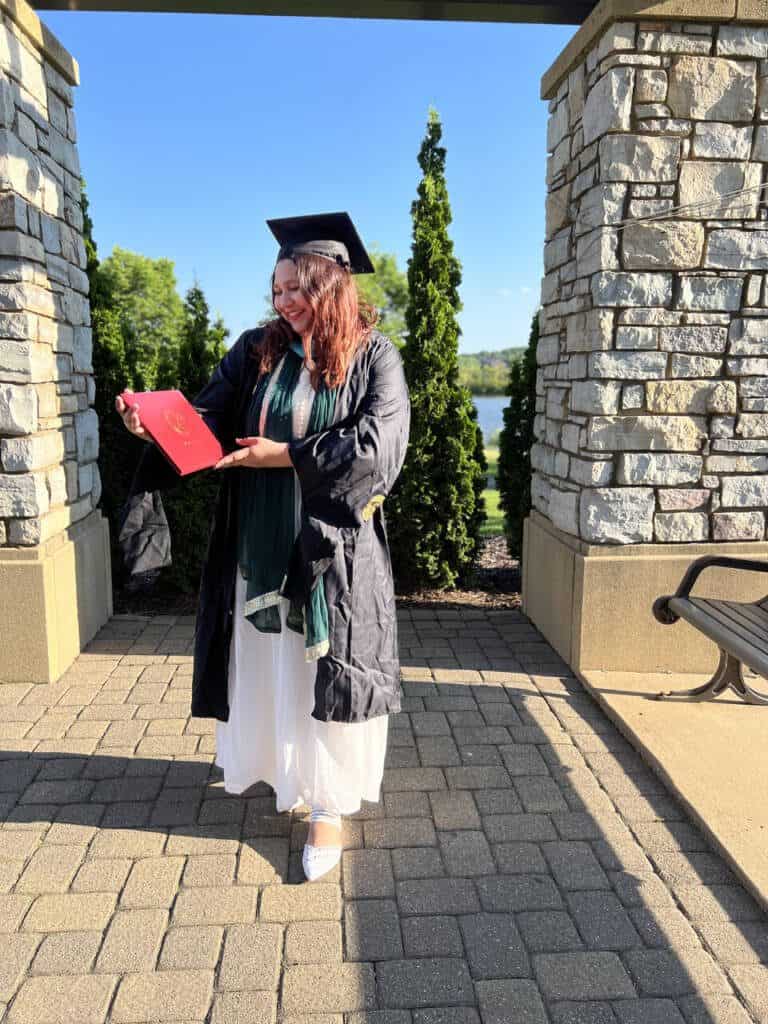
International students who received scholarships to study at University of Denver, documented by Global Scholarships.

What Scholarship Recipients Say
Advice and insights from international students who successfully secured funding to study at University of Denver.
"Fulbright reserves the right to decide the university that scholars are sent to, and I had the privilege to attend the Josef Korbel School of International Studies at the University of Denver. The scholarship covered tuition fees in full, accidental insurance coverage for up to USD 100,000, airfare to and from the destination, and initial settling in and laptop allowance for USD 2000"
Frequently asked questions
Common questions about scholarships, admissions, and studying at University of Denver.
Yes, DU offers fully online degrees, and DU notes that online students can still apply for financial support like need- and merit-based scholarships and grants (availability depends on the specific online program). If you’re comparing on-campus vs. online funding, it helps to confirm with the online program’s financial support page to see what’s eligible for your exact degree and enrollment status.
DU scholarships are offered broadly across subjects at both undergraduate and graduate levels; many are not “major-restricted,” while others are housed in specific schools/colleges (for example, business, engineering/computer science, law, international studies, arts/humanities, natural sciences/mathematics, education, social work, and more).
At the undergraduate level, DU states it considers all international students for merit-based scholarships, so nationality usually isn’t a restriction for DU’s own merit awards (you still must meet the scholarship and admission requirements).
Often yes for international applicants. DU lists English proficiency pathways for undergraduates (TOEFL/IELTS/Duolingo/CAE) and also notes exemptions may be possible depending on your background. For international graduate applicants, DU similarly lists accepted English tests (TOEFL/IELTS/CAE/Duolingo) and states applications aren’t considered complete until a score is received (unless you qualify for an exemption).
In the DU scholarship recipient story, Aisha Nazir described how requirements can also shift depending on the scholarship/application route; her Fulbright process initially meant “GRE and a TOEFL was waived,” but later, “I was asked to take both tests” for university applications.
Undergraduate: DU states it does not have a minimum GPA for international admission consideration, and emphasizes a holistic review where academic performance is central; DU also publishes typical admitted-student GPA ranges to show what’s competitive.
Graduate: DU publishes minimum GPA thresholds for graduate admission consideration (including a minimum undergraduate GPA for consideration, and a minimum cumulative GPA standard for graduate coursework). Individual programs can be more selective and may set higher expectations than the university-wide minimums.
DU does not present an “age cap” as a general scholarship rule; instead, it provides application guidance for different student situations. For example, DU explicitly describes how applicants “over 24 years old” can apply if they’ve been out of high school for several years, showing that older applicants are still eligible to apply.
That said, some external scholarships (not DU itself) can have age or career-stage rules depending on the sponsor, so always check the specific scholarship’s eligibility criteria.
Undergraduate: A strong academic record (rigorous courses and solid grades) matters most, and test scores can be optional; however, DU notes that submitting SAT/ACT (when available) may strengthen merit scholarship competitiveness for some students. English proficiency (or a valid exemption) is part of eligibility for many international applicants.
Graduate: At the university level, DU lists baseline admission standards (degree completion + GPA minimums for consideration), and program requirements can add items like standardized tests, essays/statements, and recommendations. In GlobalScholarships’ DU recipient story, Aisha Nazir brought a first-class academic record (CGPA 3.80) plus relevant professional experience in development work. This combination (grades + fit + experience + strong essays/references) is a common pattern for competitive scholarship outcomes.
Undergraduate (international first-year): DU lists an application (Common App) with an essay, the application fee (or fee waiver, if approved), official secondary-school transcripts (with certified English translations if needed), and at least one letter of recommendation; SAT/ACT can be optional depending on your situation, and proof of English proficiency (or exemption) is typically required. Some majors (e.g., music, art/design) may require an audition or portfolio, and an interview can be optional.
Graduate: DU lists an online application, a program-specific application fee (varies by program), transcripts from every college/university attended (plus certified English translations if needed), and possible supplemental materials such as letters of recommendation and admission essays/statements of purpose. International graduate applicants may also need English proficiency scores (or a qualifying exemption), and DU may require transcript evaluation steps for non-U.S. credentials and financial verification for I-20/DS-2019 processing.
From the GlobalScholarships DU recipient experience, Aisha Nazir emphasized application writing and recommendations as core documents in her Fulbright path (personal essay, research essay, and reference letters), and she later had to add standardized test results for the university stage.
Undergraduate: Yes, DU lists a $65 nonrefundable application fee for international first-year applicants, with fee-waiver options in cases of verified financial hardship.
Graduate: Yes, DU states most graduate programs require a non-refundable application fee, but the amount varies by program; DU also notes fee waivers for certain categories (for example, Fulbright Scholars). International graduate applicants may also see additional required processing fees in specific cases (for example, credential evaluation steps for non-U.S. transcripts).
There are many degrees that are open to international students right now — find yours.
About the Author: Hyun Lee


Leave A Comment