
Deakin University Scholarships for International Students 2027
To help students manage tuition and living expenses, Deakin University connects to scholarships across different funding levels. Here are several top options to review first.
Among the university based funding routes linked to Deakin University, these scholarships tend to stand out for their level of support and overall value. Deakin Vice-Chancellor’s International Scholarship is usually considered full tuition, and typical coverage can include 50% to 100% of tuition fees and vice-chancellor's professional excellence program enrollment. A strong option is Deakin International Scholarship which is partially funded and often covers 25% of the recipient's tuition fees. Deakin International Meritorious 20% Scholarship is partially funded, and coverage often includes 20% of tuition fees.
To broaden funding options beyond institutional awards at Deakin University, these external and government scholarships are commonly considered as well. Australian Government Research Training Program (RTP) is fully funded and typically covers tuition fees, living stipend, and allowances to cover additional costs associated with undertaking a Higher Degree by Research. Australia Awards Scholarships is commonly categorized as fully funded support, and coverage that often includes tuition fees, A fortnightly contribution for basic living costs and based on a set rate, and health insurance. With COLFUTURO Scholarship Loans, students may receive partially funded support, and coverage frequently includes tuition support, health insurance support, and living expenses support.
To see every scholarship associated with this institution and compare coverage and eligibility, browse the sections below.
Deakin University Scholarships for International Students
The scholarships at Deakin University can help fund your study expenses. There are currently 7 scholarships being offered to international students at the Deakin University, all with varying requirements, benefits, and application processes. We have compiled them in this list to help you find the scholarship that best fits you.
Undergraduate Scholarships
Graduate Scholarships
External Scholarships
There are many degrees that are open to international students right now — find yours.
Deakin University Admissions
Here are the official admission pages for Deakin University:
| Degree | Admissions Pages |
|---|---|
| Bachelor's | International Students Admissions Page |
| Master's | International Students Admissions Page |

Deakin University Application Deadlines
| Degree | Admission Deadline |
|---|---|
| Bachelor's and Master's | Accepts Applications All Year |
Tuition Fees at Deakin University for International Students
Indicative annual tuition fee ranges for international students at Deakin University. Exact fees vary by program, so always confirm the current cost on the university's official tuition fee pages.
| Degree Level | Typical Annual Range |
|---|---|
| Bachelor's Tuition | 37,500 – 45,000 AUD |
| Master's Tuition | 40,800 – 46,400 AUD |
Please note that tuition fees can vary based on the specific program you choose. For the most accurate and current fee information, consult the official tuition fee pages linked above.
Deakin University Scholarship Recipients
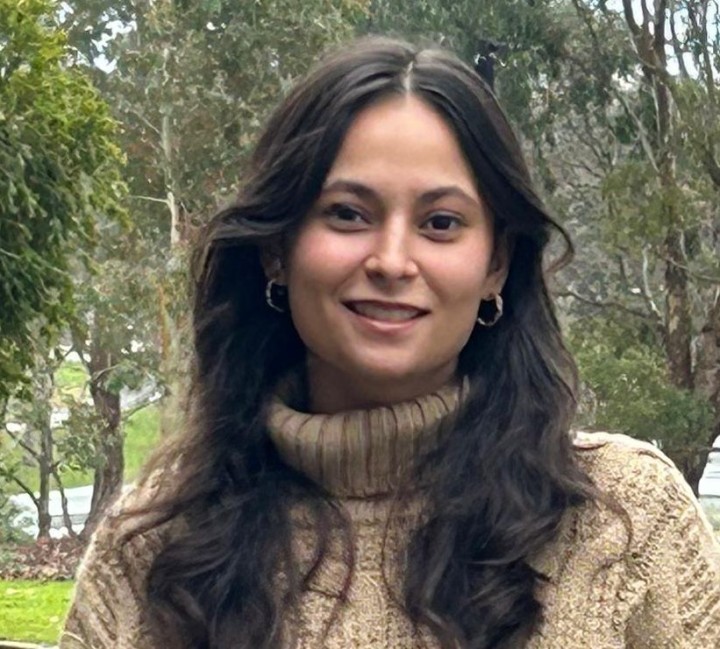
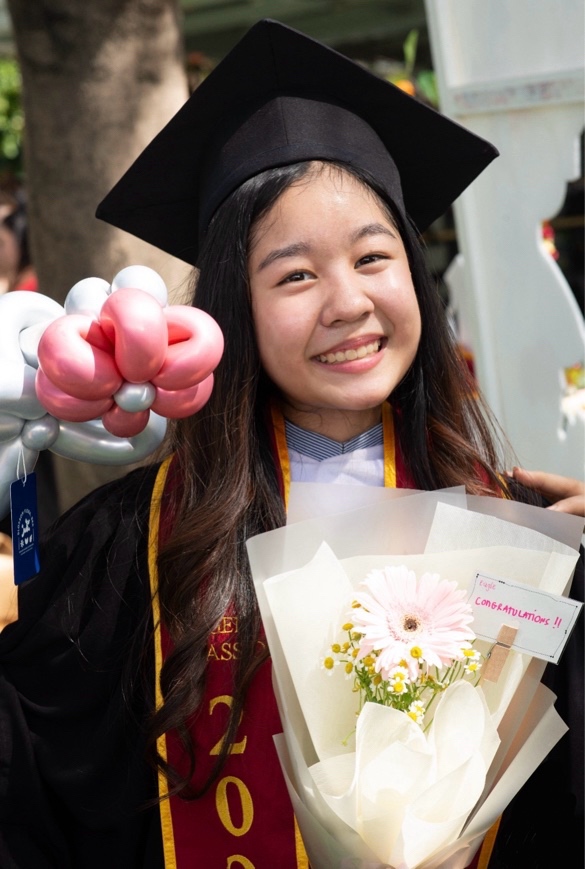
International students who received scholarships to study at Deakin University, documented by Global Scholarships.





What Scholarship Recipients Say
Advice and insights from international students who successfully secured funding to study at Deakin University.
"I’m honoured to have received the Vice-Chancellor's Meritorious 100% Scholarship from Deakin University, which covers my full tuition fees for the duration of my degree."
"Do research into each scholarship’s values and adjust your application accordingly. Show them why you are the candidate they’re looking for!"
"Due to this, I am pursuing a Bachelor’s degree in Politics, Philosophy, and Economics at Deakin University."
"I have just completed my first trimester at Deakin and was so delighted with all the support from academic staff."
"I’ve really appreciated the academic environment at Deakin. The faculty here focuses on genuine understanding rather than rote assessments."
"Recipients are granted exclusive access to the Vice-Chancellor's Professional Excellence Program (VCPEP) with a private academic mentor and events for learning and networking."
Frequently asked questions
Common questions about scholarships, admissions, and studying at Deakin University.
Deakin promotes online study options and points online students to scholarship opportunities via its scholarship finder, but eligibility for “online-only” study depends on the specific scholarship and your course/location (so always read the individual scholarship conditions carefully).
Deakin scholarships span a wide range of subjects across undergraduate, postgraduate and research programs, so you’ll see options across STEM fields (including computer science, data science and biotechnology), engineering and technology, business, and humanities/social sciences, as well as health-related programs.
Examples from Deakin scholarship recipients include tech/STEM paths like Aryan Vadera (Bachelor of Computer Science, Data Science major), Anna Shustser (Data Science with a finance focus), and Mathanki Mehra (Master of Biotechnology).
Business is also represented: Ngoc Anh (Rachel) Phung moved from Hanoi to pursue Business Analytics at Deakin, explaining her “passion for business and eagerness to learn about technology.”
For humanities/social sciences, Kanta Sudlapa is pursuing Politics, Philosophy, and Economics, saying she’s long been fascinated by “poverty and social inequality.”
Many Deakin scholarships for international students are open broadly to new international students (and you can usually filter scholarship options by citizenship/nationality in Deakin’s scholarship search tools).
In the recipient stories you can see a spread of nationalities studying at Deakin on scholarships, including Belarus (Anna Shustser), India (Aryan Vadera and Mathanki Mehra), Vietnam (Ngoc Anh (Rachel) Phung), and Thailand (Keane and Kanta Sudlapa).
Often yes for international applicants, because Deakin’s international application guidance explicitly lists “proof of English proficiency (your IELTS test)” among the documents you may need, and Deakin scholarship eligibility commonly requires meeting the English language requirements for your course.
In the recipient stories, some students used IELTS scores directly, such as Mathanki Mehra who said, “I took the IELTS and scored an overall band of 8.0,” and Ngoc Anh (Rachel) Phung who listed IELTS 7.5 and described IELTS prep as “pretty straightforward” due to her English background.
Others were exempt via prior English-medium credentials: Keane said he was “exempt from any English proficiency exams” because he met requirements through IB English, and Kanta Sudlapa similarly shared she was “exempted from taking the IELTS test requirement” thanks to her IB English grade.
Anna Shustser also noted she “did not need to take an English language test like IELTS” after studying an English-based curriculum in Australia, which is another common exemption route.
Minimum grades for admission vary by course, qualification type, and applicant background, but competitive scholarships at Deakin often publish clear academic minimums (and then select above the minimum due to competition).
For example, Deakin’s Vice-Chancellor’s International Scholarship lists an academic minimum (and also warns that “Meeting the minimum criteria does not guarantee selection”), and Anna Shustser emphasized that “The minimum academic requirement is 85% (or equivalent) in previous studies,” which she said must be maintained.
Looking at real recipient profiles can help you benchmark: Ngoc Anh (Rachel) Phung reported a high school GPA of 9.8/10 and said she aims to stand out by “maintaining a consistently high GPA,” while Keane completed the IB with “a score of 41/45,” and Mathanki Mehra completed her bachelor’s with a GPA of 8.39/10.
Most major Deakin scholarships don’t advertise a universal “age limit” and focus instead on status (for example, being a new student) plus merit and other criteria, so eligibility is typically about your academic and application profile rather than your age.
Recipient stories show scholarships going to students at different study stages, from undergraduate entrants like Ngoc Anh (Rachel) Phung who moved after “the first 18 years” of her life in Hanoi, to postgraduate study like Mathanki Mehra who is “currently pursuing a Master of Biotechnology,” suggesting the key differentiator is fit and merit, not a single age cutoff.
A strong Deakin scholarship profile typically combines solid academics plus leadership/community engagement and a compelling personal statement, because many competitive awards assess more than grades alone.
On the academic side, Deakin’s international scholarship pathways commonly publish minimum averages, but recipients often exceed minimums; Anna Shustser earned ATAR 98.85, and Aryan Vadera listed an IB score of 40.
On the “beyond grades” side, Aryan Vadera advised applicants that “the most important thing is to be yourself and be confident in your story,” and Kanta Sudlapa shared she did “at least 17 full redrafts!” of her personal statement to present herself holistically.
Mathanki Mehra also highlighted the importance of tailoring: she said she spent time “refining my Statement of Purpose” and had “multiple drafts reviewed,” which aligns closely with how competitive Deakin scholarships evaluate leadership potential and fit.
For a Deakin course application (international), you typically gather certified copies of academic transcripts and award certificates, proof of identity (passport), and proof of English proficiency; Deakin also notes that documents not in English need translation, and you can sometimes submit an incomplete application while waiting on results like IELTS.
Recipients echoed this practical checklist: Ngoc Anh (Rachel) Phung said, “I make sure I have all the required documents available, including an academic transcript, standardized scores reports, etc.,” and Anna Shustser shared that when application time came she had to prepare “school transcripts, personal statements, recommendation letters, and certificates.”
For Deakin’s major international scholarship applications, document requirements commonly include a scholarship application form, a 300-word personal statement, references (for some awards), and your course application with academic transcripts; Keane described repeatedly drafting personal statements, saying he “constantly drafted and re-drafted personal statements” to strengthen his scholarship candidacy.
For many scholarship applications, Deakin’s process focuses on submitting forms and supporting documents (often by email or through a portal) and doesn’t highlight a separate “scholarship application fee” on the scholarship pages themselves.
For course applications, fee rules can differ depending on how you apply (for example, direct/portal, VTAC for some pathways, or other routes), and Deakin’s international “How to apply” guidance focuses on steps and documents and does not state an application fee. Check the latest guidelines for updated information.
There are many degrees that are open to international students right now — find yours.
About the Author: Hyun Lee


Leave A Comment