
Brock University Scholarships for International Students 2027
Brock University is linked to scholarships that can reduce costs in meaningful ways. Here are a few strong options prioritized by funding level.
On the institution side, Brock University is connected to scholarships that can reduce tuition and sometimes extend to other study costs. These are practical starting points. A strong option is Graduate Fellowship which is partially funded and often covers partial tuition fee. Brock Scholars Award is partially funded, and coverage often includes awards of $400 up to $3,400 annually. Brock Scholars Award is partially funded and typically covers $3,400 annually for those with an admission average of 95% and above, $1,900 annually for those with an admission average of 90%-94.9%, and $900 annually for those with an admission average of 85%-89.9%. Graduate Assistantship is commonly categorized as partially funded support, and coverage that often includes partial tuition fees.
Beyond campus funding, Brock University applicants often explore outside opportunities including government backed and independent programs. These are common starting points. Ontario Graduate Scholarship (OGS) Program is commonly categorized as partially funded support, and coverage that often includes $5,000 per study term and up to three terms in a row each academic year.
For the complete set of linked scholarships including additional options and details, continue below on this page.
Brock University Scholarships for International Students
The scholarships at Brock University can help fund your study expenses. There are currently 6 scholarships being offered to international students at the Brock University, all with varying requirements, benefits, and application processes. We have compiled them in this list to help you find the scholarship that best fits you.
Undergraduate Scholarships
Graduate Scholarships
External Scholarships
There are many degrees that are open to international students right now — find yours.
Brock University Admissions
Here are the official admission pages for Brock University:
| Degree | Admissions Pages |
|---|---|
| Bachelor's | International Students Admissions Page |
| Master's | International Students Admissions Page |
Tuition Fees at Brock University for International Students
Indicative annual tuition fee ranges for international students at Brock University. Exact fees vary by program, so always confirm the current cost on the university's official tuition fee pages.
| Degree Level | Typical Annual Range |
|---|---|
| Bachelor's Tuition | 29,279 – 30,610 CAD |
| Master's Tuition | 13,451 – 35,469 CAD |
Please note that tuition fees can vary based on the specific program you choose. For the most accurate and current fee information, consult the official tuition fee pages linked above.
Brock University Scholarship Recipients
International students who received scholarships to study at Brock University, documented by Global Scholarships.
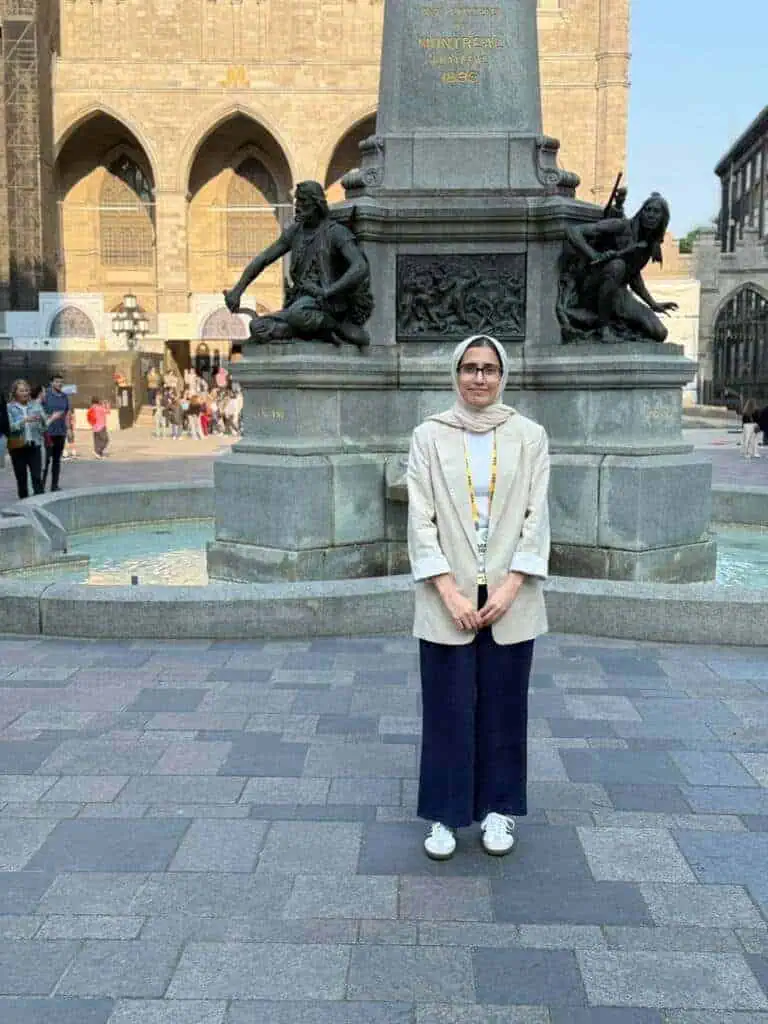
What Scholarship Recipients Say
Advice and insights from international students who successfully secured funding to study at Brock University.
"I received a professor-funded scholarship, with financial support coming through the department as part of an international fellowship for international students. In addition to that, I was awarded a Research Assistantship (RA) and, together with a Teaching Assistantship (TA), my total funding amounts to around 35,000 CAD per year."
"If I had to give one piece of advice, it would be to start early. By the time you are in your final year, try to have a clear idea of what you want to do next and start building your profile in the 2nd and 3rd year of your program. CGPA matters, but it is not everything. What really matters is knowing your direction and working towards it."
"My name is Areeba Iqbal, and I am originally from Pakistan. I am currently enrolled in a graduate program in chemistry at Brock University, Canada, and my research is focused on studying the ultrafast carrier dynamics of semiconducting materials."
Frequently asked questions
Common questions about scholarships, admissions, and studying at Brock University.
Most Brock scholarships are tied to being registered in a Brock credential (often full-time) rather than being “for online courses” specifically.
Brock scholarships are available across a wide range of subjects—many entrance awards are based on admission average (not major), while others are faculty- or program-linked. You can find scholarships connected to STEM, business, humanities, social sciences, and health programs.
- STEM: Chemistry, computer/data science, math, and more; for example, recipient Areeba Iqbal is funded in Chemistry and noted her research focus on “ultrafast carrier dynamics of semiconducting materials.”
- Engineering: Brock offers a Bachelor of Engineering (Integrated Engineering), and scholarships/entrance awards can apply as long as you meet the award terms.
- Business: Scholarships exist for Goodman School of Business programs (including graduate options like the MBA), alongside broader Brock awards.
- Humanities & Social Sciences: Awards span humanities and social-science degrees (and many are not restricted by major).
- Medicine / Health: Brock does not run an MD degree as a standard Brock program, but it does offer health-related programs (e.g., Medical Sciences, Public Health, etc.). International students can generally pursue these programs and may be eligible for international student awards if they meet the criteria (fee status, first degree, averages, etc.).
Brock has scholarships that are broadly open to international students “from anywhere in the world” (especially major entrance awards), and it also has awards targeted to specific regions or nationality/citizenship criteria.
As a real example of international representation, Brock recipient Areeba Iqbal introduces herself as “originally from Pakistan” and is funded in a Brock graduate chemistry program.
It depends on your academic background and the program. Brock lists accepted English proficiency options (e.g., IELTS/TOEFL and approved pathway programs), and some applicants may qualify for exemptions/waivers based on prior study in English (rules differ for undergraduate vs. graduate, and some programs set higher scores).
From a student-experience perspective, recipient Areeba Iqbal said, “I took the IELTS in early 2023,” and noticed that applications she submitted “without an IELTS score did not get much response,” but after adding it she “started receiving interview calls.”
Yes, minimums exist, but they vary a lot by level and program, and competitive programs can be higher than the minimum. For example, Brock’s Medical Sciences program page lists an “expected cut-off” around the mid-70s, and some programs specify their own entry averages.
Also note the difference between admission minimums and scholarship minimums: for instance, Brock’s international entrance scholarship ranges reference an 80%+ admission-average threshold for eligibility (with larger awards at higher averages).
Minimum eligibility depends on the specific scholarship, but many major entrance awards are driven by admission average (and sometimes your fee status and whether it’s your first undergraduate program). Some awards are automatic; others require an application and consider leadership, financial need, program fit, or community impact.
A helpful real example is Brock recipient Areeba Iqbal, who reports graduating with a “CGPA of 3.85/4.00” (bachelor’s) and “3.98/4.00” (master’s). But she also emphasizes balance: “CGPA matters, but it is not everything,” pointing to clarity of direction plus profile-building (research, writing, volunteering, etc.).
For research-based graduate funding, strong alignment with a supervisor/lab and evidence of research readiness can matter a lot; Areeba credits her profile edge to an “international research publication” plus relevant experience.
Documents vary by program (undergraduate vs. graduate, course-based vs. research-based), but commonly include academic transcripts, proof of English proficiency (if required), and program-specific materials such as references, a statement of interest/personal statement, and a CV/resumé.
In a research-funded pathway, recipient Areeba Iqbal says she “organized all the required documents” and made sure she had “support letters from the supervisor” plus “standardized test scores” ready, noting that having everything “in order” made the process smoother.
Yes. Brock lists an application fee for full-time applications (domestic and international), and fees can vary by application type and program (some graduate/professional programs may list their own amounts). Always confirm the fee on the specific Brock application page for your intake and program.
There are many degrees that are open to international students right now — find yours.
About the Author: Hyun Lee


Leave A Comment