
How Muelda Fatmata Juana Johnson, a Sierra Leonean Scholar, Secured a Fully Funded Master’s in Development Studies at SOAS University of London Through the Commonwealth Shared Scholarship
University: SOAS University of London
Degree: Master’s in Development Studies
Previous Education: BSc (Honours) in Business Administration and Management, IPAM, University of Sierra Leone (CGPA: 3.45, 2019)
Scholarship: Commonwealth Shared Scholarship – Tuition, Return Airfare, Monthly Stipend and Applicable Additional Allowances; 2023/2024
LinkedIn: Muelda Fatmata Juana Johnson
The Journey
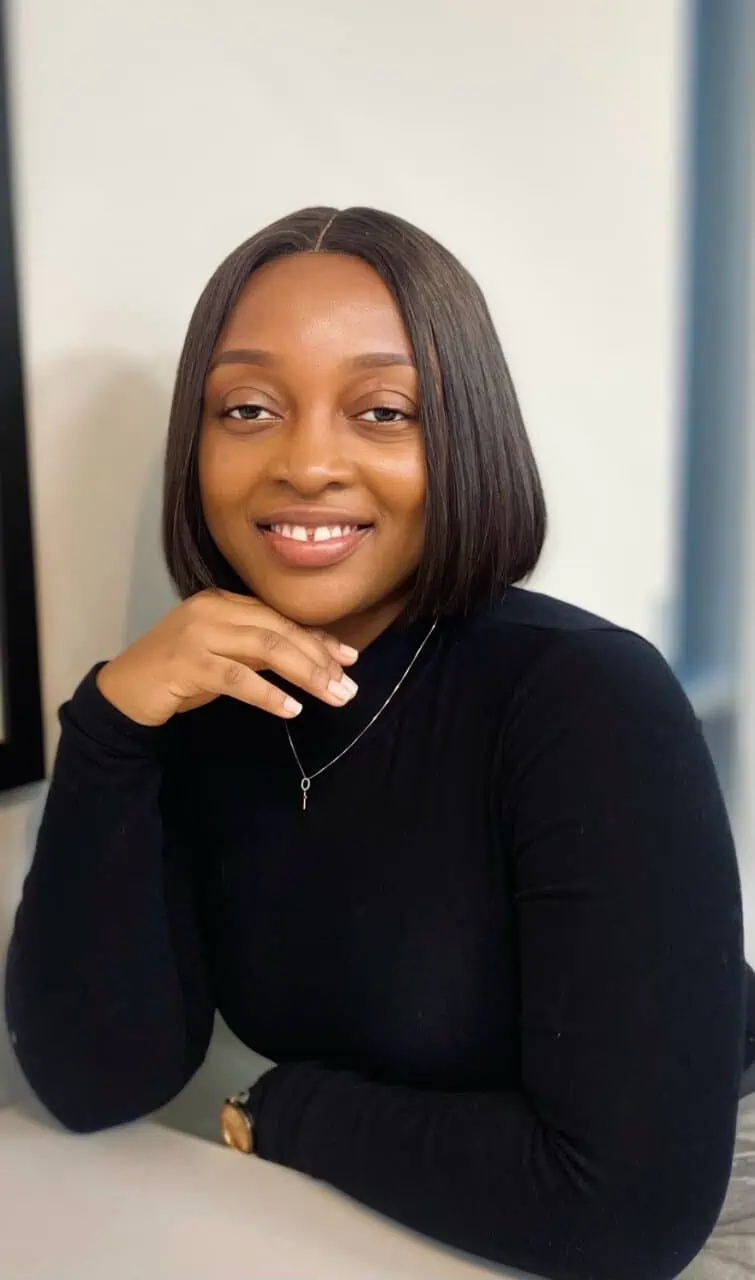
My name is Muelda Fatmata Juana Johnson, and I am from Sierra Leone, West Africa. I am a development practitioner with a strong interest in education, governance, and sustainable development.
In 2023, I was privileged to receive the prestigious Commonwealth Shared Scholarship to pursue an MSc in Development Studies at SOAS University of London, United Kingdom.
My decision to study Development Studies was motivated by my desire to understand the complex structural challenges affecting development outcomes, particularly in countries like Sierra Leone.
Having previously worked for an international NGO, I wanted to deepen my understanding of development beyond programme implementation, focusing on the political, economic, social, and institutional systems that shape people’s opportunities and well-being.
For me, pursuing higher education was never simply about obtaining another academic qualification. It was about acquiring the knowledge, analytical capabilities, and perspectives necessary to contribute meaningfully to addressing development challenges in my country.
Commonwealth Shared Scholarship Details
I received the Commonwealth Shared Scholarship for the 2023/2024 academic year, funded through the Commonwealth Scholarship Commission in the UK, with support from the UK’s Foreign, Commonwealth and Development Office (FCDO), in partnership with SOAS University of London.
The scholarship was fully funded and covered my tuition fees, return airfare between Sierra Leone and the United Kingdom, a monthly living stipend, and applicable additional allowances.
Were You Offered Any Other Scholarships?
No
Educational Background
I obtained a Bachelor of Science (Honours) in Business Administration and Management from the Institute of Public Administration and Management (IPAM), University of Sierra Leone, in 2019, graduating with a CGPA of 3.45.
How Did You Prepare to Apply to SOAS University of London?
My preparation for postgraduate scholarship opportunities began during my undergraduate studies. Even at that stage, I had a clear ambition to pursue further education through an international scholarship. With this goal in mind, I worked diligently towards obtaining an honours degree while also researching different scholarship opportunities, their eligibility criteria, and the qualifications and experiences that could make me a competitive applicant.
I understood early on that securing a scholarship required more than academic excellence. It also involved being intentional about my personal and professional development. Consequently, I began strategically positioning myself by seeking opportunities to gain relevant experience in the development sector.
This included working with an international NGO on a development programme and volunteering with a local NGO. These experiences provided practical exposure to development challenges, deepened my understanding of the sector, and helped shape my academic and professional interests.
After approximately three years of gaining professional experience, I felt sufficiently prepared to pursue my ambition of obtaining a scholarship for a master’s degree. By then, I had developed a clearer understanding of my academic interests, professional aspirations, and how further education could strengthen my capacity to contribute to development.
How Did You Find Information About Commonwealth Shared Scholarship and SOAS University of London?
I primarily relied on Google searches to identify scholarship opportunities and universities offering programmes aligned with my interests. I spent time exploring different scholarship schemes, reviewing eligibility criteria, researching universities, and understanding their admission requirements. Additionally, my networks were very supportive, as I made my intention known and they shared opportunities with me.
Did You Take Any Standardized Tests? If So, How Did You Prepare for Them?
Yes, I took the International English Language Testing System (IELTS) examination as part of my preparation for postgraduate studies.
I began preparing approximately two months before the examination. My preparation was largely self-directed. I downloaded an IELTS preparation application, obtained study books, and dedicated time to revising and practising the different components of the examination.
I focused on familiarising myself with the examination format and strengthening my skills in listening, reading, writing, and speaking.
How Did You Prepare to Apply for the Commonwealth Shared Scholarship?
My preparation began with learning from the experiences of previous scholarship recipients. I turned to YouTube, where I watched videos of successful scholars sharing their application journeys, practical advice, and lessons learned.
These resources helped me understand how to structure compelling scholarship essays, articulate my academic and professional aspirations, and present my qualifications and experiences in ways that demonstrated my potential.
I paid particular attention to how applicants connected their previous experiences with their chosen programmes and long-term development goals. This helped me become more intentional about the narrative I wanted to communicate through my application.
At the time, Grammarly was quite popular, so I downloaded it to help refine my writing, improve grammatical accuracy, and ensure my essays were clear and polished. I also sought support from individuals who reviewed my essays and provided constructive feedback before submission.
Overall, my preparation involved a combination of independent research, learning from others, using digital writing tools, and seeking feedback.
How Is Your Experience at SOAS University of London?
My experience at SOAS University of London was amazing and intellectually enriching. Beyond the academic qualification, it was an opportunity to meet people from diverse cultural, academic, and professional backgrounds and engage with perspectives that broadened my understanding of the world.
One of the most fascinating aspects of my experience was learning about the development landscapes of different African countries and other regions. Through classroom discussions, academic readings, and interactions with fellow students, I gained a deeper appreciation of how development challenges and opportunities differ across countries, despite certain shared historical, political, and socioeconomic experiences.
The diversity of perspectives also challenged me to critically examine some of my existing assumptions about development. I came to appreciate the importance of understanding context when analysing development challenges and proposing solutions.
Overall, my time at SOAS was transformative, not only academically but also personally. It strengthened my critical thinking, expanded my professional outlook, and deepened my interest in contributing to development in Sierra Leone.
How Does SOAS University of London Support International Students?
SOAS provides academic support to help international students adapt to the demands of postgraduate education in the United Kingdom.
One aspect I particularly appreciated was the availability of additional academic support sessions focusing on essay writing, structuring arguments, developing critical analysis, and improving academic writing skills.
These sessions were especially valuable because the expectations of the UK higher education system can differ considerably from those of other educational systems. Learning how to construct well-supported academic arguments, critically engage with literature, and communicate ideas effectively was an important part of adapting to postgraduate study.
I would encourage prospective students to take advantage of these opportunities early, particularly if they are transitioning into the UK academic system for the first time.
What Did You Pursue After the Commonwealth Shared Scholarship?
Following the completion of my scholarship, I returned to Sierra Leone and pursued professional opportunities within the development sector.
I initially worked with a local non-governmental organisation for approximately a year, contributing to initiatives focused on gender equality, women’s empowerment, and inclusive governance. This experience allowed me to apply some of the knowledge and perspectives I had gained during my studies to practical development work.
Subsequently, I transitioned further into development research and consultancy, supporting research and evaluation projects focused on education and other development priorities.
What Do You Think Made Your Application Stand Out?
Although I cannot say with certainty what influenced the selection committee’s decision, I believe my professional experiences, demonstrated initiative, and leadership potential were among the strengths of my application.
Beyond my academic qualifications, I had intentionally sought opportunities to contribute to development initiatives, take on responsibilities, and engage in activities within my community.
I believe these experiences demonstrated that I was not simply interested in acquiring knowledge but was also willing to take practical steps towards contributing to positive change.
In particular, my willingness to take initiative, assume leadership responsibilities, and actively participate in development and community activities helped me demonstrate commitment and potential.
I believe scholarship committees are interested not only in what applicants have achieved academically but also in what they have done with the opportunities and resources available to them.
For me, taking initiative and demonstrating a commitment to development were important aspects of my journey.
What Would You Have Done Differently If You Were Going Through the Process Again?
If I were going through the process again, I would continue preparing academically even after submitting my scholarship application.
Looking back, much of my initial preparation focused on securing the scholarship. However, I later realised that preparing to succeed academically in a new educational environment was equally important.
The postgraduate programme at SOAS was quite fast-paced, and adapting to the academic expectations of the UK higher education system was initially challenging.
If I had the opportunity to do things differently, I would spend more time familiarising myself with the core modules, reading relevant academic literature, and strengthening my understanding of key concepts before beginning the programme.
I would also work on further developing my academic reading, critical analysis, and essay-writing skills in advance.
What Advice Would You Give Those Looking to Apply for a Similar Scholarship?
My most important advice to prospective scholarship applicants is to be intentional, take initiative, and ensure that your commitment and potential are visible in your application.
Do not wait until you are ready to apply for a scholarship before beginning to build your profile. Look for opportunities to gain relevant experience, volunteer, contribute to initiatives within your community, and take on responsibilities that help you develop personally and professionally.
Scholarship applications provide an opportunity to communicate not only what you have achieved but also the kind of person you are becoming and the impact you aspire to make.
Secondly, do not hesitate to seek assistance. Connect with previous scholarship recipients, learn from their experiences, and ask for guidance where necessary. There is tremendous value in learning from people who have successfully navigated a journey you are preparing to undertake.
Thirdly, invest time in preparing strong application essays. Be clear about your academic interests, professional aspirations, and the development challenges you hope to contribute to addressing. Most importantly, support your aspirations with practical examples from your experiences.
Finally, remember that scholarship preparation is a continuous process. Even before an application opportunity becomes available, you can begin positioning yourself through academic diligence, professional development, community engagement, and personal initiative.
Want to submit your
scholarship journey?
Submit Your Story Here!
More Scholarship Recipients

My name is Mariia Hirniak, and I am from Ukraine. My academic and professional journey has been shaped by a strong interest .... Read more
My name is Toheeb Lekan Jolaosho, and I am from Lagos, Nigeria. I am a marine ecologist and interdisciplinary researcher wor .... Read more
- Australia
- Austria
- Canada
- Emory University
- Environmental Science
- Erasmus Mundus Scholarship
- Fully Funded Scholarships
- Marine Science
- Master's Scholarships
- McGill University
- Netherlands
- Nigerian Nationality
- Nord University
- Norway
- Ph.D. Scholarships
- Spain
- United States
- Universidad de Las Palmas de Gran Canaria
- University of Alabama
- University of Groningen
- University of Melbourne
- University of Notre Dame
- University of Vienna
My name is Madison Fitzpatrick, and I am from the Bay Area, California. I studied International Security and Conflict Resolu .... Read more
Leave A Comment