
How Millicent Chineme Eze-Chikwe, a Nigerian Scholar, Secured a Fully Funded Master’s in Dispute Resolution at Independent College Dublin Through the Government of Ireland International Education Scholarship
University: Independent College Dublin
Degree: Master’s in Dispute Resolution
Previous Education: LLB, Rivers State University (First-Class Honours); Nigerian Law School, Port Harcourt Campus
Scholarship: Government of Ireland International Education Scholarship – Fully Funded: Full Tuition and €10,000 Living Expenses Stipend; 2025/2026
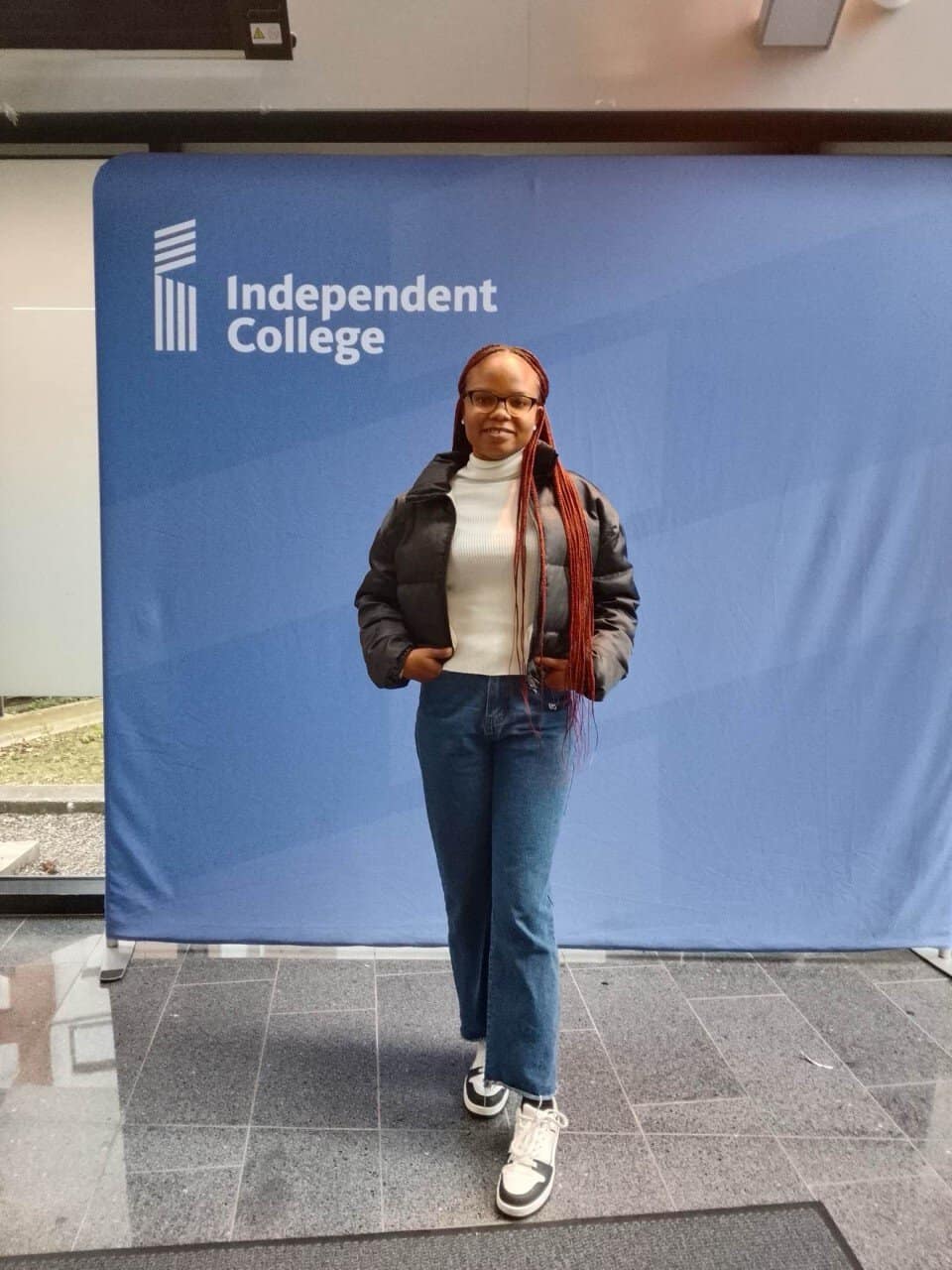
The Journey
My name is Millicent Chineme Eze-Chikwe, and I am from Nigeria. I am a lawyer by profession. I studied for my Bachelor of Laws (LL.B.) degree at Rivers State University in Nigeria and subsequently completed my legal education at the Nigerian Law School, Port Harcourt Campus.
I am currently studying for a Master of Arts in Dispute Resolution at Independent College, Dublin, Ireland, through the Government of Ireland International Education Scholarship (GOI-IES)in the 2025/2026 academic session.
Government of Ireland International Education Scholarship Details
In 2025, I received the Government of Ireland International Education Scholarship (GOI-IES), funded by the Government of Ireland through the Higher Education Authority.
The scholarship supports my one-year master's program at Independent College Dublin. It covers my full tuition fees and provides a stipend of €10,000 towards living expenses. Receiving this scholarship gave me the opportunity to pursue postgraduate education in Ireland without having to bear the full financial burden of the program myself.
Were You Offered Any Other Scholarships?
I was not ultimately offered any other scholarship. However, before receiving the Government of Ireland International Education Scholarship, I had applied for several other opportunities and progressed quite far in some of them. I reached the reserve list for one scholarship and the semi-finals for another.
Although I did not receive those scholarships, those experiences were valuable because they helped me understand the scholarship application process better, improve my applications, and become more resilient in the face of rejection.
Educational Background
I graduated with First-Class Honours in my Bachelor of Laws program at Rivers State University, Nigeria. I subsequently completed my legal education at the Nigerian Law School, Port Harcourt Campus, and qualified as a lawyer.
My academic background in law gave me a strong foundation in legal research, critical thinking, analysis, written communication, and problem-solving. These skills have been particularly useful in postgraduate study because master's-level education requires independent research, careful analysis of complex issues and the ability to develop well-supported arguments.
How Did You Prepare to Apply to Independent College Dublin?
I began by ensuring that I had the basic requisite documents for scholarship and admission applications, such as my degree certificate, transcript, international passport, and referees who could write recommendation letters for me. It is very important to have the basic documents ready so that you are ready to apply to opportunities that you qualify for within the given application window.
How Did You Find Information About Government of Ireland International Education Scholarship and Independent College Dublin?
I began by actively researching scholarships and institutions and learning as much as I could about the application process. YouTube was one of my main sources of information. I followed scholarship-focused channels and people who regularly discussed scholarship opportunities and application strategies.
I also learned from senior colleagues at my university who had successfully obtained scholarships, including several scholars who shared their scholarship experiences and successes on LinkedIn. Their successes showed me that these opportunities were attainable and encouraged me to research them more seriously.
I also subscribed to scholarship websites and email alerts, including Global Scholarships, so that I could receive information about new opportunities. One particularly useful resource was Victor Agboga's scholarship YouTube channel, where he shares so many different scholarships, application tips, and strategies.
Through these different sources, I gradually learned how to identify suitable opportunities, understand their requirements, and improve my approach to applications.
Did You Take Any Standardized Tests? If So, How Did You Prepare for Them?
Yes. I took the Duolingo English Test because I needed an English-language test as part of my visa requirements, but not at the scholarship application stage. I studied thoroughly and achieved a very high score on the test.
How Did You Prepare to Apply for the Government of Ireland International Education Scholarship?
My preparation for the scholarship application was a process of research, learning, drafting, reviewing, and refining.
I first became aware of the Government of Ireland International Education Scholarship in 2024. At that point, however, I discovered the opportunity relatively close to the deadline, and I had not yet secured admission to an institution. I was also still learning how to write strong statements of purpose, motivation letters, and scholarship essays, so I did not apply that year.
I eventually applied in early 2025. Interestingly, my admission letter arrived only one day before the scholarship deadline. This was mainly due to delays caused by technical issues during my admission interview, as I needed to submit my admission letter as part of the scholarship application process.
I used guidance from scholarship resources, including Victor Agboga's YouTube channel, and I also reached out to previous scholars to review my essays. My references were written by lecturers who knew my academic background.
One of the most important things I learned was not to rush scholarship essays. I took my time to write, revise, and fine-tune my responses. I also made sure to conduct adequate research because scholarship opportunities are highly competitive and many applicants are competing for limited funding.
I believe applicants should avoid generic essays and instead demonstrate clearly why they are a good fit for the opportunity. Getting another person, especially a previous or current scholar, to review your work is also extremely valuable because another perspective can identify weaknesses that you may not notice yourself.
Overall, my preparation involved learning from previous experiences, researching the opportunity carefully, seeking guidance, and continuously improving my application before submission.
How Is Your Experience at Independent College Dublin?
My experience at Independent College Dublin has been a positive one. It is a relatively small college, but I have found the environment welcoming and supportive.
The lecturers are friendly and supportive, and the smaller size of the college creates an environment where students can interact more easily with their lecturers. I also had the opportunity to have a Nigerian lecturer, which made me feel a little more at home and gave me a familiar connection while studying abroad.
How Do You Rate Independent College Dublin Academically?
I rate Independent College Dublin very highly academically. Although it is a small institution, I think its size contributes positively to the student experience because it is very student-focused.
The classes are relatively small, which makes them more interactive and allows students to receive more personalised support. I have also found the institution responsive and prompt in its academic administration.
What Do You Think Made Your Application Stand Out?
I believe my application stood out because it brought together a strong academic background, a clear motivation for postgraduate study, and evidence of proper research into the program, school, and Ireland as a country.
Beyond my academic record, I think my commitment to the application process was important. I had experienced several scholarship rejections before receiving the Government of Ireland International Education Scholarship, but I continued learning, improving, and applying.
I also made a conscious effort to understand the scholarship and tailor my application rather than submitting generic essays. I researched the opportunity, took time to refine my responses, and sought feedback from previous scholars. I believe that combination of academic preparation, genuine motivation, research, and persistence helped make my application competitive.
Most importantly, I did not allow previous unsuccessful applications to discourage me. Instead, I treated them as learning experiences and used what I learned to strengthen my subsequent applications.
What Would You Have Done Differently If You Were Going Through the Process Again?
To be honest, I do not think there is anything significant I would have done differently. I approached the process as carefully and deliberately as I believed I should have, and I started preparing early.
The earlier scholarship applications also gave me valuable experience. I learned from the process, from the applications that were unsuccessful and from the feedback and guidance I received. By the time I applied for the Government of Ireland International Education Scholarship, I had accumulated enough experience to understand the importance of research, careful essay writing, refinement, and external feedback.
If anything, the biggest lesson is that the process itself was part of my preparation. The earlier attempts helped me become a stronger applicant, so I would not necessarily want to remove those experiences from my journey.
What Advice Would You Give Those Looking to Apply for a Similar Scholarship?
My biggest advice is not to allow rejection to discourage you.
I received several scholarship rejections before I eventually received the Government of Ireland International Education Scholarship. The process can be daunting and emotionally draining, especially when you invest significant time and effort into an application and do not get the outcome you hoped for. However, every rejection can also be an opportunity to learn and improve.
I would encourage applicants to research their opportunities thoroughly, start early, and avoid submitting generic essays. Take time to understand what the scholarship is looking for and explain clearly why you are a strong candidate and why the opportunity is a good fit for you.
I would also strongly recommend seeking help from previous or current scholars. Sometimes you may think your essay is perfect because you have spent so much time with it, but another person can identify areas that need improvement. Take time to draft, review, refine, and fine-tune your essays rather than rushing them.
Most importantly, keep applying. The only way to know whether you will receive a scholarship is to apply for one. My own journey is evidence that previous rejection does not mean future rejection. If you remain persistent, learn from your experiences and continue improving, you give yourself a much better chance of eventually receiving the opportunity you have been hoping for.
I wish anyone embarking on a similar journey the very best of luck and encourage them not to give up on their goals.
Want to submit your
scholarship journey?
Submit Your Story Here!
More Scholarship Recipients
My name is Maria Tordoya, and I am from Peru. I am currently pursuing an undergraduate degree in Clinical Medicine at Guangx .... Read more
My name is Stacy Randrianasolo, and I am from Madagascar. I’m currently in the second year of a Master’s degree in Ocean .... Read more
Hi everyone, my name is Manh Tuan Do. I recently graduated from Université Paris-Saclay, where I specialized in computer vi .... Read more
- Artificial Intelligence
- Erasmus Mundus Scholarship
- France
- Fully Funded Scholarships
- Global Korea Scholarship
- IDEX Scholarship
- Korea University
- Luxembourg Government Scholarship
- Master's Scholarships
- MIAI Grenoble Alpes Scholarship
- Université Grenoble Alpes
- Université Paris-Saclay
- University of Ulsan
- Vietnamese Nationality
Leave A Comment