
How Khanzadi Nazneen Manzoor, a Pakistani Scholar, Secured a Fully Funded PhD Through the Marie Skłodowska-Curie Fellowship
University: University of Bath
Degree: PhD
Previous Education: BS in Microbiology; MS in Microbiology and Immunology, COMSATS University Islamabad
Scholarship: Marie Skłodowska-Curie Innovative Training Network (MSCA-ITN) Fellowship – Fully Funded (Salary/Living Allowance, Visa, International Travel, Research, Training, and Professional Development)
Other Offered Scholarships: HEC Scholarship; Pakistan Scottish Scholarship
Social Media
LinkedIn: linkedin.com/in/khanzadi-nazneen-manzoor-phd-7a9547171/
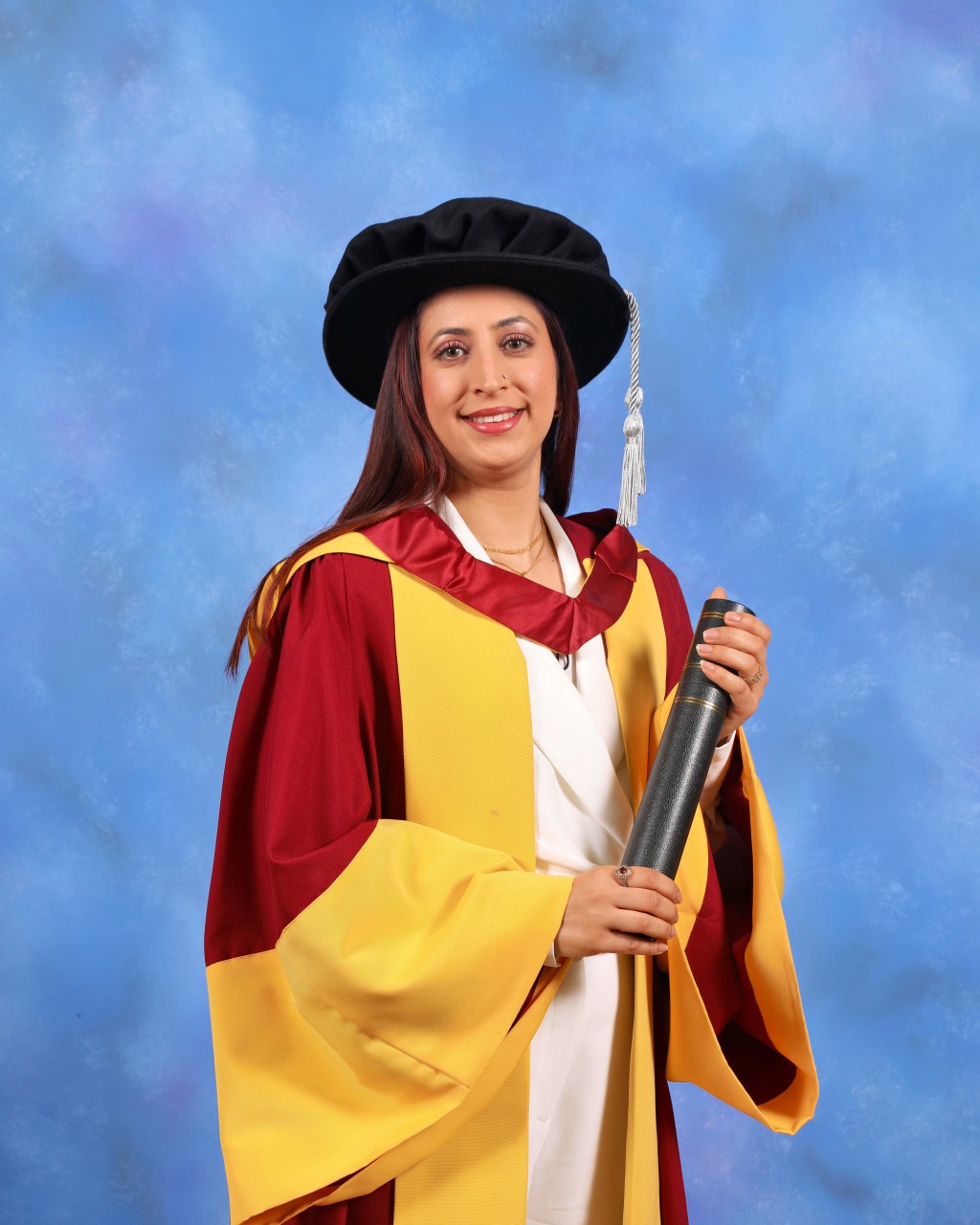
The Journey
My name is Khanzadi Nazneen Manzoor, and I am from Pakistan. My academic background is in microbiology, with particular interests in antimicrobial resistance, bacterial biofilms, and infectious diseases.
My journey in science began in Pakistan. I was always fascinated by microbiology because of its connection to some of the most important challenges in human health, particularly infectious diseases and antimicrobial resistance. As my education progressed, that interest developed into a much bigger ambition: I wanted to become a researcher and pursue a PhD internationally.
That ambition eventually took me from Pakistan to the United Kingdom, where I undertook my PhD at the University of Bath, with my research primarily hosted at the UK Health Security Agency (UKHSA), Porton Down, through a Marie Skłodowska-Curie Fellowship.
Reaching that point, however, was not a straightforward journey.
Marie Skłodowska-Curie Innovative Training Network Details
I was selected as an Early Stage Researcher (ESR) through a Marie Skłodowska-Curie Innovative Training Network (MSCA-ITN), Grant Agreement No. 955664.
The fellowship was fully funded and supported much more than the PhD itself. It provided a salary/living allowance and supported costs associated with the fellowship, including visa, international travel, research, training, and professional development.
For someone moving internationally to pursue research, this level of support was extremely valuable because it allowed me to concentrate on developing as a researcher and making the most of the opportunities available through the programme.
Were You Offered Any Other Scholarships?
The Marie Skłodowska-Curie Fellowship was not my first experience of receiving educational support. Scholarships had already played an important role in allowing me to progress academically in Pakistan.
During my undergraduate studies, I received an HEC scholarship, and in 2018 I was awarded the Pakistan Scottish Scholarship for my postgraduate education.
I see these opportunities as different stages of the same journey. Each one allowed me to progress a little further, develop academically, and become better prepared for the much bigger step of competing for an international doctoral fellowship.
Educational Background
I completed my BS in Microbiology in Pakistan with a CGPA of 3.96/4.00, graduating with a Gold Medal. I then completed my MS in Microbiology and Immunology at COMSATS University Islamabad, achieving a CGPA of 3.88/4.00.
My education gave me a strong foundation in microbiology, immunology, and laboratory research, but it also helped me understand the direction I wanted my career to take. By the time I completed my postgraduate studies, I knew that I wanted research to be more than something I had studied at university. I wanted it to become my career.
How Did You Prepare to Apply to the University of Bath?
Once I had decided that I wanted to pursue a PhD internationally, I became extremely focused on that goal.
I did not restrict myself to one university or even one country. I searched for opportunities all over the world and applied to hundreds of PhD positions and research opportunities.
For a long period, applications became part of my everyday life. I spent days and evenings searching for positions, reading project descriptions, researching universities, laboratories and potential supervisors, adapting my CV and preparing applications.
There were many rejections. Some applications received no response at all. For others, I progressed further but was ultimately unsuccessful.
It was not always easy. When you repeatedly invest your time and hope into applications without getting the outcome you want, it is natural to question whether all that effort will eventually lead somewhere.
But I knew what I wanted to achieve.
So I continued.
With every application, I learned something. I became better at presenting my experience, identifying positions that suited my background, and communicating what I could contribute. Every interview also made me better prepared for the next one.
That period taught me that academic success alone does not automatically create opportunities. Hard work matters, but consistency and persistence matter too. You have to continue putting yourself in a position where an opportunity can eventually find you.
And eventually, one did.
How Did You Find Information About Marie Skłodowska-Curie Innovative Training Network and University of Bath?
One of the most important things I learned during this process was to search broadly.
I regularly looked at university websites, advertised research positions, and international funding opportunities rather than limiting myself to traditional scholarships or a particular country.
I would encourage prospective PhD students not to search only for opportunities carrying the word “scholarship.” Funded PhD positions, doctoral networks, research projects and fellowships can provide equally valuable—and sometimes even better—routes into postgraduate research.
Marie Skłodowska-Curie doctoral positions are a good example. They are part of funded international research networks, with researchers recruited to work on specific projects.
Being open to these different routes considerably expands the opportunities available to you.
Did You Take Any Standardized Tests? If So, How Did You Prepare for Them?
As part of preparing for higher education internationally, I also took the IELTS (International English Language Testing System).
This formed part of ensuring that I was prepared for studying, conducting research, and communicating professionally in an English-speaking academic environment.
How Did You Prepare to Apply for the Marie Skłodowska-Curie Innovative Training Network?
When I found the Marie Skłodowska-Curie opportunity, I tried to understand the research project rather than simply submitting another generic PhD application.
I looked carefully at how my education, laboratory experience and research interests aligned with what the research team was seeking. I reviewed my previous experience, identified the technical and transferable skills that were particularly relevant and read around the research area in preparation for the interview.
I wanted to demonstrate not simply that I had achieved good grades, but why my background was relevant to this particular research project and what I could bring to it.
By this stage, all those previous applications and interviews had also taught me how to communicate my experience much more effectively.
How is Your Experience at the University of Bath?
Securing the fellowship opened a completely new chapter of my life.
I was registered at the University of Bath, while much of my research was undertaken at UKHSA Porton Down. My PhD focused on polymicrobial biofilms, particularly interactions between Pseudomonas aeruginosa and Staphylococcus aureus and their responses to antimicrobial interventions.
One of the things I valued about the Marie Skłodowska-Curie programme was that the experience extended far beyond my individual PhD project. I had opportunities for specialist training, professional development, networking and international collaboration.
I also completed a research secondment at Amsterdam UMC in the Netherlands, giving me further experience of working within an international scientific environment.
The fellowship therefore helped me develop not only as a scientist, but also personally and professionally.
How Does the University of Bath Support International Students?
Moving from Pakistan to the UK was a major transition. I was entering a new country, a new research environment and a different working culture.
I was very fortunate to have an extremely supportive research group at UKHSA. My colleagues and supervisors were welcoming and approachable, and I always felt that I could ask for help, whether I needed scientific guidance or support while adjusting to a completely new environment.
That support made a real difference to my experience as an international researcher.
The wider Marie Skłodowska-Curie network also brought together researchers from different countries. Being surrounded by other international researchers, many of whom were experiencing similar transitions themselves, created a strong sense of community.
What Did You Pursue After the Marie Skłodowska-Curie Innovative Training Network?
My fellowship ultimately became the foundation for the next stage of my scientific career.
After completing it, I continued working at the UK Health Security Agency, where I now work as a Research Scientist.
My work has allowed me to broaden my scientific experience within infectious disease research while continuing to develop as an independent researcher.
For me, that progression is particularly meaningful because the fellowship did not simply allow me to obtain another academic qualification. It helped me establish the research career that I had been working towards for years.
What Do You Think Made Your Application Stand Out?
When I think about what may have made my application competitive, my academic record and research experience were certainly important. But behind those achievements was something much more personal: determination.
I was the first woman in my family to pursue higher education.
For me, education was therefore never simply about collecting qualifications or building an impressive CV. I was taking a path that no woman in my family before me had taken.
I understood from quite early on that education had the potential to change the direction of my life, and I was determined to see how far I could take that opportunity.
That determination took me from my undergraduate degree and Gold Medal, through postgraduate study and eventually towards the much bigger ambition of becoming an international researcher.
I cannot know exactly what the selection panel considered decisive when choosing me for the fellowship. However, I believe they could see not only my academic background and relevant research experience, but also my genuine enthusiasm for science and my determination to develop as a researcher.
That is why securing the Marie Skłodowska-Curie Fellowship meant much more to me than simply receiving funding for a PhD.
It represented how far education had taken me—from becoming the first woman in my family to pursue higher education in Pakistan to building a scientific career internationally.
What Would You Have Done Differently if You Were Going Through the Process Again?
Looking back now, I am genuinely happy with the way I approached the journey.
The hard work, the applications and even the rejections contributed to the person and researcher I became. I would not want to remove those experiences simply because some of them were difficult.
If I could change one thing, I would start earlier.
I would begin exploring international PhD positions, fellowships and funded research opportunities sooner and give myself even more time to discover what was available around the world.
Apart from that, I would follow the same path: know what I want, work consistently towards it and keep going when things do not happen immediately.
What Advice Would You Give Those Looking to Apply for a Similar Scholarship?
When people see someone receive a prestigious fellowship or move abroad for a PhD, they usually see the successful outcome.
They rarely see everything that happened before it.
In my case, there were hundreds of applications. There were rejections, applications that received no response, and opportunities that simply did not work out.
So my advice is simple: work hard, know what you want, remain consistent, and do not confuse rejection with failure.
At the same time, persistence should be accompanied by preparation. Build your academic profile, gain research experience, develop relevant technical and transferable skills, seek advice from mentors, understand the project you are applying for and tailor your application. Prepare seriously for interviews and learn something from every unsuccessful attempt.
And then keep going.
I particularly want students from Pakistan and similar backgrounds to understand this. When you see a prestigious international fellowship, do not immediately think:
“This is probably not for someone like me.”
Put yourself forward.
You do not know which application will change your life.
Mine did not happen because every application succeeded.
It happened because the unsuccessful ones did not make me stop
Want to submit your
scholarship journey?
Submit Your Story Here!
More Scholarship Recipients
My name is Shah Hussain, and I am from Khyber Pakhtunkhwa, Pakistan. I completed my Bachelor’s in Psychology at the Univer .... Read more
I am June from the Philippines. I am an educator for Social Sciences and Humanities. I recently earned my Master in Southeas .... Read more
Hi, my name is Abdul Hafeez, and I come from a small town called Nasirabad in Sindh, Pakistan. Currently, I am pursuing a ma .... Read more
Leave A Comment