
University of California, San Diego Scholarships for International Students 2027
Funding at University of California, San Diego can be easier to navigate when you start with the most generous options. Below is a shortlist prioritized by the level of support.
University scholarships associated with University of California, San Diego often form the core of an applicant’s funding plan. Here are a few notable options to review first. Katzin Prize is commonly categorized as partially funded support, and coverage that often includes $15,000 per year for 5 years ($1,500 stipend per month for 10 months/year). With Teaching Assistants, students may receive partially funded support, and coverage frequently includes partial tuition fee remission, student services fee, and $100 to cover campus fees.
You can find more university scholarships and external or government scholarships further down on this page.
University of California, San Diego Scholarships for International Students
The scholarships at University of California, San Diego can help fund your study expenses. There are currently 3 scholarships being offered to international students at the University of California, San Diego, all with varying requirements, benefits, and application processes. We have compiled them in this list to help you find the scholarship that best fits you.
Graduate Scholarships
External Scholarships
There are many degrees that are open to international students right now — find yours.
University of California, San Diego Admissions
Here are the official admission pages for University of California, San Diego:
| Degree | Admissions Pages |
|---|---|
| Bachelor's | International Students Admissions Page |
| Master's | International Students Admissions Page |
Admissions and Scholarship Results at University of California, San Diego
Here are some of the admissions and scholarship results from previous applicants to University of California, San Diego, which you might find helpful. For more results to University of California, San Diego, please see the University of California, San Diego Admissions Profile Page .
| Nationality / Region | SAT/ACT | EFC | GPA | Scholarship | Status |
|---|---|---|---|---|---|
| India | 1480 | N/A | N/A | N/A | Accepted |
| India | 33 | N/A | 4 | N/A | Rejected |
| India | 1540 | N/A | N/A | N/A | Accepted |
| India | 1550 | N/A | N/A | N/A | Accepted |
| India | 1520 | N/A | N/A | N/A | Accepted |
University of California, San Diego Application Deadlines
| Degree | Admission Deadline |
|---|---|
| Bachelor's (Fall) | November 30, 2026 |
| Master's (Fall) | January 1, 2027 Different Master's programs have different deadlines |
Tuition Fees at University of California, San Diego for International Students
Indicative annual tuition fee ranges for international students at University of California, San Diego. Exact fees vary by program, so always confirm the current cost on the university's official tuition fee pages.
| Degree Level | Typical Annual Range |
|---|---|
| Bachelor's Tuition | 54,984 USD |
| Master's Tuition | 36,575 USD |
Please note that tuition fees can vary based on the specific program you choose. For the most accurate and current fee information, consult the official tuition fee pages linked above.
University of California, San Diego Scholarship Recipients
International students who received scholarships to study at University of California, San Diego, documented by Global Scholarships.
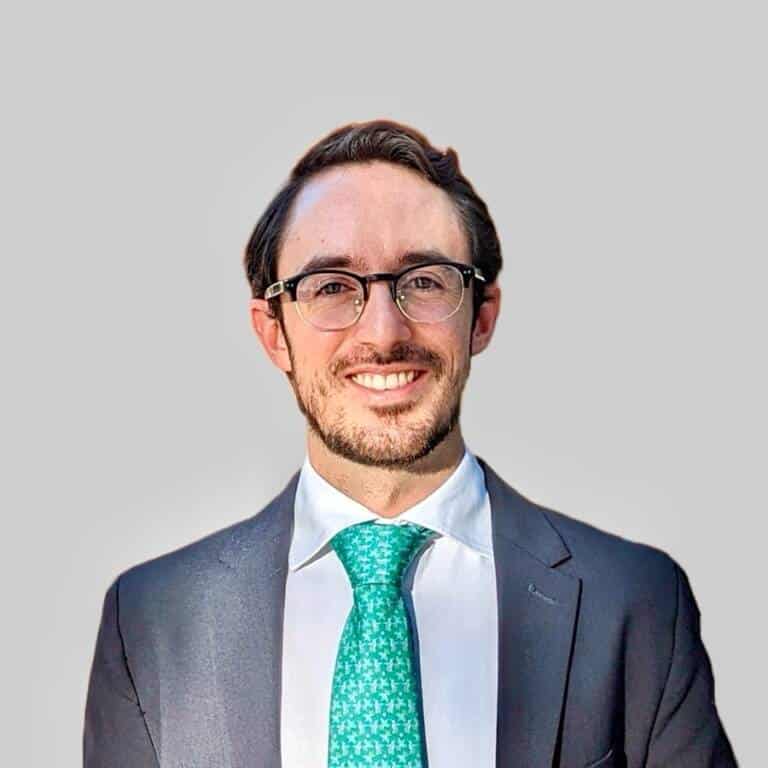
What Scholarship Recipients Say
Advice and insights from international students who successfully secured funding to study at University of California, San Diego.
"Available for both master's, which covers two years of funding, and for PhDs, which covers three years of funding. This scholarship gives students a maximum of 25,000 USD per year of funding, so it is necessary to complement it with additional sources of income."
"I would recommend that anyone applying for a scholarship be very specific in their statements of purpose. Do some research on courses you would want to take, professors you would like to work with, and lines of research that interest you; mention all of them. You can always change your mind about things along the way, but being specific shows that you are genuinely interested and that you have taken the time to weigh your options carefully."
"During my program, I was able to get an internship at Palm Therapeutics, a small startup developing cancer therapeutics. I was lucky to be able to stay and work at Palm after graduation."
Frequently asked questions
Common questions about scholarships, admissions, and studying at University of California, San Diego.
Most UC San Diego scholarships are tied to being enrolled in a UC San Diego degree program (which is typically campus-based), like Jerónimo Martí Vértiz (M.Eng. Bioengineering) and Anupam Anand Ojha (PhD).
Across the university, scholarships and funding can apply to a wide range of subjects (often “any subject” depending on the award), including STEM and engineering, business/entrepreneurship, humanities, and more. In the Global Scholarships recipient stories, UC San Diego examples were strongly STEM-focused. Jerónimo studied bioengineering, and Anupam pursued theoretical/computational biophysics.
Engineering & STEM (including biomed/bio): Jerónimo emphasized both academics and research—“I kept good grades… (GPA ~3.85 in both),” but also said “my research experiences were more important than my grades.” Anupam similarly highlighted high performance (“for graduate studies, it was 4.0/4.0.”) and sustained research impact.
Humanities & social sciences: UC San Diego also lists and supports prestigious scholarships that explicitly include “Arts, Humanities, and Social Sciences” among their eligible areas (availability and eligibility depend on the specific scholarship).
Business: Business/entrepreneurship-related scholarships and awards exist across UC ecosystems and partner opportunities; availability is typically program- or award-specific, so check the scholarship’s subject/department rules.
Medicine (important note for international students): If you mean the UC San Diego School of Medicine (MD), UCSD states it will consider applications only from U.S. citizens, U.S. permanent residents, and DACA recipients. If you mean medicine-adjacent STEM (biomedical science, bioengineering, computational health), international students can be eligible depending on the scholarship and program (as seen in Jerónimo’s and Anupam’s UCSD pathways).
It depends on the scholarship. Some UC San Diego-related awards are open broadly (often including international students), while others target specific groups or countries. From the UC San Diego recipient stories on Global Scholarships, examples included Mexico (Jerónimo) and India (Anupam).
Often, yes, especially for international applicants whose prior education was not in English. For first-year international applicants, UC San Diego lists minimum scores such as TOEFL 83, IELTS 7, or Duolingo 115 (policy details depend on your background and can change by case). For graduate admissions, UC San Diego lists a university-wide minimum TOEFL iBT (85) and IELTS (Band 7), though some programs require higher.
The Global Scholarships recipient stories also reflected this in practice. Jerónimo wrote: “you also must submit TOEFL iBT, GRE scores, and a statement of purpose,” and his profile listed a TOEFL iBT score of 115. If you’re seeking teaching assistant-type funding, language speaking subscores can matter even more (some TA eligibility rules specify minimum speaking subscores).
Undergraduate (first-year): UC San Diego states minimum eligibility GPAs of 3.0 for California residents and 3.4 for non-California residents (including international applicants), with no grade lower than a C in the required college-prep courses.
Graduate: UC San Diego Graduate Division policies say “at least a B average (3.0 GPA) or its equivalent is generally required,” though meeting minimums does not guarantee admission.
In the UC San Diego recipient stories, the GPAs reported were well above minimums: Jerónimo cited “GPA ~3.85,” and Anupam reported “for graduate studies, it was 4.0/4.0.” Both also stressed substance beyond GPA; Jerónimo said research mattered more, and Anupam framed competitiveness as long-term impact rather than cramming.
Most UC San Diego degree-program scholarships and funding opportunities do not have a universal age limit; eligibility is typically based on academic status (e.g., enrolled student), merit/need, and scholarship-specific criteria. The broader UC system also explicitly welcomes “older” (non-traditional) students.
Minimum eligibility depends on the scholarship, but you usually need (1) to meet UC San Diego admissions eligibility for your level (undergraduate or graduate), and (2) to meet the scholarship’s specific criteria (degree level, enrollment status, merit/need, department rules, etc.). Many scholarships also strongly favor clear academic direction and evidence of impact.
In the UC San Diego recipient stories, strong academics plus research/impact stood out. Jerónimo wrote, “I kept good grades… (GPA ~3.85 in both),” but added “my research experiences were more important than my grades.” Anupam reported top performance (“for graduate studies, it was 4.0/4.0.”) and summarized his approach: “In essence, I did not prepare for these fellowships,” because “I built the habits, the achievements, and the impact” over time.
Undergraduate (first-year) — commonly required / expected:
- UC application information, including your academic history and UC Personal Insight Questions (PIQs).
- English proficiency test scores if required by your background (e.g., TOEFL/IELTS/Duolingo thresholds depend on your case).
- Official transcripts are generally submitted after you’re admitted and accept an offer (not at initial submission), unless a campus requests them later.
Graduate — commonly required / expected:
- Uploaded academic records/transcripts and a statement of purpose.
- Contact information for recommenders (letters are typically collected through the application system).
- Program-specific tests if required (some programs require GRE; others do not).
- English proficiency scores for international applicants when required (programs may set higher minimums than the university-wide baseline).
Undergraduate: UC San Diego uses the University of California application, which charges an application fee per campus (the UC admissions fee guidance lists $80 per campus and $95 for international/non-immigrant applicants).
Graduate: UC San Diego’s Graduate Division lists an application fee of $135 for U.S. citizens/permanent residents (and some other categories noted by UCSD) and $155 for international applicants (fees are generally non-refundable and department applications are paid separately if you apply to multiple programs).
There are many degrees that are open to international students right now — find yours.
About the Author: Hyun Lee


Leave A Comment