
Pukyong National University Scholarships for International Students 2027
Students considering Pukyong National University can explore scholarships that range from fully funded support to partial awards. This shortlist highlights higher coverage options first.
For institution funded support at Pukyong National University, these scholarships are frequently highlighted when prioritizing higher coverage. A strong option is Entrance Scholarship which is full tuition and often covers 40% of tuition fees for students with TOPIK Level 4 and 100% of tuition fees for students with TOPIK Level 5 or higher. RA and TA Scholarship is partially funded, and coverage often includes 50% of the tuition fee.
Outside the university’s own funding routes, Pukyong National University students may be eligible for external programs that can offer substantial support. Here are a few to consider. Global Korea Scholarship (GKS) is commonly categorized as fully funded support, and coverage that often includes tuition fees, airplane tickets, and living stipend.
This is only a shortlist. Additional scholarships and funding options appear further down on this page.
Pukyong National University Scholarships for International Students
The scholarships at Pukyong National University can help fund your study expenses. There are currently 4 scholarships being offered to international students at the Pukyong National University, all with varying requirements, benefits, and application processes. We have compiled them in this list to help you find the scholarship that best fits you.
Undergraduate Scholarships
Graduate Scholarships
External Scholarships
There are many degrees that are open to international students right now — find yours.
Pukyong National University Admissions
Here are the official admission pages for Pukyong National University:
| Degree | Admissions Pages |
|---|---|
| Bachelor's | International Students Admissions Page |
| Master's | International Students Admissions Page |
Tuition Fees at Pukyong National University for International Students
Indicative annual tuition fee ranges for international students at Pukyong National University. Exact fees vary by program, so always confirm the current cost on the university's official tuition fee pages.
| Degree Level | Typical Annual Range |
|---|---|
| Bachelor's Tuition | 3,406,000 – 4,483,000 KRW |
| Master's Tuition | 4,140,000 – 8,000,000 KRW |
Please note that tuition fees can vary based on the specific program you choose. For the most accurate and current fee information, consult the official tuition fee pages linked above.
Pukyong National University Scholarship Recipients
International students who received scholarships to study at Pukyong National University, documented by Global Scholarships.

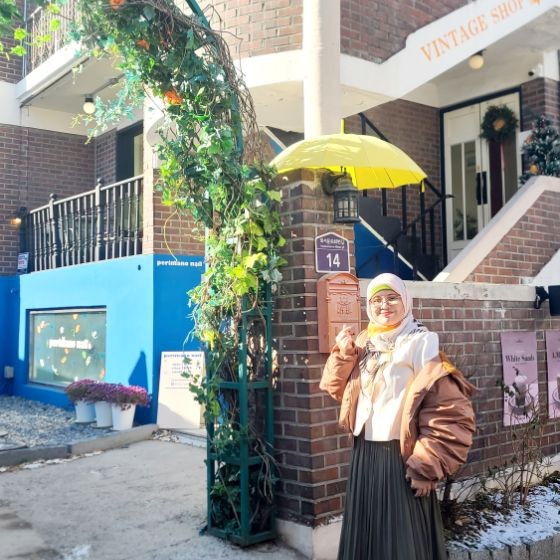

What Scholarship Recipients Say
Advice and insights from international students who successfully secured funding to study at Pukyong National University.
"The scholarship covers my full tuition fees, a monthly living allowance of KRW 1,300,000, round-trip airfare, medical insurance, settlement and completion grants, and Korean language training for one year if required."
"Your written applications, especially your letters, make up nearly 50% of your profile, so it’s essential to dedicate sufficient time and effort to crafting them. Make sure to express your aspirations, experiences, and goals convincingly, as a well-written application can significantly enhance your chances of success."
"After I got the Global Korea Scholarship, I went to the Korean language program at Jeju Halla University, located in Jeju-do, as one of the mandatory programs in the Global Korea Scholarship and pursued my master's in engineering at Pukyong National University in South Korea."
"In 2024, I was awarded the GKS undergraduate scholarship and began my studies at Pukyong National University’s Daeyeon Campus in Busan, South Korea. I am currently in my second year."
"My university experience was both challenging and rewarding. I majored in Marine Biology at Pukyong National University, where I gained a strong academic foundation and developed skills in critical thinking, research, and collaboration."
"While some administrative steps may require patience, overall, the university’s comprehensive support network demonstrates a genuine commitment to helping international students succeed both academically and socially. Learning Korean for one year also helps me to communicate with the Korean community and adapt to living in Korea."
Frequently asked questions
Common questions about scholarships, admissions, and studying at Pukyong National University.
Most PKNU-linked scholarships are designed for in-person (degree-seeking) study in Korea, not fully online degrees. This is especially true for the Global Korea Scholarship (GKS): PKNU recipients often describe the built-in Korea-based components (like the Korean language year) as part of the journey. For example, Ayu Fitri Izaki shared that “it’s mandatory for learning Korean … for 1 year for GKS students,” and Amir Mahmud also described a Korea-based preparation path alongside his degree studies.
At PKNU, you should expect a mix: many courses are offered in Korean, while some tracks/classes (especially at graduate level or in internationally oriented settings) can be offered in English. In practice, the “real experience” can depend on department and lab culture. Ayu Fitri Izaki said that “sometimes I do not understand the topic because of the language barrier,” but also noted that “my professor and laboratory members always help me,” which is common in research labs where papers and seminars may use more English.
For PKNU’s own university-funded scholarships, an age limit is not always the main factor; eligibility tends to focus more on admission status, academic performance, and sometimes language level (e.g., TOPIK-based awards). For major external scholarships used at PKNU (like GKS), age rules can apply depending on the program level and year.
You can see how this plays out in real recipient profiles: Pelinsu Erbey explicitly introduced herself with “I am 20 years old,” which fits typical undergraduate scholarship age windows.
In general, PKNU scholarships (and common external scholarships used at PKNU) are not limited to a single subject. Many are “tuition-based” or “status-based” (e.g., entrance awards, TOPIK incentives, RA/TA roles), so they can apply across departments if you qualify. Recipients on the GlobalScholarships PKNU page span very different fields, like Marine Biology and Engineering, showing that “fit + merit” matters more than a single major.
Engineering / STEM: PKNU is strong in engineering and technology fields. Amir Mahmud pursued engineering at PKNU through GKS, and he framed his profile around measurable readiness (tests, academics, and planning). STEM applicants often strengthen scholarship chances by matching lab research and showing publications, projects, or competitions.
Business: PKNU offers business programs at undergraduate and graduate levels. If you’re aiming for business scholarships, emphasize quant skills, internships, and a clear study plan (many scholarship reviewers look for “why this program, why now”).
Humanities: PKNU also has humanities and social sciences. If you’re applying for humanities scholarships, your writing materials (personal statement, study plan, portfolio if relevant) often carry extra weight.
Medicine (and health-related fields): PKNU has health-related areas (for example, aquatic life medicine and interdisciplinary healthcare/biomedical directions). If you mean an MD-style “medicine program,” confirm carefully. Medical pathways in Korea are often highly regulated and frequently Korean-taught. For international students, eligibility and language requirements can be stricter than in other majors, so treat this as a “double-check early” area.
Many PKNU opportunities are open to international applicants broadly, but some major scholarships have nationality rules. The biggest example is GKS, which is tied to designated countries/quotas depending on the track and year. On the recipient side, PKNU scholarship stories show a wide spread of backgrounds: e.g., Ayu Fitri Izaki (Indonesia), Amir Mahmud (Indonesia), and Pelinsu Erbey (Turkey).
If you’re targeting PKNU specifically, the practical approach is: (1) check whether the scholarship is “PKNU-funded” (usually open to admitted international students who meet conditions) vs. “externally funded” (often nationality/track restricted), and then match your profile accordingly.
It depends on your program and track. Some applicants can be admitted with alternative proof (such as prior education in a certain language), while scholarships often reward or require standardized proof. In PKNU’s scholarship ecosystem, TOPIK can directly increase scholarship coverage in some entrance awards, while GKS applicants often strengthen their competitiveness with English or Korean results.
Recipient examples make this very concrete: Ayu Fitri Izaki said “I just took TOEFL ITP and got a score of 517,” and also noted “I completed TOPIK level 2” (later progressing further). Amir Mahmud highlighted high English scores: “945 in TOEIC and 104 in TOEFL iBT.” Pelinsu Erbey shared “I got TOPIK 5,” which is exactly the kind of milestone that can unlock higher tuition coverage in TOPIK-linked scholarships.
PKNU admission standards vary by degree level and department, and there isn’t one universal GPA number that guarantees admission. However, scholarship programs commonly do have minimum academic thresholds. For example, GKS is widely associated with a baseline “equivalent to 80%+” academic requirement, and competitive applicants often exceed that.
In the PKNU recipient stories, strong grades show up repeatedly: Pelinsu Erbey reported “GPA 97%,” Amir Mahmud listed “I had a GPA of 3.59,” and Ayu Fitri Izaki described graduating with “a GPA of 3.32” (bachelor’s) and later “a GPA of 3.71” (master’s).
A “good scholarship background” at PKNU typically combines: (1) solid grades, (2) a clear academic direction, and (3) evidence that you can thrive in the program’s language and research environment. In research-heavy majors, alignment with faculty/labs is often decisive.
Recipients show what this looks like in real life. Ayu Fitri Izaki connected her background to her PhD focus and emphasized research continuity (from fisheries science and biotech into molecular research). Amir Mahmud framed preparation as systematic, “My preparation process is quite detailed,” and backed it with measurable outcomes (test scores, GPA, and a scholarship-focused strategy). Pelinsu Erbey combined strong grades with language milestones like “I got TOPIK 5,” showing readiness for Korean academic life.
Exact requirements can vary by level (undergraduate vs. graduate) and by track, but most PKNU applications commonly involve: application form, academic transcripts and graduation certificates, passport ID, photos, and financial proof. Scholarships can add extra layers (study plan, personal statement, recommendations, and language certificates).
The scholarship recipients’ stories show the “real workload” behind the checklist. Ayu Fitri Izaki wrote that she “prepared all certified translations of my academic documents,” and emphasized revising her personal statement and study plan. Amir Mahmud summarized the same reality from another angle: “I start to organize all my documents, tests, and essays.”
PKNU offers a wide range of undergraduate and graduate programs across major academic areas. Broadly, you’ll see options across humanities and social sciences, natural sciences, business, engineering, fisheries sciences, environmental/marine sciences, IT/convergence fields, and global/interdisciplinary studies.
To make it tangible, the GlobalScholarships PKNU recipients alone span Marine Biology (Ayu Fitri Izaki), Engineering (Amir Mahmud), and an interdisciplinary international pathway (Pelinsu Erbey, who mentioned being in “a mandatory program for all international students … for at least two semesters”).
No, there’s no application fee at Pukyong National University. However, check with the latest guidelines for updated information
There are many degrees that are open to international students right now — find yours.
About the Author: Hyun Lee


Interesting and would like to be a part.
You can apply to Pukyong National University by going to the admissions section.
I am interested in getting a fully funded scholarship.
Hello, please check out our database for fully-funded scholarships or check these 67 Fully Funded Scholarships for International Students