
MOE Taiwan Scholarship Program 2027 (Fully Funded)
The MOE Taiwan Scholarship is awarded by Taiwan’s Ministry of Education to outstanding international students (excluding those from Mainland China, Hong Kong, or Macau). It covers tuition and miscellaneous fees up to NTD 40,000 per semester, along with a monthly living stipend (NTD 15,000 for undergraduates, NTD 20,000 for graduates). The scholarship supports up to 4 years for bachelor’s, 2 years for master’s, and 4 years for doctoral studies—with a lifetime cap of 5 years. It aims to bring top talent to Taiwan, encouraging international students to immerse themselves in Taiwanese academic and cultural life.
MOE Taiwan Scholarship Program Coverage
This government fully funded scholarship for international students covers the following:
-
Up to NTD 40,000 for tuition and miscellaneous fees
-
Living stipend of NTD 15,000 or NTD 20,000
MOE Taiwan Scholarship Program Eligibility Criteria
To be eligible for MOE Taiwan Scholarship Program, you need to meet the following criteria:
- Non-Republic of China (non-Taiwan) citizens with at least a high-school/secondary diploma
- Strong academic record and good conduct
- Are not currently enrolled, maintaining student status, or registered to begin studies in Taiwan
- Have not previously earned a Taiwan degree at the same level you plan to pursue
- Are not an exchange or dual/joint-degree student admitted under an inter-university agreement
- Have not held Taiwan Scholarship funding for a total of five years
- Have never had a Taiwan Scholarship or MOE Huayu Enrichment Scholarship revoked
- Are not receiving any other Taiwan government or Taiwan-institution scholarship/subsidy (except a university top-up that only covers tuition/fees beyond the MOE cap).
For detailed requirements, refer to the official eligibility page .
Eligible degree levels
Eligible programmes
Eligible nationalities
How to Apply
In this section, we'll provide a clear general overview of requirements and steps to guide you through the application process for MOE Taiwan Scholarship Program.
To apply for MOE Taiwan Scholarship Program, please follow these steps:
-
Apply for the Taiwan Scholarship at your local ROC (Taiwan) embassy/office
-
Separately apply to your target university/college in Taiwan
-
Interview at the embassy/office
-
Send your admission letter (when you get it) to the embassy/office
Important Note: The application procedures and required documents for MOE Taiwan Scholarship Program may vary depending on your degree, program, nationality and other factors. For specific details regarding the requirements, kindly visit the official website of MOE Taiwan Scholarship Program.
Application Deadlines
Now that you’re familiar with the application procedure, it’s time to know the application dates! Knowing the dates for MOE Taiwan Scholarship Program will help you prepare early and it will also give you the time you need to put together a competitive application.
Application deadlines vary
The application deadlines for MOE Taiwan Scholarship Program vary. It’s important to review official guidelines on the official website or contact administrators for specific deadlines. Make sure to regularly check the MOE Taiwan Scholarship Program page for the latest and most accurate information on application deadlines.
MOE Taiwan Scholarship Program Eligible Institutions
The eligible institutions for MOE Taiwan Scholarship Program are listed below:
N
- National Central University
- National Changhua University of Education
- National Chengchi University
- National Cheng Kung University
- National Chiayi University
- National Chi Nan University
- National Chung Cheng University
- National Chung Hsing University
- National Dong Hwa University
- National Formosa University
- National Kaohsiung University of Science and Technology
- National Pingtung University
- National Sun Yat-sen University
- National Taipei University
- National Taipei University of Education
- National Taipei University of Technology
- National Taiwan Normal University
- National Taiwan Ocean University
- National Taiwan University
- National Taiwan University of Science and Technology
- National Tsing Hua University
- National University of Kaohsiung
- National University of Tainan
- National Yang Ming Chiao Tung University
- National Yunlin University of Science and Technology
MOE Taiwan Scholarship Program Recipients
Meet students who have received MOE Taiwan Scholarship Program and learn how they secured their award.





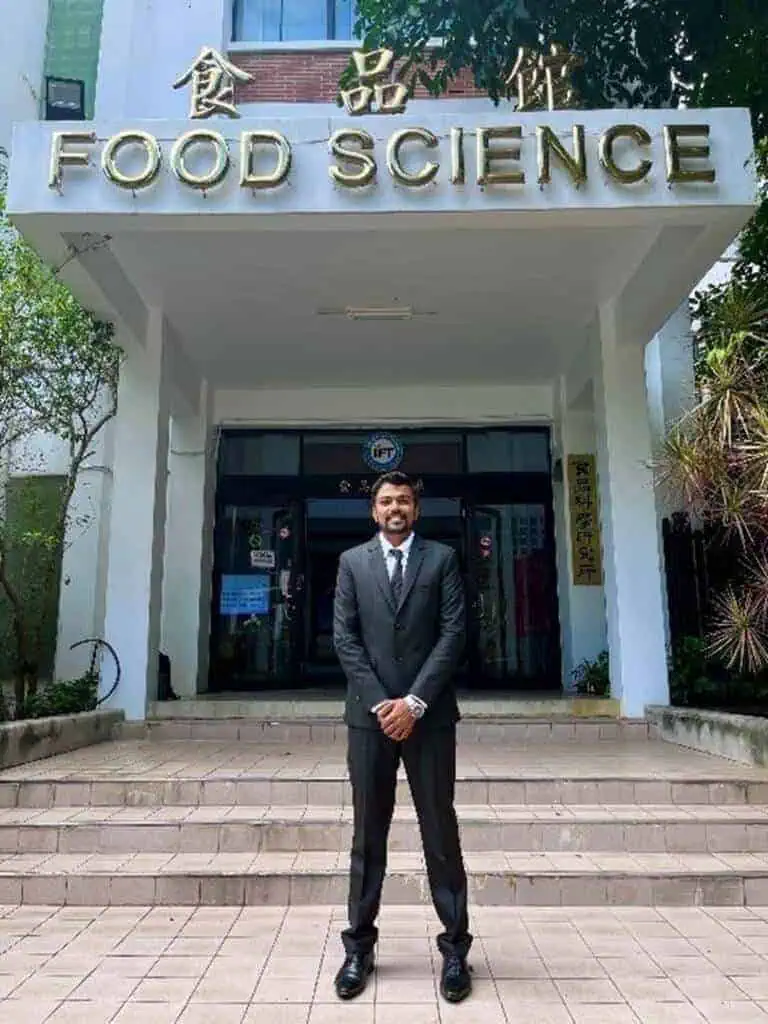



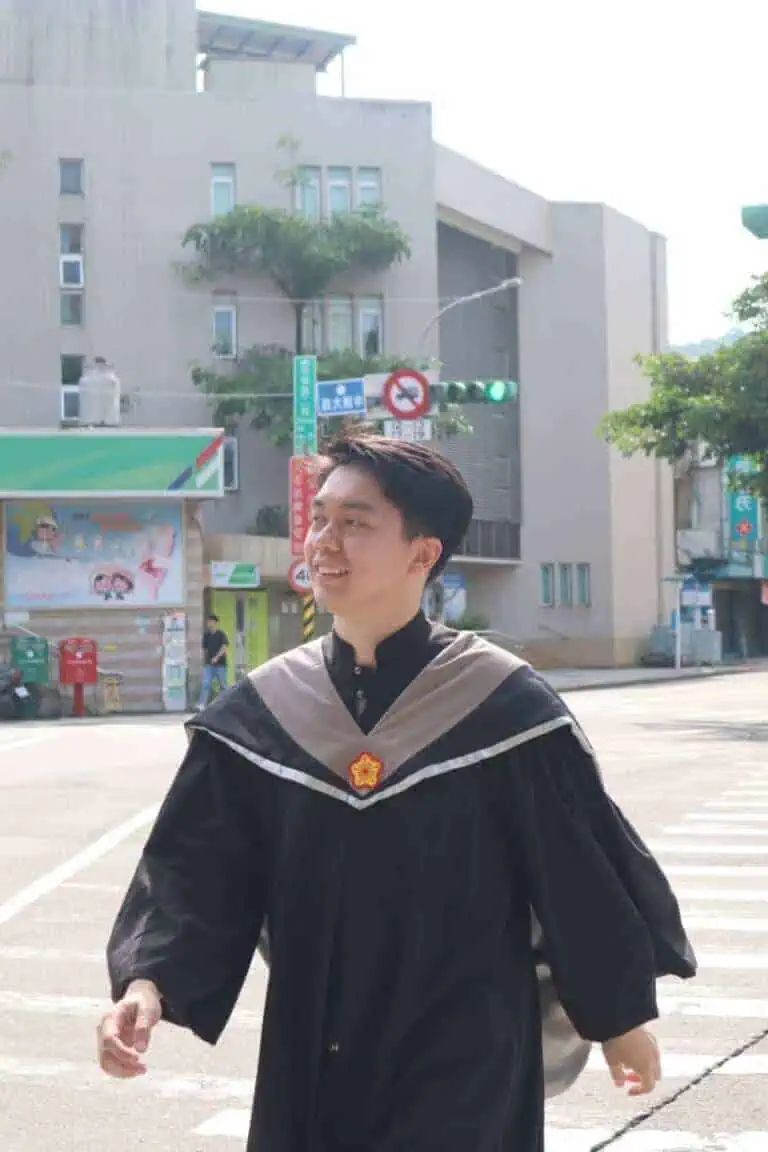
Recipient Insights
These 13 stories describe degree study supported by the MOE Taiwan Scholarship Program: three undergraduate, eight master’s and two doctoral stories.
| Nationalities | Stories per nationality |
|---|---|
| Indian | 5 |
| Indonesian, Vietnamese | 2 each |
| Malaysian, Nigerian, Thai, Venezuelan | 1 each |
| Degree level | Stories | Subjects |
|---|---|---|
| Bachelor’s | 3 | Business Administration; ICI programme at NCCU; Mechanical Engineering |
| Master’s | 8 | Aquaculture; Business Administration; Genome and Systems Biology; Industrial Management; International Business Administration; International Studies; graduate pharmaceutical and medicinal-chemistry training |
| PhD | 2 | Food Science; Mechanical Engineering |
Funding Reported by Recipients
| Recipient and degree/program | Reported coverage |
|---|---|
| Mnasnan Seamorntham — Bachelor’s in Mechanical Engineering | Reported tuition, miscellaneous fees and a monthly living allowance throughout her four-year degree. |
| Nim Boi Doanh — Bachelor’s in Business Administration | Reported tuition and living support for four years. |
| Muskan Dhawan — Master’s in International Business Administration | NTD 40,000 per semester paid toward tuition and NTD 20,000 per month. Her university waived tuition above the scholarship cap; she paid insurance and internet costs herself. |
| Anisa Putri Kurniawati (2023–2025) — Master’s in Industrial Management | Tuition and academic fees up to NTD 40,000 per semester and NTD 20,000 per month. NTUST covered tuition above the cap; she also described a visa-fee exemption. |
| Prathama Das — Master’s in Genome and Systems Biology | Tuition and miscellaneous expenses up to NTD 40,000 per semester, plus NTD 20,000 per month for her two-year master’s programme. |
| Girish Ningappa Mathad — PhD in Food Science | Reported a tuition waiver and NTD 20,000 per month for four years. |
| Thamaraikannan — PhD in Mechanical Engineering | Reported tuition support up to NTD 40,000 and a monthly stipend of NTD 20,000. |
Examples of Featured Recipients’ Application Backgrounds
| Recipient and degree/program | Scholarship/application route | Reported background and preparation |
|---|---|---|
| Mnasnan Seamorntham — Bachelor’s in Mechanical Engineering | MOE and NTUST admission | Science–Math high-school background, GPA 3.99/4.00 and STEM projects. Researched English-taught engineering programmes and sought feedback on her personal statement. |
| Linh Nhi — Bachelor’s in ICI programme at NCCU | MOE and NCCU admission | Built leadership experience from grade 10 through a charity club, student council and an economics newspaper project; reported maintaining a GPA between 8.9 and 9.5. |
| Nim Boi Doanh — Bachelor’s in Business Administration | MOE and NTHU admission | GPA 9.2/10, environmental-club co-founder and third prize in a city-level English competition. Used a gap year to organize certificates, references and interview preparation. |
| Raphael Onuku — Master’s in graduate pharmaceutical and medicinal-chemistry training | MOE and Taipei Medical University admission | Pharmacy background and voluntary research in computer-aided drug design, leading to early publications. Identified research fit and contacted laboratories before applying. |
| Prathama Das — Master’s in Genome and Systems Biology | MOE and joint NTU–Academia Sinica admission | Biotechnology graduate with GPA 9.15/10, Chanakya UG Fellowship research exposure and biosciences-society leadership; identified a supervisor who agreed to supervise the master’s thesis. |
| Darshana Mahesh Patil — Master’s in International Business Administration | MOE and NTHU admission | Mechanical Engineering degrees, a year-long Cummins internship and three years of Michelin R&D experience. Explained how business training would connect technical work with strategic decisions. |
| Thamaraikannan — PhD in Mechanical Engineering | MOE and NCHU admission | Mechanical Engineering bachelor’s and IC Engines master’s degrees, both with First Class Distinction; prior Assistant Professor role at Vel Tech University. Prepared a research proposal and study plan. |
| Girish Ningappa Mathad — PhD in Food Science | MOE and NPUST admission | Horticulture bachelor’s and a master’s in Post Harvest Technology. Built a study plan around sustainable food-science research and secured academic references. |
How Recipients Met Language Requirements
| Language requirement route | Stories / total funded degree-study stories | Recipients and examples |
|---|---|---|
| IELTS for the application/admission episode | 3/13 | 7.5 (Mnasnan Seamorntham, Nim Boi Doanh); IELTS taken for the application (Prathama Das). |
| TOEFL for the scholarship application | 1/13 | TOEFL taken for the application (Talitha). |
| Malaysian University English Test | 1/13 | MUET accepted as English-proficiency evidence (Joey Tang Pei Wen). Joey described the test in connection with the master’s entry requirement. |
| English-medium education certificates | 2/13 | English-medium education evidence submitted (Darshana Mahesh Patil, Raphael Onuku). Darshana explicitly described acceptance of her bachelor’s and master’s certificates; Raphael described using his undergraduate university’s letter when institutions requested proof. |
| University English-test exemption | 1/13 | NPUST waived the language-test requirement (Girish Ningappa Mathad). Girish attributed this to the university’s treatment of his English-speaking educational background. |
| English assessment in the application process | 1/13 | English proficiency assessment followed by an interview (Muskan Dhawan). Muskan described the interview as being conducted in Chinese after she indicated her Chinese ability. |
| English-proficiency certificate submitted | 1/13 | English certificate included in MOE documents (Anisa Putri Kurniawati). Anisa identified the certificate without specifying which test she used. |
| Chinese proficiency submitted alongside the application | 2/13 | TOCFL Level 5 (Nim Boi Doanh); TOCFL novice-level certificate (Prathama Das). Prathama described taking TOCFL voluntarily alongside her English-taught programme application. |
Country-Specific Application Timeline Examples
| Country and route | Recipient and degree/program | Reported sequence or timing |
|---|---|---|
| Malaysia — MOE application through TECO | Joey Tang Pei Wen — Master’s in Aquaculture | Completed the online application and sent hard-copy documents to TECO in Malaysia within one week, including the requested medical checkup documentation. Applied separately to the university; no scholarship interview was conducted in her case. |
Interviews Reported by Recipients
| Recipient and degree/program | Reported interview experience or preparation |
|---|---|
| Muskan Dhawan — Master’s in International Business Administration | Described an English assessment followed by an interview in Chinese. For the scholarship, refreshed Chinese skills and obtained references from contacts made during her Taiwan internship. |
| Nim Boi Doanh — Bachelor’s in Business Administration | Prepared for the MOE interview by practising structured thinking and authentic explanations rather than memorized answers. |
| Prathama Das — Master’s in Genome and Systems Biology | Described discussing her interest in Taiwan’s language and culture during the MOE interview; believed the novice-level TOCFL certificate helped convey that interest. |
Degree Teaching Language
English-taught programmes (Alicia, Darshana Mahesh Patil, and 5 others). Raphael Onuku described English coursework and seminars at Taipei Medical University, while Joey Tang Pei Wen described her Aquaculture classes as mostly English.
What Recipients Pursued After Their Scholarship-Funded Studies
| Recipient | Scholarship-funded degree/program | Reported outcome or current status |
|---|---|---|
| Mnasnan Seamorntham | Bachelor’s in Mechanical Engineering at NTUST | After graduation, began work at ASML Taiwan and received an internal transfer offer to the Netherlands within a year. |
| Raphael Onuku | Master’s-level graduate training at Taipei Medical University | Completed a paid two-month research internship at Academia Sinica after graduation; subsequently became a Medicinal Chemistry PhD candidate at the University of Michigan with fellowship and graduate-assistant support. |
| Joey Tang Pei Wen | Master’s in Aquaculture at National Taiwan Ocean University | Transitioned to doctoral research at the same university, funded separately through the MOST Excellent Doctoral Scholarship. |
| Darshana Mahesh Patil | International MBA at National Tsing Hua University | Current role: R&D Engineer in mechanical design and project management at ONANO in Taiwan. |
Other Offers in Featured Applicants’ Journeys
| Recipient | Reported alternative | Decision described in the story |
|---|---|---|
| Mnasnan Seamorntham — Bachelor’s in Mechanical Engineering | Scholarship offers from Mahidol University, the Institute of Field Robotics in Thailand, and I-Shou University’s Intelligent Systems and Automation Engineering bachelor’s programme. | Chose the MOE-supported English-taught engineering pathway in Taiwan. |
| Linh Nhi — Bachelor’s in ICI programme at NCCU | University of Auckland Dean’s Asia Scholarship covering 100% of tuition. | Reported the offer alongside her MOE award and freshman enrolment at NCCU. |
| Anisa Putri Kurniawati (2023–2025) — Master’s in Industrial Management | A scholarship directly from NTUST. | Had to choose one and accepted the MOE award. |
| Joey Tang Pei Wen — Master’s in Aquaculture | NTOU Scholarship, with full tuition and NTD 4,000 per month for master’s students. | Chose MOE support for her master’s study. |
| Darshana Mahesh Patil — Master’s in International Business Administration | NTHU University Scholarship. | Chose the MOE government scholarship after considering both offers. |
Applicants Who Declined This Scholarship
| Applicant and intended degree/program | Offer from MOE Taiwan Scholarship Program | Alternative chosen | Reason described in the story |
|---|---|---|---|
| Alivia Kirana Hartono Putri — graduate engineering application | Reported acceptance into the MOE Taiwan Scholarship. | Global Korea Scholarship; completed a Master of Engineering at Kumoh National Institute of Technology. | Viewed GKS as the most challenging and exciting opportunity. |
| Felix Pratama — MBA at NTUST | Reported an MOE scholarship offer for the MBA. | TaiwanICDF-funded IMBA at National Chengchi University. | N/A |
What MOE Taiwan Scholarship Program Scholars Say
Advice and reflections from scholars about the MOE Taiwan Scholarship Program application process and programme.
"I was awarded the MOE Scholarship from the Taiwan Government, which covers tuition fees up to NTD 40,000 and provides a monthly stipend of NTD 20,000."
"The professors are highly knowledgeable and supportive, and the curriculum is designed to provide both theoretical understanding and practical applications."
"Taiwan Government Scholarship (MOE Taiwan Scholarship) typically provides funding across bachelor's, master's, and doctoral levels under a unified scheme, without specifying a quota for each. Historically, very few undergraduate students have received this scholarship. In fact, I was the first undergraduate student admitted in several years."
Frequently asked questions
Common questions about MOE Taiwan Scholarship Program, eligibility, funding, and applications.
MOE Taiwan Scholarship is a full-funding government scholarship that can cover up to NTD 40,000 in tuition and miscellaneous fees, plus a living stipend of NTD 15,000 or NTD 20,000 depending on degree level. For example, Talitha said the scholarship “covered NT$40,000 for tuition fees and provided a monthly allowance of NT$20,000,” while Girish Ningappa Mathad described his award as “Fully Funded (Tuition waiver and 20,000 NTD/month stipend for 4 years).” At the same time, Alicia reported that her MOE Taiwan Scholarship “covered partial tuition support and a monthly living stipend.”
On Global Scholarships institution pages, the MOE Taiwan Scholarship is commonly described as covering up to NTD 40,000 for tuition and miscellaneous fees, plus a living stipend of NTD 15,000 or NTD 20,000. Recipient stories reinforce that tuition support and a monthly allowance are the core benefits. For example, Talitha wrote that it “covered NT$40,000 for tuition fees and provided a monthly allowance of NT$20,000,” and Alicia said her scholarship “covered partial tuition support and a monthly living stipend.”
Yes, many applicants will need to show English proficiency, but the exact score requirement can depend on the university or program. According to Anisa Putri Kurniawati, “For the MOE Taiwan Scholarship, applicants need to provide proof of English proficiency.” She also noted that the scholarship may accept tests such as TOEFL ITP, TOEFL iBT, and IELTS, but “the scholarship itself does not set a strict minimum score. Instead, each university may define its own standards depending on the program.”
Many MOE Taiwan Scholarship recipients on Global Scholarships studied in English-taught programs, although this depends on the major and university. Muskan Dhawan answered the question directly with “In English.” Likewise, Girish Ningappa Mathad said, “Language of Classes: English,” and added that “Professors and staff consistently speak English, meaning language is not a barrier when studying at the university.” Talitha also specifically advised applicants to “choose a major that offers an English-taught program.”
Recipients consistently emphasize authenticity, preparation, and tailoring your documents carefully. Anisa Putri Kurniawati advised applicants to “be sincere. Tell your story honestly, explain why you want to study in Taiwan, what motivates you, and how this connects with your personal journey.” Girish Ningappa Mathad recommended making sure “your motivation letter, resume, and study plan are truly unique and reflect your personality and vision.” Muskan Dhawan also shared that she “brushed up on my Chinese language skills” and “collected recommendation letters from Taiwanese contacts” to strengthen her application.
The exact checklist can vary each year and by country office, so applicants must verify the latest announcement locally. Still, Global Scholarships recipients mention several common documents. Talitha explained that the requirements may vary each year, but in general the documents include a “Study plan,” “English proficiency test result,” “Letter of recommendation,” and “Previous diploma and academic transcripts.”
That is often a smart strategy. Talitha recommended, “When applying to universities, it is recommended to apply to at least three institutions.” She also suggested that applicants first “select the top 10 universities in Taiwan and choose a major that offers an English-taught program.” This kind of broader application strategy can improve your chances of matching with both a suitable program and scholarship pathway.
Recipients recommend combining official scholarship instructions with university research and advice from people who have already gone through the process. Anisa Putri Kurniawati said she “carefully went through the official information available online and followed each instruction step by step.” Alicia said she relied on “university websites, international student pages, online forums, and conversations with alumni,” adding that “Speaking with former or current students made a huge difference.”
There are many degrees that are open to international students right now — find yours.

Leave A Comment