
How Kent Jacob Secured Full Tuition at CUHK Through the Belt and Road Scholarship
University: The Chinese University of Hong Kong (CUHK), Hong Kong
Degree: Bachelor’s in Insurance, Financial, and Actuarial Analysis
Previous Education: Springfield School in Jakarta, Indonesia. Four A* grades at A Level.
Scholarship: Belt and Road Scholarships (Indonesia), HKSAR. HK$178,000 per year in tuition for four years and a one-time HK$15,000 relocation allowance, for a total of HK$727,000.
Other Offered Scholarships: CUHK’s earlier admission award offered HK$178,000 per year in tuition for four years and was not additional to the Belt and Road Scholarship. The CUHK Business School Admission Scholarship supported accommodation and living expenses (approximately $47,000 per year, $188,000 over four years). The Hong Kong University of Science and Technology offered four years of tuition. CUHK Honours at Entrance was non-monetary recognition.
Social Media
LinkedIn: linkedin.com/in/ACoAAFafsZcBDCFKvXfJ3DRVYWwMNOAF73IWkyU/
The Journey
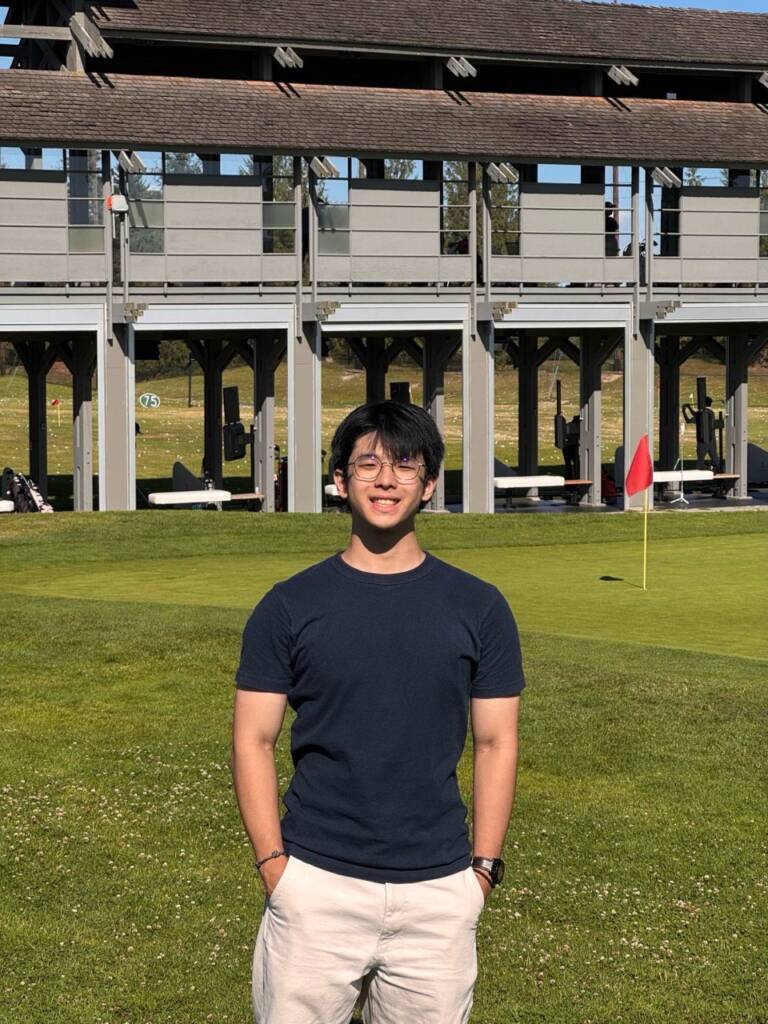
My name is Kent Jacob, and I'm from Jakarta, Indonesia. I'm currently a second-year student at The Chinese University of Hong Kong (CUHK), studying Insurance, Financial, and Actuarial Analysis (IFAA).
I've always had a strong interest in mathematics, but what eventually drew me towards actuarial science was discovering how mathematics could be applied to real-world problems. Through competitions involving mathematical modelling and actuarial science, I became increasingly interested in pursuing a field where I could put that knowledge to practical use.
I chose CUHK because of its strong actuarial science programme, particularly its alignment with the professional examinations of the Society of Actuaries (SOA). Hong Kong was also an attractive destination because of its position as a global financial hub. I saw studying there as an opportunity to develop academically while preparing for a career in the financial industry.
The scholarships I received have made this opportunity possible, allowing me to pursue my education abroad with substantial financial support.
Belt and Road Scholarship Details
I received the Belt and Road Scholarships (Indonesia), HKSAR, in July of my admission year.
The scholarship provides full-tuition funding of HK$178,000 per year for four years, along with a one-time relocation allowance of HK$15,000. The total award is worth HK$727,000.
Receiving this scholarship has made an enormous difference in my life. It has allowed me to pursue my education in Hong Kong with far greater financial security. I'm incredibly grateful for the opportunities this support has given me, and I try to make the most of them.
Other Offered Scholarships
- Yes. Before receiving the HKSAR Government Belt and Road Scholarship, CUHK initially offered me a full-tuition admission scholarship worth HK$178,000 per year for four years. This was an earlier tuition scholarship offer, rather than additional funding on top of the Belt and Road Scholarship.
- CUHK Business School Admission Scholarship: Approximately $47,000 per year totalling $188,000 over four years, to help cover my accommodation and living expenses.
- Honours at Entrance, CUHK (Non-Monetary Academic Distinction): Academic recognition awarded upon admission.
- Additionally, I received an admission scholarship offer from the Hong Kong University of Science and Technology (HKUST), which would have covered all four years of tuition fees.
Educational Background
I attended Springfield School in Jakarta, Indonesia, where I completed my A Levels in Mathematics, Further Mathematics, Physics, and Chemistry. My predicted and final grades were four A*s.
Throughout high school, I participated in several academic competitions, mostly in mathematics. Some of my achievements include:
- First Place in Infinitics, a mathematical modelling competition hosted by Universitas Pelita Harapan (UPH).
- Distinctions in the Cayley and Fermat Mathematics Contests organised by the University of Waterloo.
- High Distinction in the International Chemistry Quiz organised by the Royal Australian Chemical Institute (RACI).
- Third Place in Actuarial Science Day, hosted by Prasetiya Mulya University.
Outside academics, I served as president of my school's programming club for a year. I was also involved in Eunoia, a school charity organisation that helps children who cannot afford proper education, where I helped manage the logistics of various events.
I also volunteered as a mentor in our school's study club, teaching younger students IGCSE Mathematics, Additional Mathematics, Physics, and Chemistry.
Two experiences that particularly influenced my decision to study actuarial science were Infinitics and Actuarial Science Day. Both competitions helped me appreciate the applications of mathematics beyond the classroom. I had always enjoyed mathematics as a subject, but these experiences helped me realise that I wanted to pursue it professionally.
How Did You Prepare to Apply to the Chinese University of Hong Kong?
I applied directly through CUHK's non-JUPAS admissions system on its official website.
My application included a personal statement, CV, recommendation letter from my teacher, and an interview, which was conducted online due to scheduling difficulties.
When I received my admission offer, I was also offered a full-tuition scholarship by CUHK. Subsequently, the admissions team nominated me for the HKSAR Government Belt and Road Scholarship and provided further instructions on the application process.
How Did You Find Information About the Belt and Road Scholarship and the Chinese University of Hong Kong?
I first discovered CUHK while researching universities in Hong Kong. As one of the region's leading universities, it was relatively easy to come across, and its actuarial science programme immediately caught my attention.
Did You Take Any Standardized Tests? If So, How Did You Prepare for Them?
I took the IELTS examination as part of my university application.
I didn't spend much time preparing specifically for IELTS, as I had completed IGCSE First Language English the year before. I found the examination reasonably similar to what I had previously studied, so I was already familiar with much of the material being assessed.
How Did You Prepare to Apply for the Belt and Road Scholarship?
After receiving the nomination, I was asked to submit a one-page write-up explaining why I should be considered for the Belt and Road Scholarship.
The write-up was expected to cover my academic achievements, extracurricular activities, contributions to my school and community, leadership experience, plans after graduation, and how I hoped to contribute to Hong Kong.
I spent quite a lot of time working on both my personal statement and this write-up. One thing I really wanted to avoid was making my application sound like a list of achievements. My CV already contained most of that information, so I wanted the written components to explain more about who I was and what I hoped to achieve.
I tried to be as genuine as possible about my experiences, the things I cared about, and why I wanted to study in Hong Kong.
Looking back, I think spending time reflecting on those questions was one of the most valuable parts of preparing my application.
How Was Your Experience at the Chinese University of Hong Kong?
My experience at CUHK has been great so far, although it has definitely been challenging.
Academically, the IFAA programme is demanding. There's a lot of material to cover, and the workload can be quite intense. However, that's also something I appreciate about the programme. I came to CUHK because I wanted to challenge myself, and I certainly haven't been disappointed in that regard.
Socially, moving to Hong Kong was a big adjustment. Making friends at university can already be difficult, and being an international student who doesn't speak Cantonese made it a little more intimidating.
At first, I found it difficult to meet people and get used to living somewhere completely different from home. Over time, though, things became easier. I started meeting more students, including many other international students, and gradually found people I felt comfortable around.
There are times when being surrounded by so many different cultures makes me forget that I'm living abroad. I've met people from backgrounds very different from mine, but I've also found a sense of familiarity that sometimes makes Hong Kong feel like home.
How Do You Rate the Chinese University of Hong Kong Academically and Why?
I would rate CUHK very highly, particularly for students interested in pursuing professional actuarial qualifications.
One of the biggest advantages of the IFAA programme is its alignment with the Society of Actuaries (SOA) examinations. Eligible students can earn University-Earned Credits for Exam FM, SRM, FAM, and either ALTAM or ASTAM, provided they meet the required academic standards.
These credits can significantly reduce the number of professional examinations students need to take independently, although they do not automatically qualify us as Associates of the Society of Actuaries (ASA). We still need to complete the remaining professional requirements.
What I particularly appreciate is that our courses often go beyond the SOA examination syllabi. Rather than studying just enough to meet the requirements of a particular examination, we cover additional material that helps prepare us for more advanced courses and examinations.
I won't pretend that the programme is easy. It can be extremely challenging, and I don't think it would necessarily suit everyone. However, I believe that the depth of the curriculum and the expectations placed on students help prepare us for the demands of the actuarial profession.
How Does the Chinese University of Hong Kong Support International Students?
I've found CUHK to be very supportive of its international students, especially when it comes to settling into university life.
Moving to another country for university can be overwhelming. Apart from adjusting to a different academic environment, you also have to get used to living independently and navigating a place where you might not know anyone.
CUHK provides opportunities for international students to meet one another, become familiar with Hong Kong, and experience the local culture.
Personally, I found these opportunities helpful, especially during the earlier stages of my university experience. Meeting other international students who were going through similar adjustments made it much easier to settle in.
Were Your Studies in English or Cantonese?
All my classes are conducted in English, so not knowing Cantonese hasn't been a problem academically. In fact, there are times when I feel like I could live in Hong Kong without knowing any Cantonese at all.
The language barrier becomes more noticeable outside university, particularly when buying groceries, ordering food, or interacting with people who are more comfortable speaking Cantonese. However, I've gradually gotten used to it, and I've even started picking up a little Cantonese along the way.
I would still recommend that international students try to learn some basic Cantonese. Although it isn't necessary for studying at CUHK, it makes everyday life easier and helps you feel more connected to the place you're living in.
What Are Your Plans After Graduation?
I'm currently continuing my undergraduate studies at CUHK.
After graduation, I hope to remain in Hong Kong and pursue a career in the actuarial or financial industry. My long-term goal is to complete the professional requirements of the Society of Actuaries and eventually obtain the Fellowship designation (FSA).
What Do You Think Made Your Application Stand Out?
I think what helped my application was the combination of my academic performance and my involvement outside the classroom.
I had strong A Level grades and participated in several academic competitions, but I also made time for leadership roles, mentoring, and charity work.
Something I kept in mind throughout the application process was that I was applying to a highly competitive university. I knew there would be plenty of applicants with grades just as good as mine, if not better. Some might even have more prestigious competition achievements or considerably more impressive CVs.
So I often asked myself, what would actually make my application stand out among all these students?
I eventually realised that I wanted the admissions team to see more than just my academic abilities. I wanted them to understand the kind of person I was, how I spent my time outside studying, and what I hoped to contribute to the community.
I think this is particularly relevant for the Belt and Road Scholarship, where your potential contributions to Hong Kong and society are also important considerations.
Of course, I can't say for certain what made the selection committee choose me, but I believe showing different sides of myself helped make my application stronger.
What Would You Have Done Differently?
If I could go through the application process again, I would definitely apply to more universities.
I only applied to CUHK and HKUST, and to make things worse, I only applied to one programme at each university. Looking back, that was quite a risky decision.
My admission depended on my final A Level results, which were only released in the middle of August, just a few weeks before the university term started.
I remember how stressful it was knowing that so much depended on those results. During my A Level examinations, I kept thinking about what would happen if I didn't meet the conditions of my offers.
If I had applied to more universities, I would have had more options available to me. More importantly, I probably would have had much greater peace of mind while sitting my examinations.
Fortunately, everything worked out in the end, but I wouldn't recommend taking the same risk.
What Advice Would You Give Those Looking to Apply for a Similar Scholarship?
My biggest piece of advice would be to remember that not everything is about your grades.
Of course, academic achievements matter, particularly when applying to competitive universities. But I think it's equally important to consider what kind of person you are and what you can contribute beyond the classroom.
For students interested in the Belt and Road Scholarship, I would encourage you to think about how you could contribute to Hong Kong, your own community, and perhaps even serve as a bridge between the two.
I think a lot of applicants feel pressured to present themselves as these exceptionally accomplished high school students who have everything figured out. I felt that pressure too.
When I was applying, I knew there would be students with grades as high as mine, possibly better, and with achievements far more impressive than my own. At some point, you have to ask yourself what makes you different from everyone else.
I don't think the answer necessarily has to be another competition award or another extracurricular activity. Sometimes, it's simply the way you've chosen to spend your time, the things you care about, and the experiences that have shaped you.
I would also tell applicants not to be afraid of making mistakes. You're still in high school. You aren't expected to have everything figured out.
Looking back at the CV I submitted with my university application, there are so many things I would change now. If I were to use that same CV to apply for a professional internship today, I doubt it would get very far. But that's perfectly fine. I was a high school student applying to university, and I've learned a lot since then. Your application doesn't have to be perfect, and neither do you.
After all, part of going to university is learning and discovering what you're capable of. There wouldn't be much point in pursuing an education if you already knew how to do everything.
Finally, if you do receive a scholarship, I hope you make the most of it.
The scholarship support I've received has changed my life. It has allowed me to study at CUHK, meet the people I've met, and experience living in Hong Kong with far greater financial security.
I know how fortunate I am to have received this support, and I want to make sure I don't take it for granted.
University hasn't always been easy, and I'm sure there will be plenty more challenges ahead. But being given this opportunity has made me even more determined to give my education and future career everything I can.
Want to submit your
scholarship journey?
Submit Your Story Here!
More Scholarship Recipients
My name is Aishath Naseem (Aisha), and I am from the Maldives. My country is world-famous for its soulful islands, surrounde .... Read more
My name is Md Imamul Islam, and I come from Jamalpur, Bangladesh. I am an electrical engineer and researcher working on the .... Read more
My name is Hriti Parekh, and I am from Raipur, Chhattisgarh, India. I am a law graduate from Hidayatullah National Law Unive .... Read more